VHD/VHDX and VMDK are the virtual disk formats in VMware and Hyper-V environment. They contain the applications and other data of VMs. When IT administrators need to move data from Hyper-V to VMware, one of the methods is converting the virtual disks.
What Are VHD and VMDK Files?
VHD (Virtual Hard Disk) and VMDK (Virtual Machine Disk) are both virtual disk formats that act like physical hard drives inside files, but they serve different platforms and have distinct features.
VHD/VHDX
VHD and VHDX are virtual disk formats primarily used by Microsoft Hyper-V.
These files contain:
Operaating system
Applications
VM configuration data
User data
VMDK
VMDK (Virtual Machine Disk) is VMware’s virtual disk format used by:
VMDK files can be configured as:
Thin provisioned
Thick provisioned
Split disks
Monolithic disks
When migrating a VM between platforms like from Hyper-V to VMware, you must convert the disk file so it matches the target system’s expectations.
You can export the entire Hyper-V VM and then find the vhd file in the folder.
VHD to VMDK Pre-Conversion Considerations
Before jumping into commands and tools, let’s cover some best practices that help ensure success:
1. Always backup your source VM. Don’t just copy the .vhd file but create a full snapshot or clone within Hyper-V Manager if possible. This gives you an easy rollback point if anything goes wrong during conversion.
2. Check available storage space on your workstation or server where you’ll run the conversion tool. You’ll need enough free space for both source (.vhd/.vhdx) and target (.vmdk) files at once.
3. Also consider hardware compatibility: After converting disks between platforms, you may need to adjust virtual hardware settings in VMware. For example, switching disk controllers from IDE (common in older Hyper-V setups) to SCSI or NVMe for better performance on VMware hosts.
4. Be aware of licensing implications when moving commercial OS images between hypervisors. Some licenses tie activation status directly to underlying hardware signatures, which can change after migration.
Now, let’s look at how qemu-img makes this process manageable even for complex scenarios.
How to Convert VHD/VHDX to VMDK with QEMU-img?
QEMU-img is an open-source virtual hard disk converter which allows you to change the formats of several kinds of files including VHD, VMDK, QCOW2, etc. You need to install this software on computer and then convert virtual disk with commands. It also requires you to add the directory to path environment variables.
The ways to install QEMU-img are different on Windows computer and Linux computer.
Using QEMU-img in Windows
1. Download QEMU for Windows
2. Open Command Prompt or PowerShell
3. Navigate to the VHD/VHDX location
cd D:\VMs\
4. Convert VHD to VMDK
qemu-img convert -p -f vpc -O vmdk source.vhd destination.vmdk
-p: display coversion progress
-f vpc: source format
-O vmdk: Output format
5. Import the VMDK into VMware
Open VMware ESXi or VMware Workstation to create a new virtual machine. Select the Use an existing virtual disk and browse to the generated VMDK file.
Using QEMU-img in Linux
1. Install QEMU-img
sudo apt update
sudo apt install qemu-utils
sudo yum install qemu-img
or
sudo dnf install qemu-img
sudo zypper install qemu-img
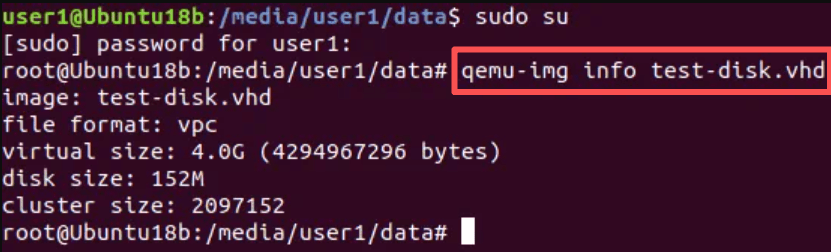
2. Check the Source Disk
qemu-img info source.vhd
3. Convert VHD to VMDK
qemu-img convert -p -f vpc -O vmdk source.vhd destination.vmdk
4. After conversion, many admins optimize the disk using VMware tools:
vmkfstools -i destination.vmdk -d thin optimized.vmdk
How to Convert VHD/VHDX to VMDK with VMware vCenter Converter Standalone?
Every vendor will provide the solution to let you easily start with new platform. In the download center of VMware, you can find the VMware vCenter Converter Standalone to help quickly migrate to VMware. Compared with QEMU-img, VMware vCenter Converter Standalone works in a different way. You don’t have to export vhd virtual disk from Hyper-V virtual machine. It will smoothly move the entire VM from Hyper-V to VMware.
This application can be installed on physical or virtual machine, and then you need to follow the instruction of the wizard to finish the conversion.
1. In VMware vCenter Converter Standalone, click Convert machine
2. In Source System section, select Power off and Hyper-V server as the source type > input the credentials of the Hyper-V server > click Next
3. In Source Machine section, you can preview the VMs working on the Hyper-V server > select the Hyper-V VM you would like to move > click Next
4. In Destination System section, you can select the target VMware server > select VMware Infrastructure virtual machine as the destination type > input the credentials of the ESXi server > click Next
5. In Destination Virtual Machine section, give a new name to the VM > click Next
6. In Destination Location section, select the ESXi host and datastore for the VM > click Next
7. In Options sections, check other configurations of the VM > click Next
8. Review the Summary of the conversion job > click Finish
After the process is finished, you can check whether the VM works on the ESXi host. If you still want the VMDK file, you can copy it in vCenter. What's more, you can use OVF Tool to export OVF/OVA template.
How to Easily Migrate Hyper-V to VMware with Vinchin Backup & Recovery?
Using conventional approaches like converting VM exports can be challenging due to compatibility issues. Instead, using a specialized migration solution for virtual setups is recommended.
Vinchin Backup & Recovery is not only a backup solution for virtual machine, but also an advanced VM migration solution,is a VHD to VMDK tool, also supporting VMware vSphere, Hyper-V, Proxmox, XenServer, XCP-ng, oVirt, OLVM, RHV, OpenStack, etc. By adding both virtualized platforms into the backup system, you can perform easy agentless VM migration with a user-friendly web console.
There is the built-in conversion engine in the backup system, you just need to select the VM you need to move it to another virtualized platform. Vinchin will properly handle the migration process including automatica reparing of boot and network configuration to make sure the new VM can boot.
For instance, if you would like to migrate VM from Hyper-V to VMware
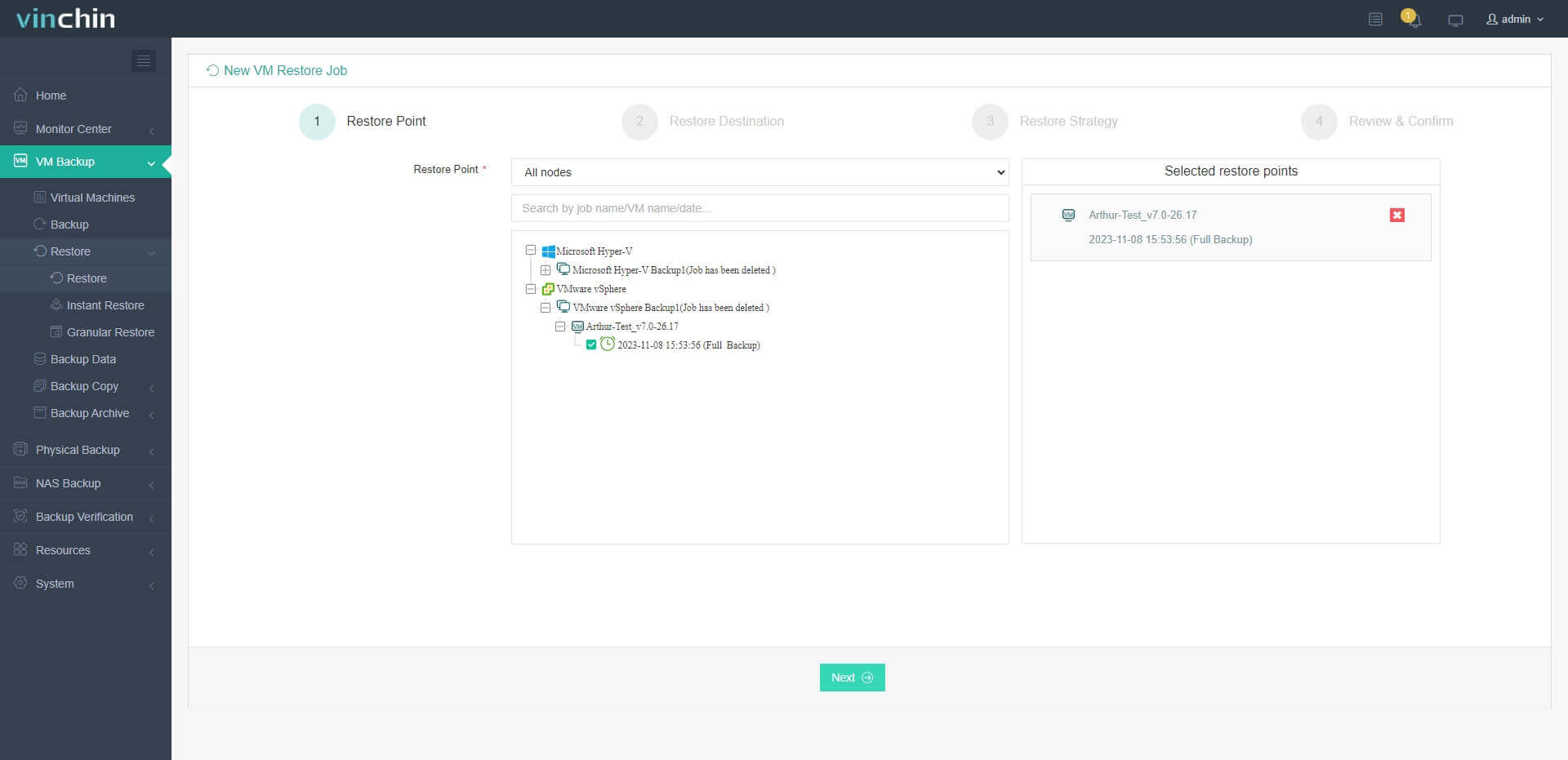
1. Just select the backup of the target Hyper-V VM
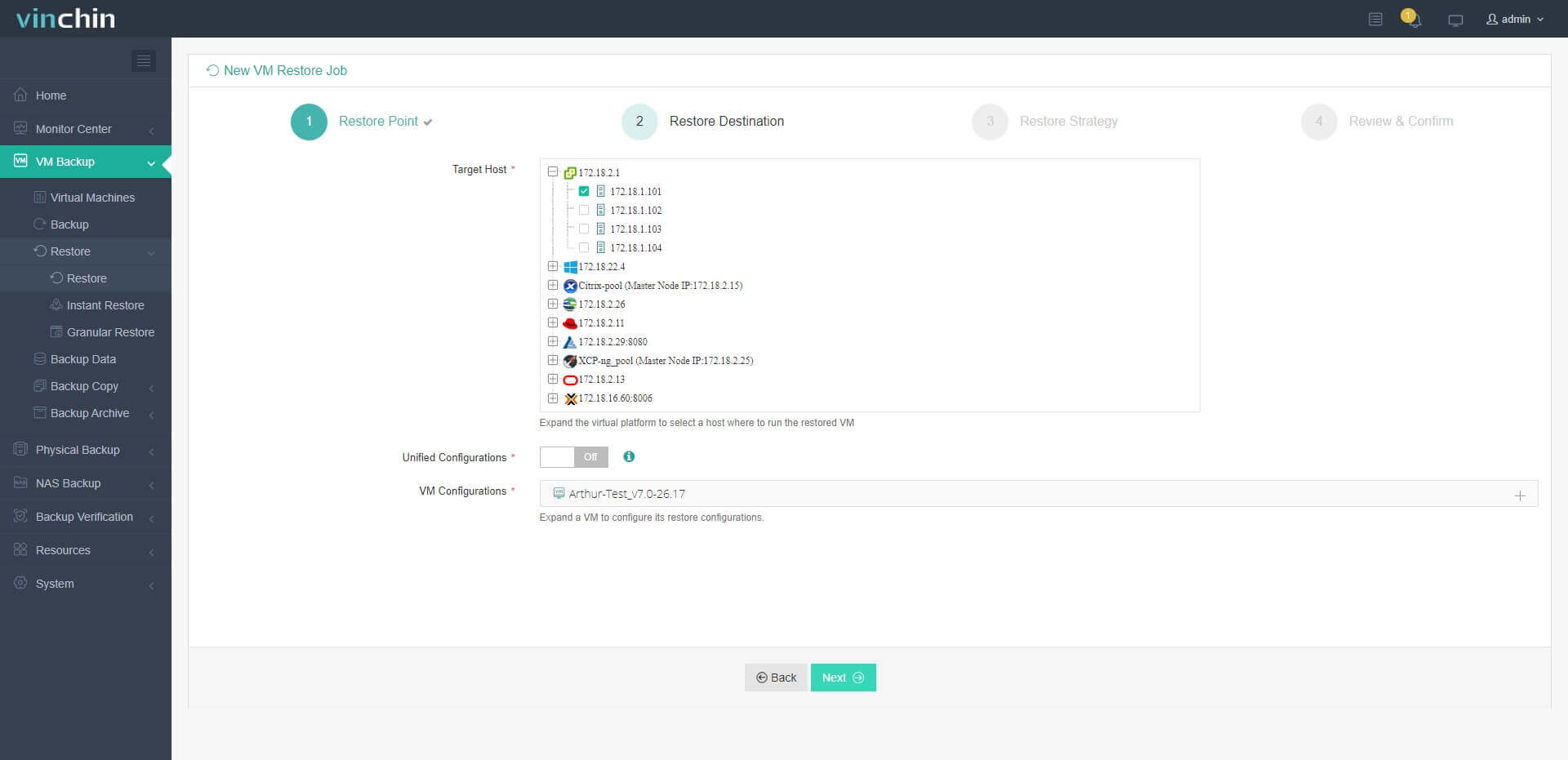
2. Select a VMware host as target host
3. Simply set up restore strategies or directly skip this step
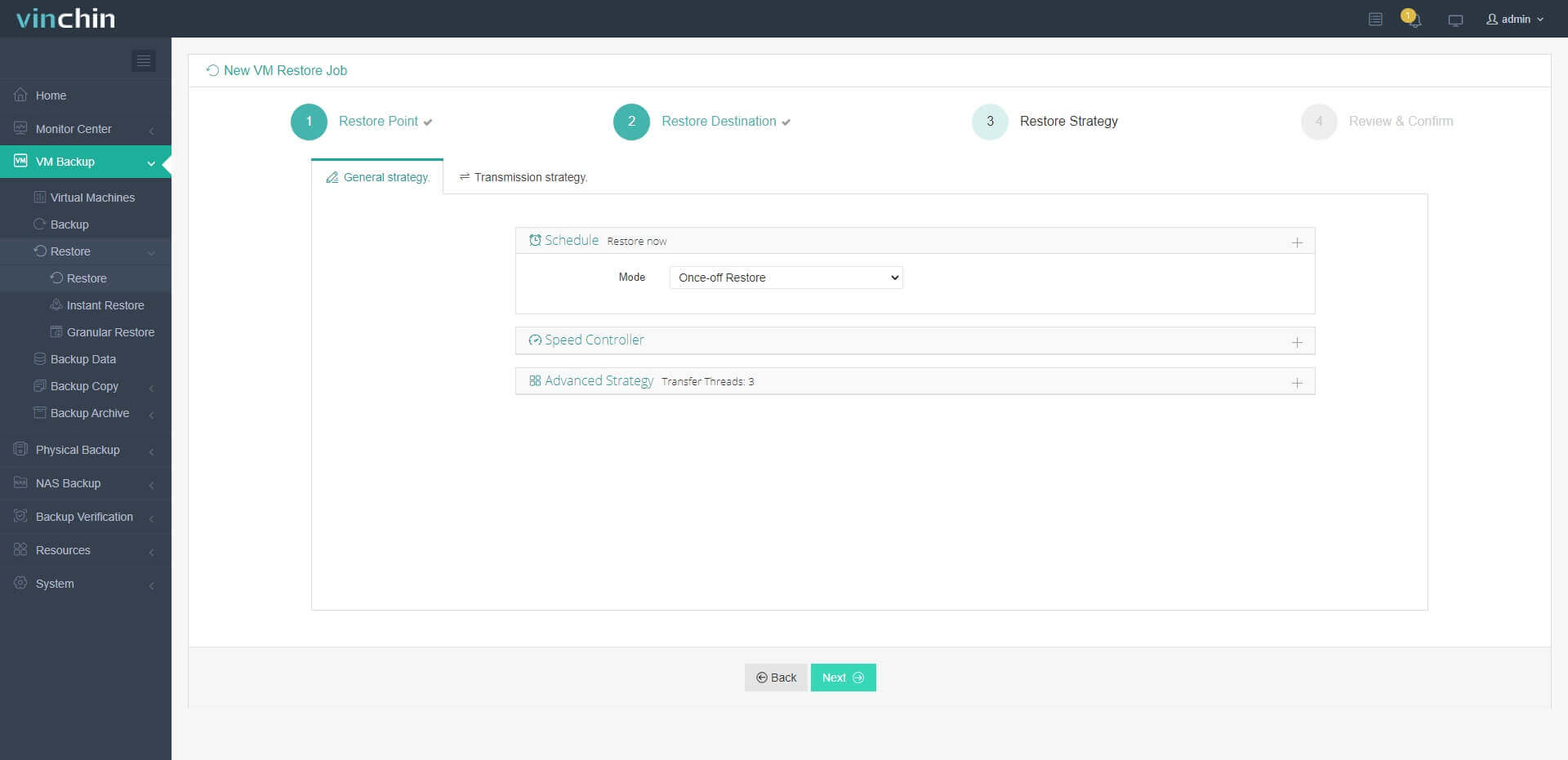
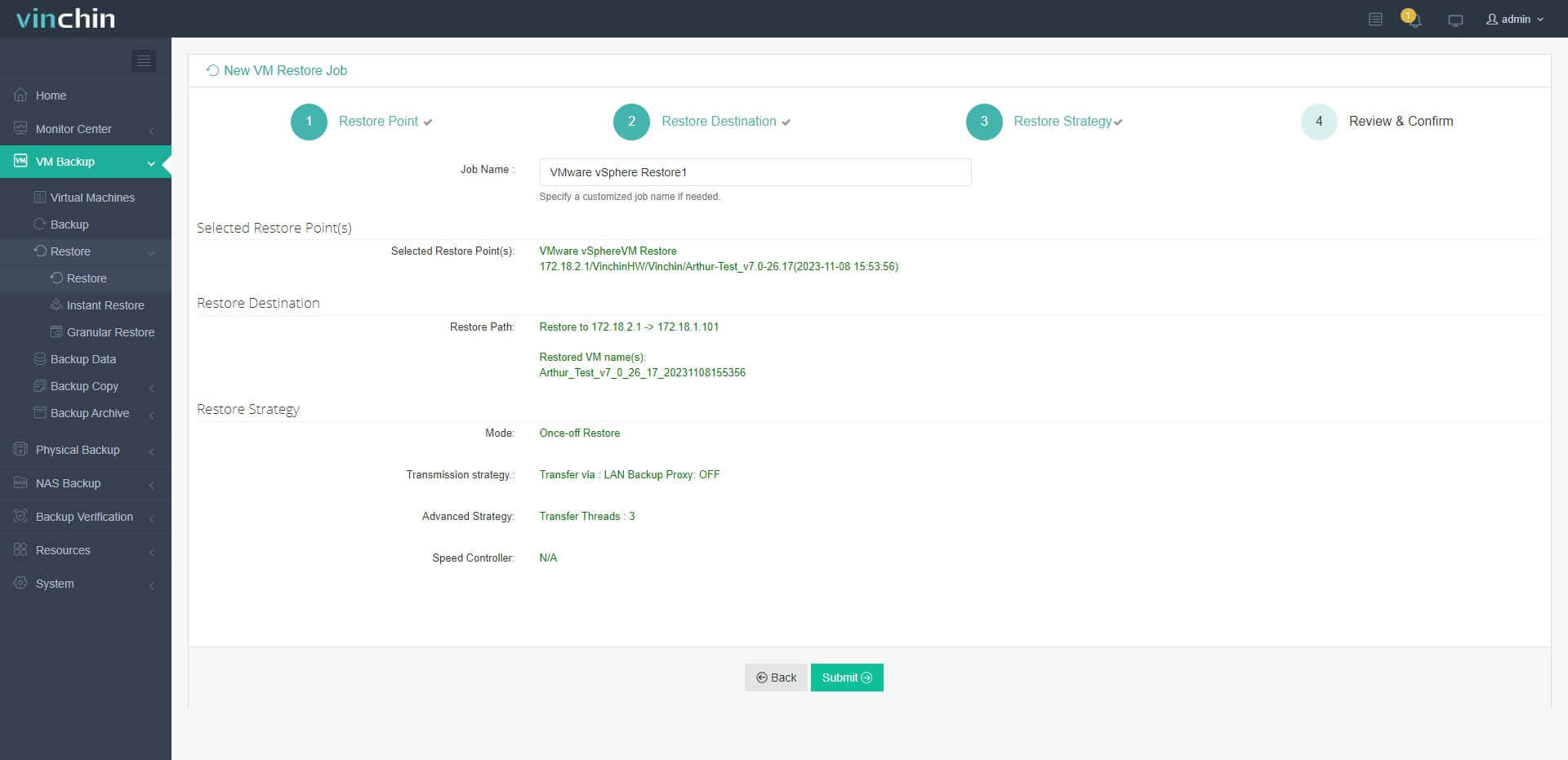
4. Just submit the job and then the Hyper-V VM will be quickly restored on the VMware host
Vinchin Backup & Recovery has been selected by thousands of companies and you can also start a 60-day full-featured free trial here. Also, contact us, leave your requirements, and then you will receive your tailored solution. We have established partnerships with reputable companies all over the world so if you would like to do a local business, you can select a local partner here.
VHD to VMDK FAQs
1. What is the difference between VHD and VMDK files?
Vhd and vmdk files are different virtual disk for different virtual machines. VHD files are often used in Hyper-V and VMDK files are often used in VMware.
2. Can you migrate VM from Hyper-V to VMware directly?
Yes. You can use the agent VMware converter to migrate Hyper-V VM to VMwawre or use the professional agentless migration solution Vinchin Backup & Recovery via an easier way.
3. Is there a risk of data loss during the conversion process?
It is rare to see data loss during the conversion process but it is essential to have a backup the virtual disk in case of any accidents.
Sum Up
VHD and VMDK are the virtual disk formats of VMware and Hyper-V. In the latest Hyper-V, virtual hard disk can be saved as VHDX format.
Converting virtual hard disk is one of the ways to migrate VM so it is a useful skill for IT administrator. In this post, you can know the commands of using QEMU-img to convert VHD to VMDK and the steps of using VMware vCenter Converter Standalone for VMware migration.
For convenient VM migration, you can try Vinchin Backup & Recovery to add VMware and Hyper-V servers to easily migrate VM. Don’t miss the free trial.