VMware is the most popular server virtualization solution in the world and it is trusted by thousands of users for its excellent performance and convenient management.
In the daily maintenance of virtual environment, VM exporting and importing are common jobs. VMware provides vCenter to let users export VM to OVF, but it is not the only application to do these jobs.
For example, VMware OVF Tool can also do this for you.
VMware OVF Tool and its features
OVF Tool, short for Open Virtualization Format Tool, is a command-line utility that allows you to import and export OVF packages to and from many VMware products.
For exporting VM, IT administrators can use ESXi or vCenter to export VM template and deploy the template then. Sometimes IT administrators will find that it will result in a fail job when the VM is too large. To fix this issue, OVF Tool can help smoothly export and deploy large VM.
There are two kinds of VM templates in VMware, OVF and OVA. OVF template is a folder containing the metadata, applications, and other data, and OVA is a single file distribution of the OVF file package. Both of them can be used to recover VM or move VM to another ESXi host.
These templates can be not only used on VMware. If you wish, you can use V2V converters to import the templates to other virtualization platforms like KVM or Xen hosts. Some VM management tools like Xen Orchestra can directly recognize VMware OVA template.
vCenter once supported exporting both OVF and OVA templates but from vSphere 6.5, it no longer supports exporting OVA but luckily, you can still use OVF Tool to convert VM to OVA template.
Except for exporting VM template, VMware OVF Tool can be also used to deploy VM template.
Where to download OVF Tool
VMware OVF Tool is officially provided by VMware and can be downloaded from the VMware website. IT administrators can obtain the latest version of OVF Tool from VMware, which ensures better compatibility with current vSphere and ESXi versions.
How to install OVF Tool?
OVF Tool supports multiple operating systems, including Windows, Linux, and macOS. After downloading the installation package that matches your system, you can install it locally and start using command-line operations to export or import OVF and OVA templates for virtual machine migration and backup scenarios.
1. On Windows systems, the OVF Tool is provided as an executable installer. You only need to double-click the installer, follow the setup wizard, accept the license agreement, and choose the installation path. Once the installation is completed, OVF Tool can be accessed directly from the command line.
2. On Linux systems, OVF Tool is usually distributed as a compressed installer package. After extracting the package, you need to run the installer script with appropriate permissions. The installation process will guide you through the license confirmation and target directory selection. When finished, the ovftool binary will be placed in the specified path and can be executed from the terminal.
3. For macOS, OVF Tool is also provided as a standard installer package. After opening the installer, follow the on-screen instructions to complete the installation. Once installed, you may need to reopen the terminal so that the system can recognize the ovftool command.
ovftool --version
If OVF Tool is installed correctly, the command will return the version information of the tool, such as the OVF Tool build number and release version. This indicates that the system environment has successfully recognized the ovftool executable and it is ready to be used for virtual machine export, import, and format conversion tasks.
How to export VM to OVF/OVA with OVF Tool?
1. Use CMD to open OVF Tool by typing the command below:
cd “<C:Program FilesVMwareVMware> OVF Tool”
2. Type the command below to export VM to OVF
ovftool.exe –noSSLVerify vi://ip_of_esxi_host where the machine resides/name of source_machine “D:ovf_export_name.ovf”
–noSSLVerify is used to skip SSL verification. Replace the host IP, VM name and the export destination with the real information.
If you wish to export VM to OVA, just replace ovf with ova in the command, like this:
ovftool.exe –noSSLVerify vi://ip_of_esxi_host where the machine resides/name of source_machine “D:ova_export_name.ova”
When you need to deploy the template, type the command below:
ovftool -ds=DestinationDatastore -n=DestinationVMName OVF.ovf vi://username:password@vCenter2/Datacenter2/host/Cluster2
How to deploy an OVA/OVF template using OVF Tool?
To deploy an OVA or OVF template using OVF Tool, you need to specify the source template file and the destination ESXi host or vCenter Server. The basic syntax is straightforward and can be executed directly from the command line.
For example, to deploy an OVA template to an ESXi host, you can use the following command:
ovftool MyVM.ova vi://username:password@esxi-host-ip/
If you want to deploy an OVF template to a vCenter Server and specify a target datastore, the command can be written as:
ovftool --datastore=datastore1 MyVM.ovf vi://username:password@vcenter-ip/Datacenter/host/Cluster/
After the command is executed, OVF Tool will upload the template, create the virtual machine, and complete the deployment automatically. This command-line approach is reliable for large OVA/OVF files and is widely used in automated or batch deployment scenarios.
How to convert OVF to OVA or OVA to OVF?
As mentioned before, OVF is a folder containing many files like VMDK, snapshot, etc. and OVA is like a zipped OVF. Can you zip the OVF and modify its format to use it as OVA or extract files from OVA and copy them into a folder to use it as OVF? It might not work but OVF Tool can help you convert the template.
To convert OVF into OVA, type the command below:
> ovftool /ovfs/my_vapp.ovf /ovfs/my_vapp.ova
To convert OVA into OVF, type the command below:
> ovftool /ovfs/my_vapp.ova /ovfs/my_vapp.ovf
Backup and migrate VMware with Vinchin Backup & Recovery
It is not necessary to backup and migrate VM with complex procedures and you can have a one-stop solution.
Vinchin Backup & Recovery will help you easily backup ESXi VM, supporting ESXi 8/7/6/5/4. It can not only help you move VM to another ESXi host, but also move VM between multiple virtualization platforms including VMware vSphere, Proxmox, Citrix XenServer, Red Hat Virtualization, Oracle Linux KVM, OpenStack, etc.
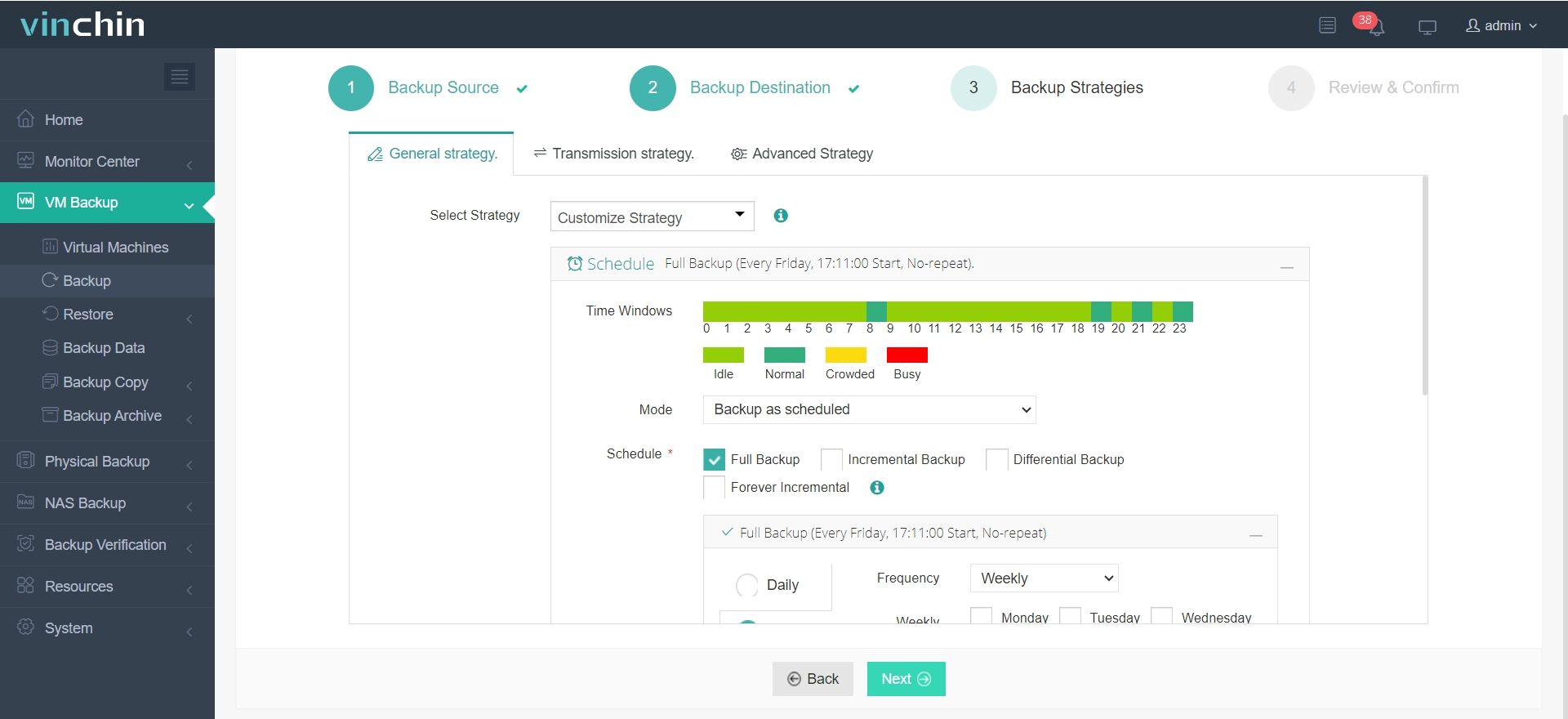
As a professional VM backup and disaster recovery solution, Vinchin Backup & Recovery will let you backup VM agentlessly. You can configure the backup jobs with many strategies like schedule, speed, data deduplication and compression, transfer mode, etc. You can use Instant Recovery to rescue a failed VM from its backup in 15 seconds, greatly reducing RTO and protecting business continuity. It also allows you perform full machine migration by restore VM backup on another platform.
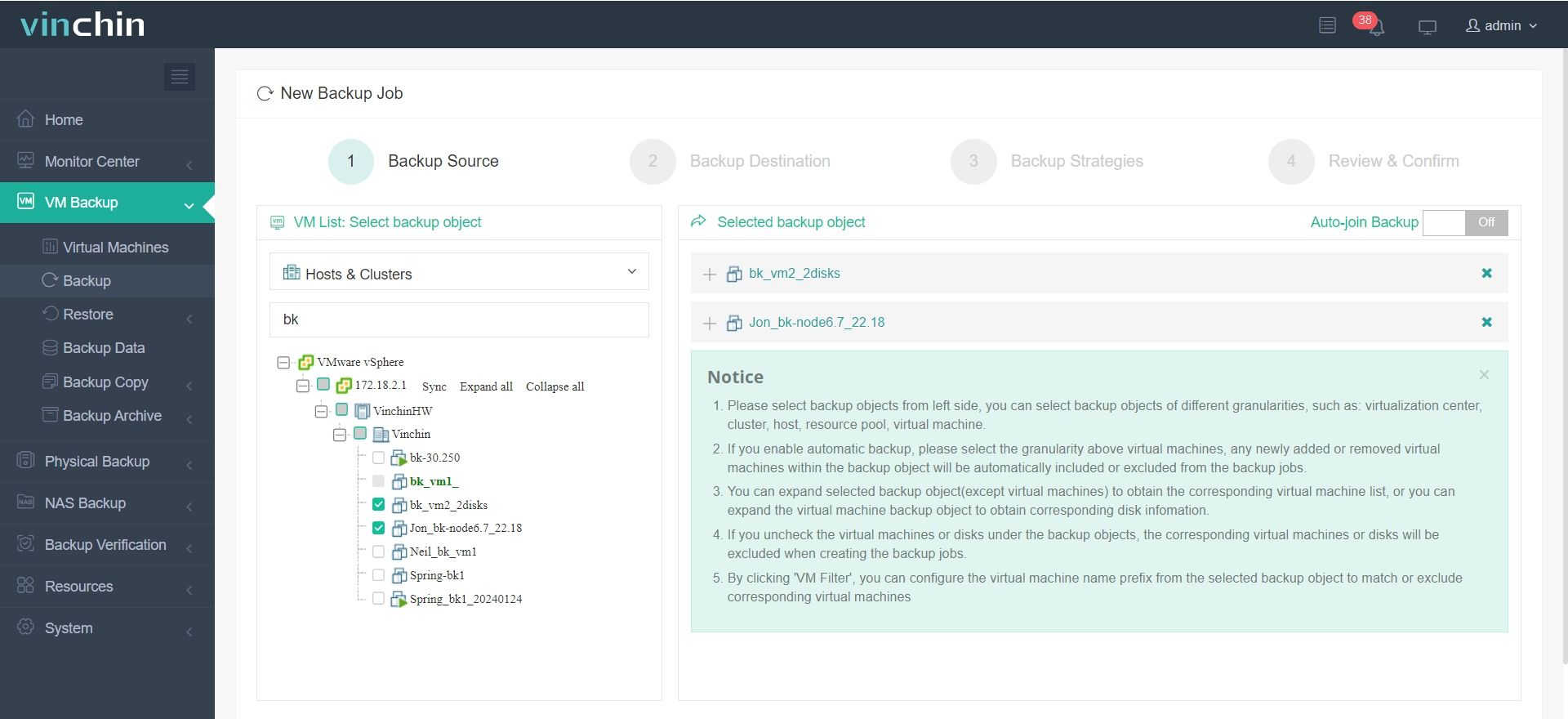
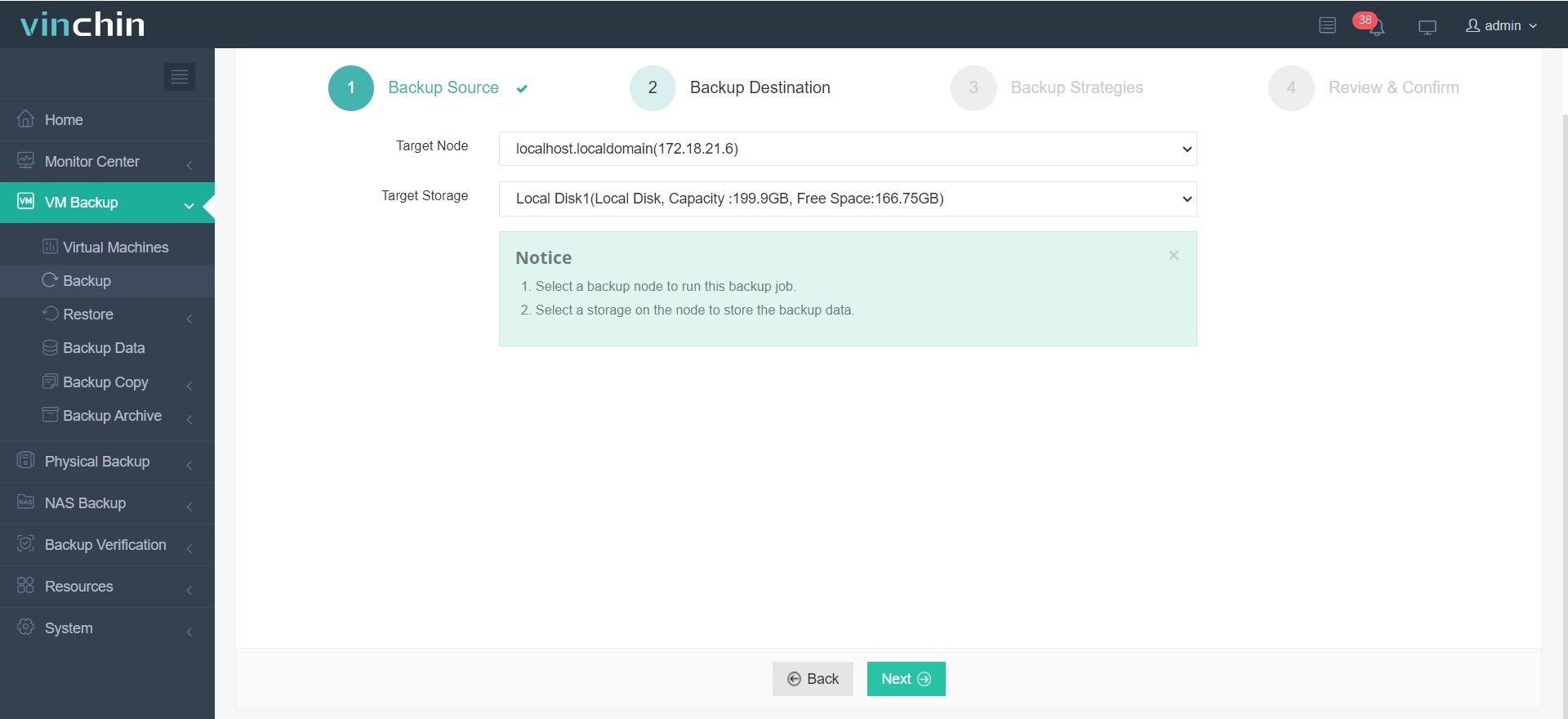
See how easy it is to backup VMware VM:
1. Select the VMware VMs
2. Select the backup storage
3. Select the backup strategies
4. Submit the job
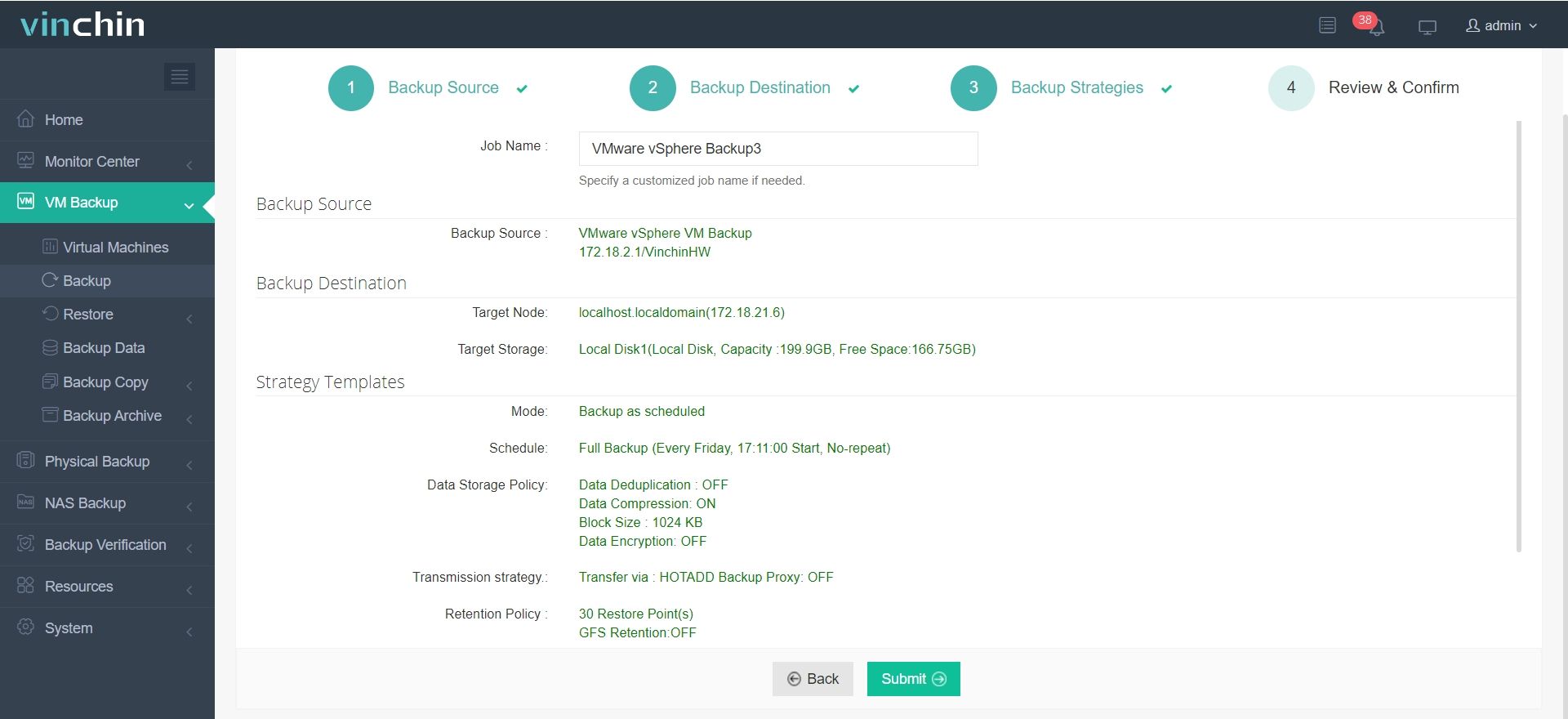
This brilliant software can be deployed in your virtual environment in just a few minutes. Start a 60-day full-featured free trial to experience easier virtual environment maintenance.
OVF Tool Export OVF/OVA FAQs
1. How to install OVF Tool?
You can download OVF Tool from Broadcom first. For Windows, just install the exe file; for Linux, use the provided .tar.gz package and extract it.
2. Can you export multiple VMs at once with OVF Tool?
Yes, but you need to write a scripts for that. If you want to backup multiple VMs at once, try Vinchin Backup & Recovery.
3. Are there any limitations of using OVF Tools?
OVF tool is not good at exporting large VMs so you might need to have multiple attempts and modify some parameters.
Conclusion
IT administrators often need to export and deploy VM via vCenter, but sometimes the job will fail if the VM is too large. To mitigate the situation, IT administrators can use OVF Tool to export and deploy large VM. The commands to use OVF Tool have been introduced in this post.
Vinchin Backup & Recovery can be your one-stop solution for VM exporting, importing, and converting. Don't miss the free trial.