Managing backups for many Oracle databases can get complicated fast. In large organizations, multiple teams or administrators often share responsibility for different databases. If you use Oracle RMAN with a central recovery catalog, this shared access can create operational risks. One mistake—like accidental deregistration or misconfigured permissions—could impact all registered databases. Overly broad access also raises compliance concerns. How do you let each administrator manage only their own databases without exposing everything? That’s where the Oracle RMAN Virtual Private Catalog (VPC) comes in. Let’s break down what it is, why you might need it, and how to set it up step by step.
What Is Oracle RMAN Virtual Private Catalog?
An Oracle RMAN Virtual Private Catalog is a security feature that lets you restrict access to backup metadata in a shared RMAN recovery catalog. By default, all users with access to the recovery catalog can see and manage metadata for every registered database. With a VPC, you can create separate catalog users—each limited to their assigned databases only. This approach keeps each administrator’s view focused while still offering centralized reporting and longer metadata retention.
Oracle introduced this feature in version 11g Enterprise Edition, and it remains available in later releases. The VPC acts as a logical layer over your base recovery catalog: each user sees only what they are allowed to manage.
Why Use a Virtual Private Catalog
Why bother with a VPC? In many organizations, different teams or administrators are responsible for different databases. If everyone shares the same recovery catalog without restrictions, one error—or even malicious intent—could affect backups across all environments. A VPC enforces separation of duties by limiting each user’s view strictly to their assigned databases.
This model improves security by reducing unnecessary privileges—a key compliance requirement under frameworks like GDPR or SOX. It also reduces clutter: administrators see only relevant backup jobs and reports instead of sifting through unrelated data from other teams’ systems. Centralized management remains possible but now operates within secure boundaries.
Prerequisites Before Setting Up an RMAN Virtual Private Catalog
Before starting configuration steps, make sure your environment meets these requirements:
The base recovery catalog database must be running on Oracle Enterprise Edition 11g or newer.
The base recovery catalog owner exists with RECOVERY_CATALOG_OWNER role granted.
Network connectivity (such as TNS/SQL*Net) is configured between your recovery catalog database and all target databases you plan to register.
You have administrative credentials for both the base owner account and any new VPC users you will create.
Testing changes first in a non-production environment is always recommended.
How to Set Up an RMAN Virtual Private Catalog?
Setting up an Oracle RMAN Virtual Private Catalog involves several steps: creating users, granting privileges, configuring catalogs, then registering target databases—all following best practices from Oracle documentation.
First ensure your base recovery catalog is created and upgraded to match your current database version; its owner should have RECOVERY_CATALOG_OWNER privileges.
Step 1: Create the Virtual Private Catalog User
Start by creating a new user in your recovery catalog database using SQL*Plus as DBA:
CREATE USER vpc_user IDENTIFIED BY strong_password
  DEFAULT TABLESPACE users
  TEMPORARY TABLESPACE temp
  QUOTA UNLIMITED ON users;
GRANT CREATE SESSION TO vpc_user;
Tip: Use secure password management tools rather than hardcoding passwords directly.
Step 2: Grant Recovery Catalog Privileges
Still connected as DBA or base owner:
GRANT RECOVERY_CATALOG_OWNER TO vpc_user;
Step 3: Grant Catalog Access for Specific Databases
Connect to RMAN as the base owner account:
rman CATALOG base_owner/password@catdb
Grant access using either database name or DBID (database unique identifier). Typically dbname1 refers to DB_UNIQUE_NAME, which you can find by running:
SELECT db_unique_name FROM v$database;
Then grant access:
RMAN> GRANT CATALOG FOR DATABASE dbname1 TO vpc_user;
RMAN> GRANT CATALOG FOR DATABASE dbname2 TO vpc_user;
If needed for onboarding new systems:
RMAN> GRANT REGISTER DATABASE TO vpc_user;
Step 4: Create the Virtual Private Catalog
Now connect as your new VPC user:
rman CATALOG vpc_user/password@catdb
RMAN> CREATE VIRTUAL CATALOG;
This command links your schema into the main recovery catalog structure while enforcing security policies behind-the-scenes.
Step 5: Register and Manage Databases
As that VPC user:
rman TARGET sys/password@targetdb CATALOG vpc_user/password@catdb
RMAN> REGISTER DATABASE;
From now on any backup metadata for these registered targets will be visible only to this specific VPC user—and always accessible by the main base owner account too.
Verifying and Testing Your VPC Setup
After configuration comes validation—a crucial step before handing off control or automating processes further.
Begin by connecting as your newly created VPC user via RMAN:
rman CATALOG vpc_user/password@catdb TARGET /
RMAN> REPORT SCHEMA;
You should see only those databases explicitly granted earlier; others remain hidden from view.
Next try accessing an unassigned database:
rman TARGET sys/password@otherdb CATALOG vpc_user/password@catdb
RMAN> REPORT SCHEMA;
This attempt should fail due to lack of privilege—confirming proper isolation between teams or roles.
Finally log back in as your original base owner account:
rman CATALOG base_owner/password@catdb TARGET /
RMAN> LIST INCARNATION OF DATABASE ALL;
Here you’ll see full visibility across every registered system regardless of individual grants—a good way to double-check overall integrity after changes.
Always test these scenarios before moving into production workflows!
How to Manage Security in Oracle RMAN VPC?
Once set up properly most day-to-day tasks involve adjusting privileges when responsibilities change among staff members or business units:
To revoke access from one specific database connect again as base owner via RMAN:
RMAN> REVOKE CATALOG FOR DATABASE dbname1 FROM vpc_user;
The affected user immediately loses visibility—but existing backup records persist safely inside main repository until deleted by authorized personnel later if needed elsewhere.
To revoke ability for registering additional targets:
RMAN> REVOKE REGISTER DATABASE FROM vpc_user;
If removing someone entirely—for example if they leave company—connect as that user then run:
RMAN> DROP CATALOG;
This deletes their logical schema linkages but leaves underlying data untouched inside core repository structure itself; nothing gets lost unless explicitly purged at higher level afterward!
Remember only main “base” account ever sees everything at once; regular audits help keep things tidy over time especially during periods of rapid growth or reorganization across IT departments.
Vinchin Backup & Recovery: Enterprise-Level Protection for Your Oracle Backups
For organizations seeking robust protection when backing up Oracle environments—including those managed through RMAN Virtual Private Catalogs—a specialized solution like Vinchin Backup & Recovery stands out among enterprise offerings. Vinchin Backup & Recovery supports today’s mainstream platforms such as Oracle, MySQL, SQL Server, MariaDB, PostgreSQL, PostgresPro, and TiDB; its comprehensive feature set ensures reliable data protection across diverse infrastructures while meeting strict compliance needs typical of large-scale deployments involving complex catalogs like those used with Oracle environments.
Key features include batch database backup operations, incremental backup support, advanced source-side compression, granular log/archived log backups at any point-in-time recovery granularity, storage protection against ransomware threats, WORM protection policies for immutable retention enforcement—and automated integrity checks plus verification via SQL script restores—all designed to maximize reliability while minimizing risk exposure throughout every stage of the backup lifecycle.
Using Vinchin Backup & Recovery’s intuitive web console makes safeguarding an Oracle instance straightforward:
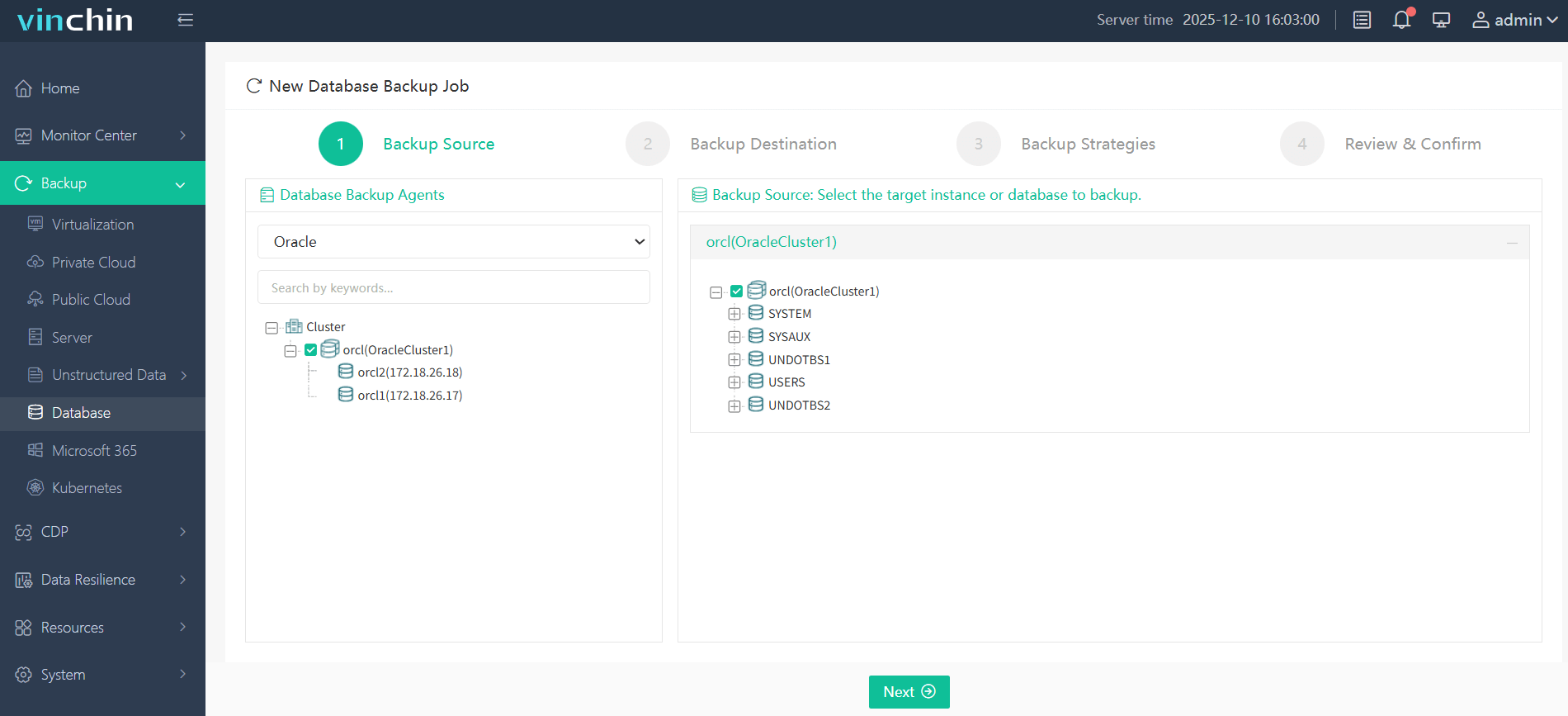
Step 1—Select the Oracle database to back up;
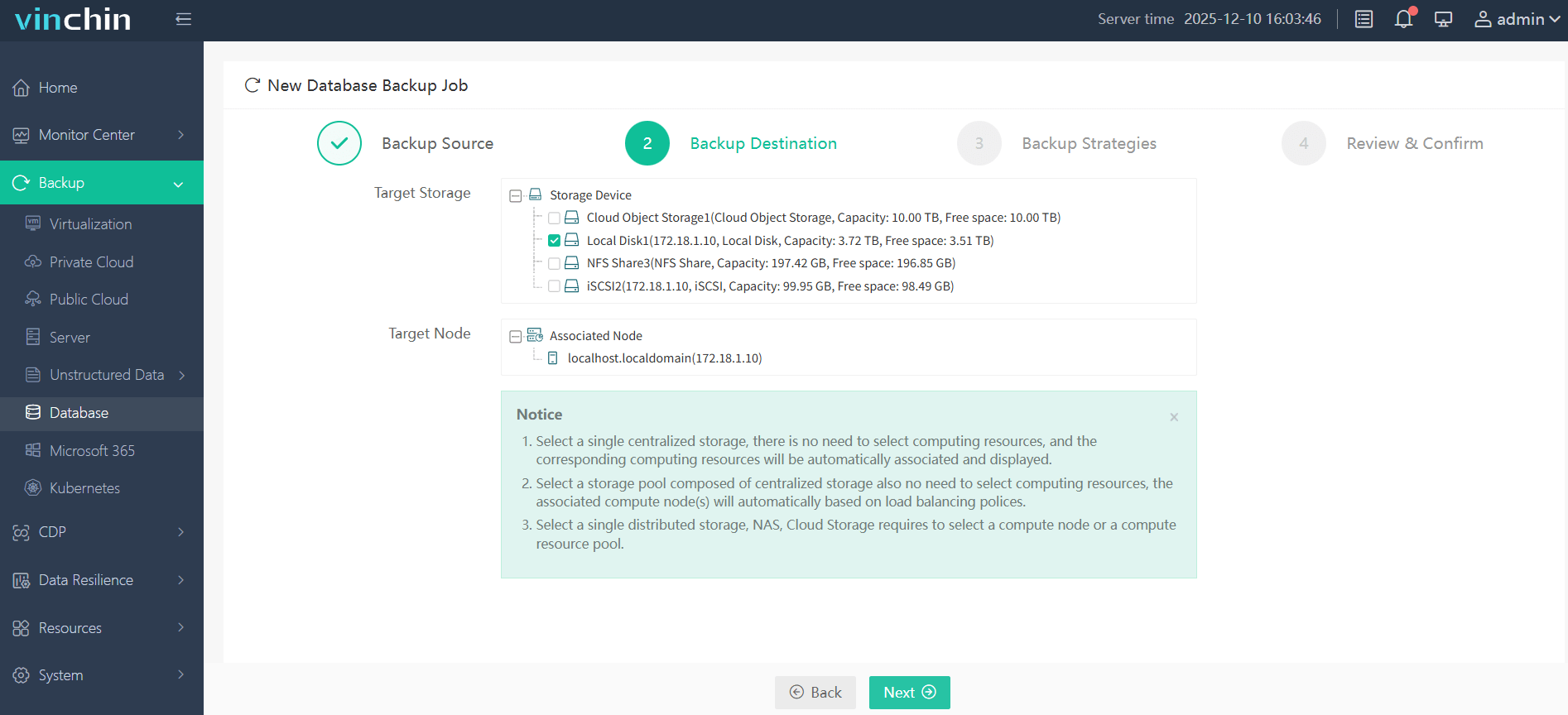
Step 2—Choose appropriate backup storage;
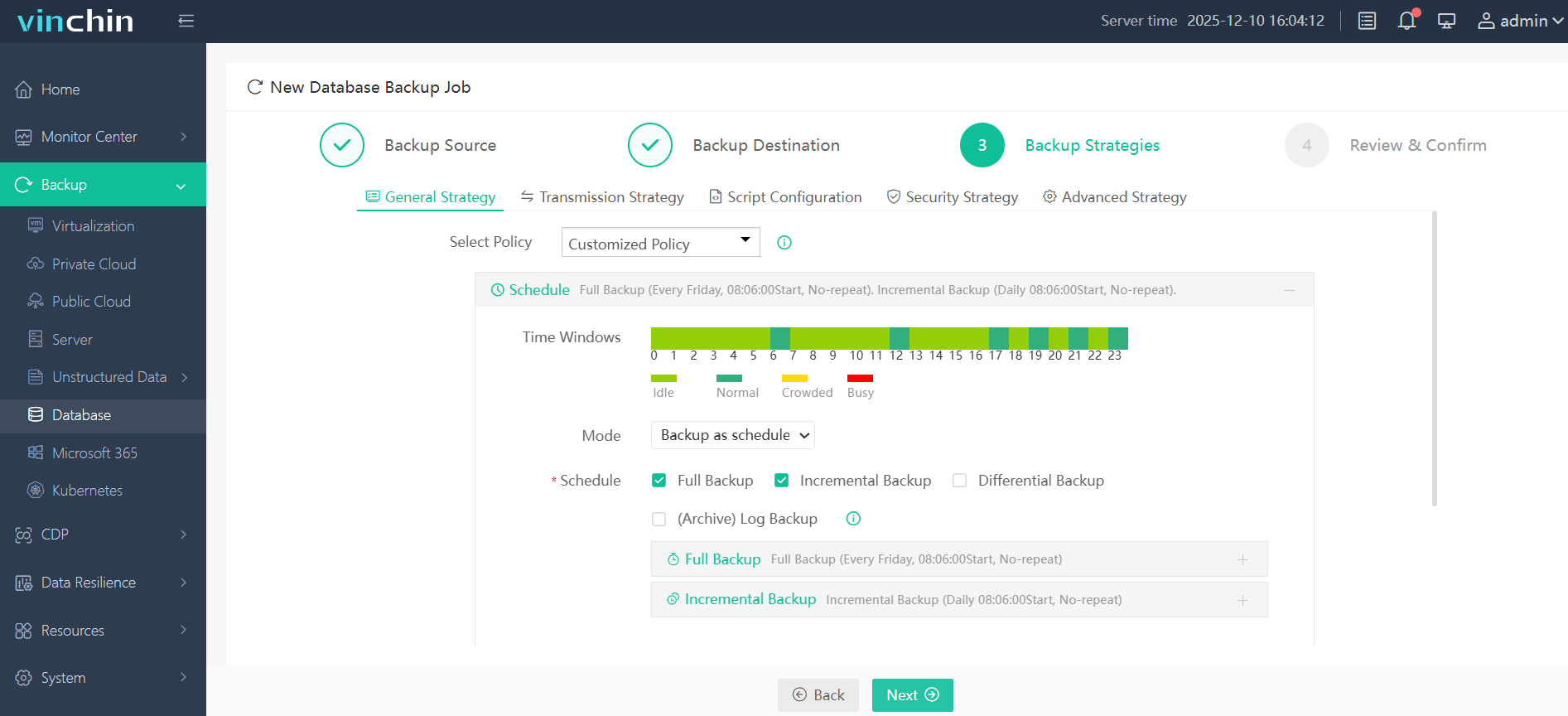
Step 3—Define strategy parameters including scheduling and retention rules;
Step 4—Submit the job with just a few clicks.
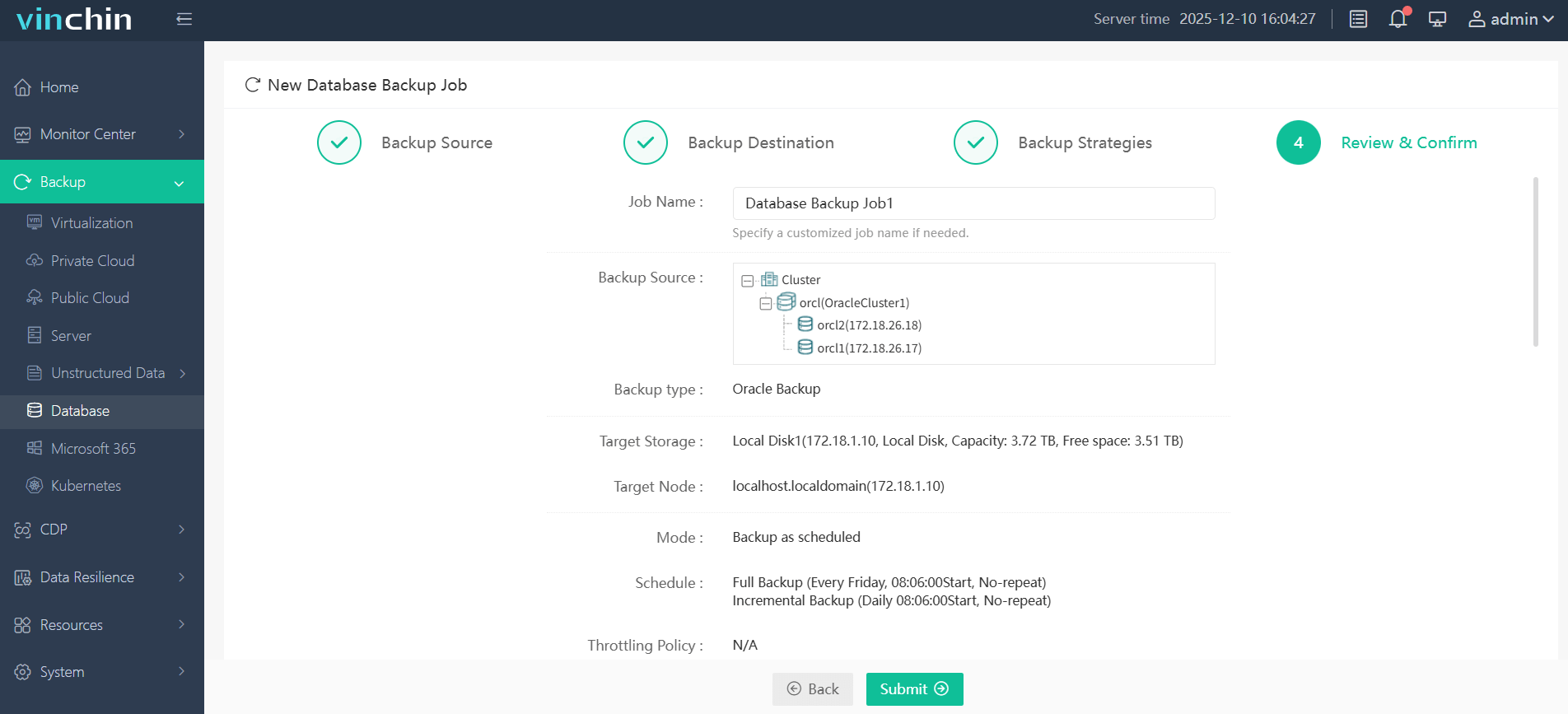
Vinchin Backup & Recovery enjoys global recognition among leading enterprises—with top ratings reflecting its proven reliability worldwide—and offers a free full-featured trial valid for 60 days so you can experience next-level data protection firsthand before making any commitment.
Oracle RMAN Virtual Private Catalog FAQs
Q1: Can I use a Virtual Private Catalog with Oracle Standard Edition?
No; this feature requires Enterprise Edition licensing only—not available under Standard Edition deployments.
Q2: How do I upgrade an existing VPC when moving between major versions?
Connect with admin rights (such as SYS), run required update scripts (dbmsrmansys.sql then dbmsrmanvpc.sql), finish upgrade using UPGRADE CATALOG command.
Q3: What happens if I drop just one individual VPC user?
Their direct access disappears instantly but historical metadata stays safe inside master repository until removed separately.
Q4: How do I give temporary cross-team access during vacations?
Base owner uses GRANT CATALOG FOR DATABASE...to assign extra rights briefly; revoke them right away once coverage ends.
Conclusion
Oracle RMAN Virtual Private Catalogs enable secure centralized management while ensuring strict separation between teams—a must-have for large-scale operations needing robust compliance controls. Vinchin makes protecting these environments even easier thanks totheir advanced featuresand intuitive interface. Try Vinchin today with a 60-day free trial for enterprise-grade Oracl data protection!