Protecting your Oracle database means more than just backing up data files. Archive logs are vital for point-in-time recovery and disaster recovery. If you’re an operations administrator, you know that missing even a single archive log can make a full restore impossible. So, how do you ensure your oracle rman backup archivelog process is reliable and complete? Let’s break it down together.
What Is Oracle RMAN Backup Archivelog?
Oracle RMAN (Recovery Manager) is the built-in tool for backing up and restoring Oracle databases. The archivelog backup refers to copying the archived redo log files generated by Oracle. These logs record every change made to the database over time. By backing up archive logs with RMAN, you can recover your database to any point in time—not just to the last full backup.
Archive logs are essential because they capture all transactions since your last backup operation. Without these logs, any changes made after your most recent datafile backup would be lost during recovery.
Why Back Up Archive Logs with RMAN?
Backing up archive logs is essential for several reasons beyond basic data protection. Archive logs capture all database changes between backups—every insert, update, or delete operation gets recorded here.
If you lose data or need to roll back to a specific moment due to corruption or user error, you’ll need these logs for a successful restore process. Without them, you can only restore to the last backup point—losing all changes since then.
RMAN automates both the backup and management of these critical files, reducing manual errors and ensuring that nothing slips through unnoticed during routine maintenance tasks.
Method 1. Using RMAN Commands for Archivelog Backup
Using native RMAN commands gives you direct control over archive log backups in Oracle environments.
First, connect as target using RMAN:
rman target /
To back up all available archive logs at once:
BACKUP ARCHIVELOG ALL;
This command ensures every archived redo log currently on disk is included in your oracle rman backup archivelog set.
If you want only those not previously backed up (to avoid redundancy), use:
BACKUP ARCHIVELOG ALL NOT BACKED UP 1 TIMES;
To save disk space after confirming successful backups, add DELETE INPUT:
BACKUP ARCHIVELOG ALL DELETE INPUT;
This removes each archived redo log from disk only after it has been safely copied into your backup set—a key safeguard against accidental loss but one that requires confidence in your storage reliability.
You may also specify custom locations using FORMAT:
BACKUP ARCHIVELOG ALL FORMAT '/u01/app/oracle/backups/arc_%U.bak';
For targeted backups within a certain sequence range (for example during high-activity periods):
BACKUP ARCHIVELOG FROM SEQUENCE 355 UNTIL SEQUENCE 479 DELETE INPUT;
This approach allows precise control over which archive logs are included—useful when managing large volumes of transactional activity or troubleshooting specific incidents.
Always check that your destination has enough free space before running commands with DELETE INPUT. If storage fails mid-backup, deleted input could mean permanent data loss!
Method 2. Automating Oracle RMAN Backup Archivelog Tasks
Manual backups work but can be risky if forgotten or delayed—automation brings consistency and peace of mind.
A typical shell script might look like this:
#!/bin/sh
export ORACLE_SID=yourdb
rman target / <<EOF
BACKUP ARCHIVELOG ALL NOT BACKED UP 1 TIMES DELETE INPUT;
EXIT
EOF
Save this file (for example as /home/oracle/backup_arch.sh), make it executable (chmod +x /home/oracle/backup_arch.sh), then schedule it using cron so it runs regularly—perhaps every hour depending on transaction volume:
0 * * * * /home/oracle/backup_arch.sh > /home/oracle/rman_backup.log 2>&1
Adding output redirection captures both standard output and errors into a log file for later review—a best practice for production systems!
Want more control? To back up only recent activity (say from the past two hours):
BACKUP ARCHIVELOG FROM TIME 'SYSDATE-1/12';
But beware: if jobs overlap or fail unexpectedly some logs may get missed! Always include NOT BACKED UP 1 TIMES where possible—it ensures any unprotected archives are picked up next run regardless of timing hiccups.
For advanced automation needs such as validation before deletion or integrating with monitoring tools—you can query internal views like V$BACKUP_ARCHIVELOG_SUMMARY. Here’s how you might validate ranges programmatically:
min_scn=$(sqlplus -S "/ as sysdba" <<EOF | awk '{print $1}'
set heading off feedback off verify off echo off
select min(first_change#) from v\$archived_log where backed_up = 'NO';
exit
EOF
)
max_scn=$(sqlplus -S "/ as sysdba" <<EOF | awk '{print $1}'
set heading off feedback off verify off echo off
select max(next_change#) from v\$archived_log where backed_up = 'NO';
exit
EOF
)
rman target / <<EOF > /home/oracle/rman_validate.log 2>&1
restore validate archivelog from scn $min_scn until scn $max_scn;
exit
EOF
if [ $? -ne 0 ]; then echo "Validation failed!" | mail -s "RMAN Validation Alert" dba@example.com; fi
This script checks which SCNs still need attention then validates their presence in existing backups—alerting operators if something goes wrong so issues don’t go unnoticed until disaster strikes!
Automated scripts should always include logging steps (> logfile) plus exit code checks (if [ $? -ne 0 ] ...) so failures trigger alerts rather than silent errors piling up behind the scenes.
How to Monitor and Verify Archive Log Backups?
Backing up is only half of good operations—the other half is making sure those backups actually work when needed!
After running an oracle rman backup archivelog job (manual or automated), always confirm what was protected using built-in reporting features:
LIST BACKUP OF ARCHIVELOG ALL;
This displays details about each archived redo log copy stored in current backup sets—including sequence numbers and timestamps—for easy cross-checking against expected results.
RESTORE ARCHIVELOG ALL VALIDATE;
This tells RMAN to scan available media/catalogs ensuring required archives exist—but doesn’t overwrite anything on disk.
SELECT RECID, STAMP, NAME FROM V$BACKUP_ARCHIVELOG_DETAILS WHERE STATUS='A';
Regularly reviewing these reports helps catch gaps early—before they become show-stoppers during urgent restores!
Integrate these checks into daily routines alongside alerting scripts so problems surface quickly rather than lurking undetected until recovery day arrives.
How to Back Up Oracle Database Archive Logs with Vinchin?
For organizations seeking streamlined protection beyond native scripting alone, enterprise solutions offer comprehensive coverage. Vinchin Backup & Recovery stands out as a professional-grade platform supporting today’s leading databases—including Oracle first and foremost—as well as MySQL, SQL Server, MariaDB, PostgreSQL, PostgresPro, and TiDB. With robust features such as advanced source-side compression for efficient storage usage; incremental backup capabilities; batch database processing; flexible retention policies including GFS; plus integrity check mechanisms—all tailored for demanding environments—it delivers reliability at scale while simplifying compliance requirements overall.
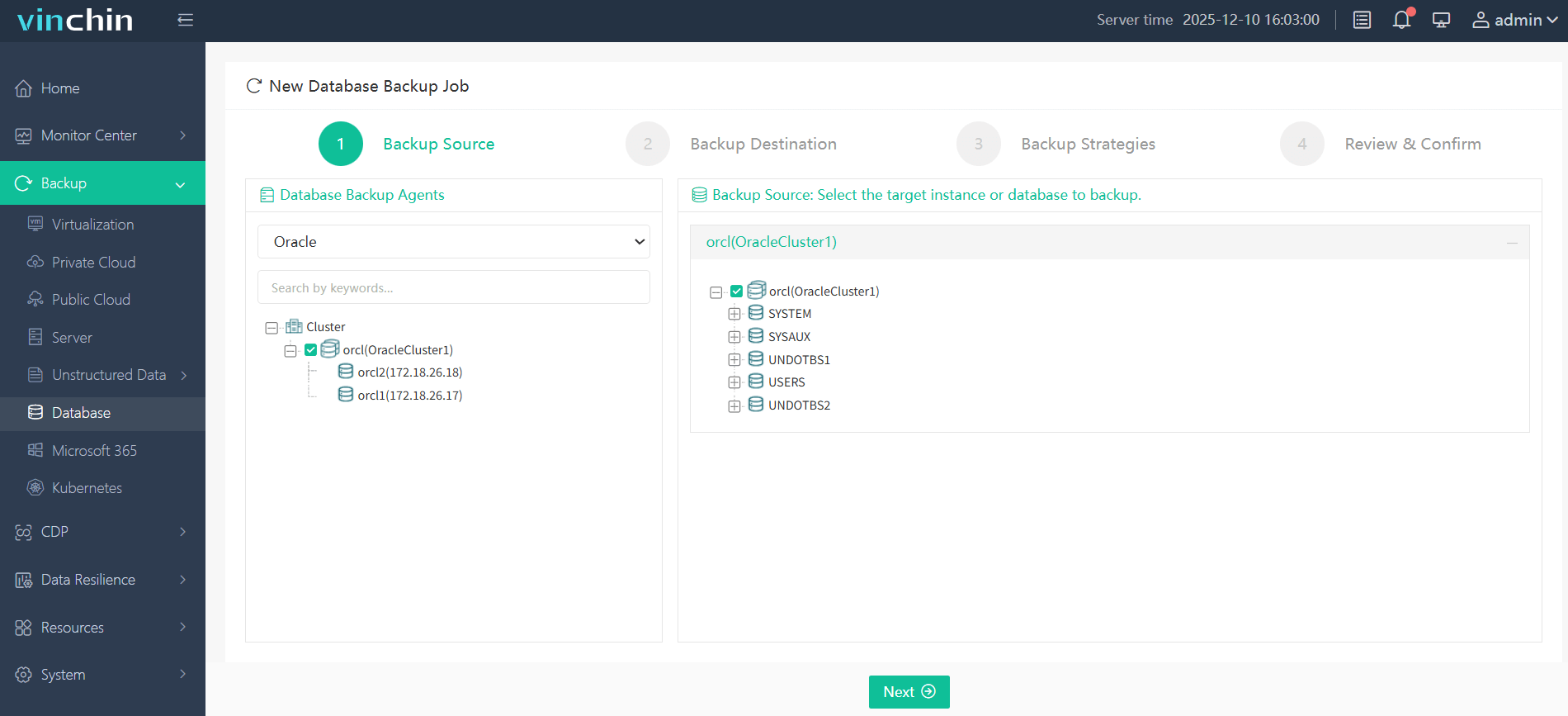
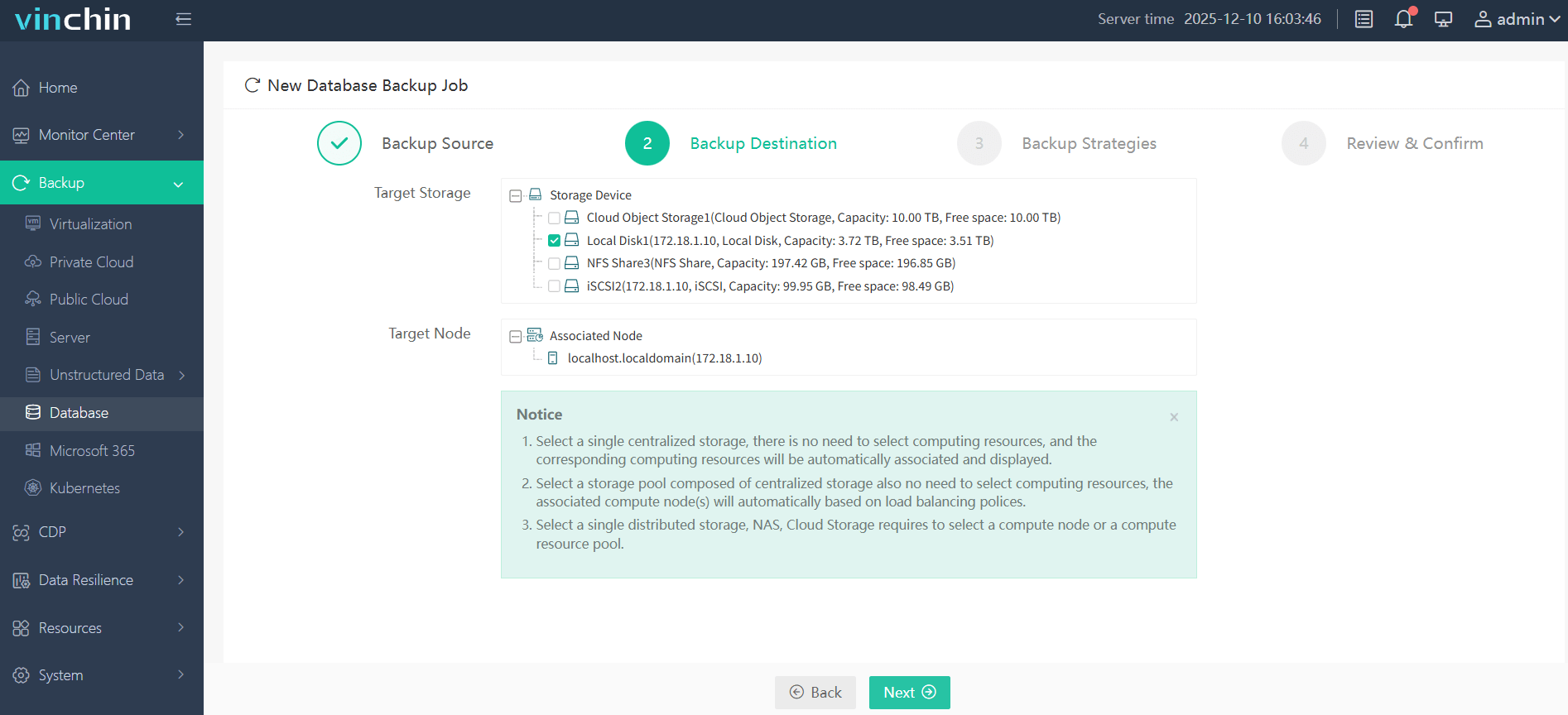
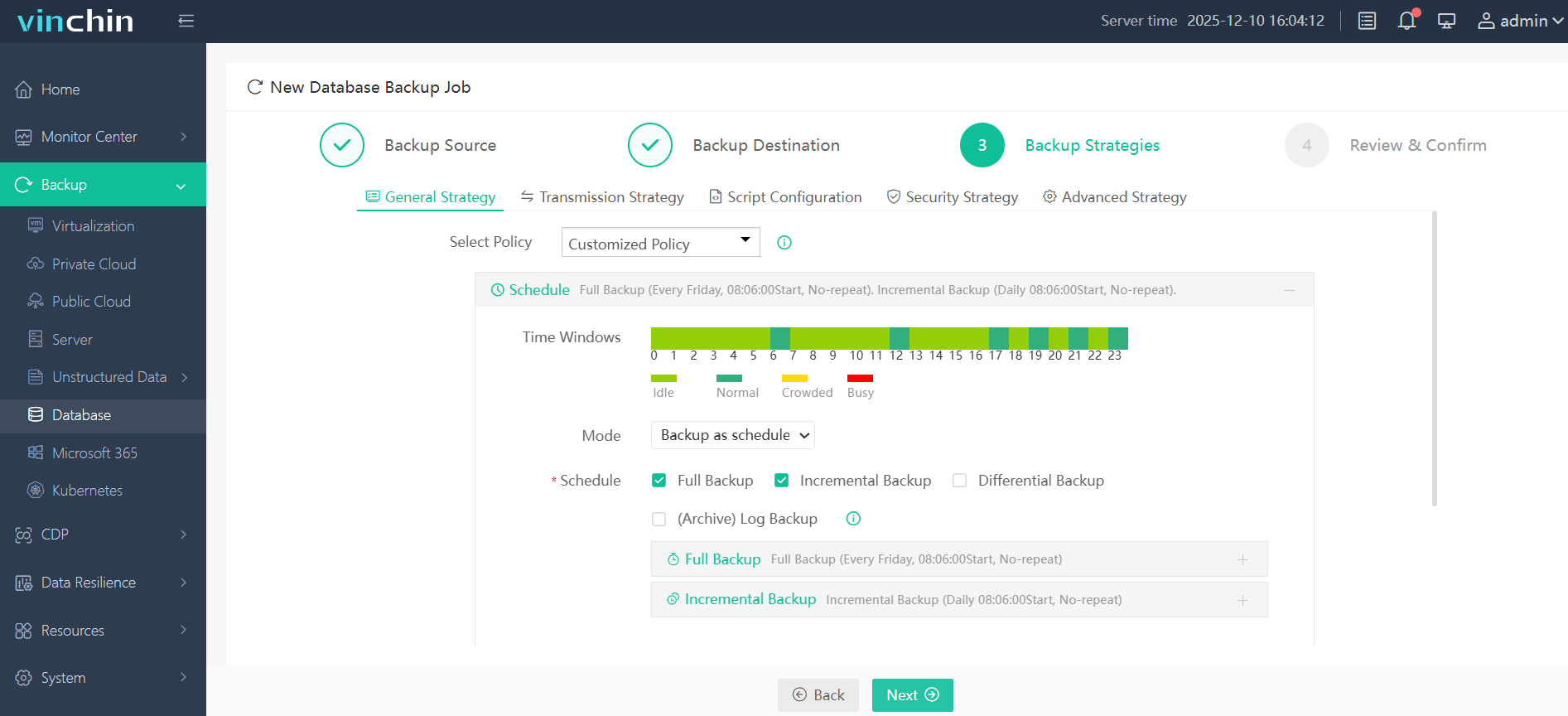
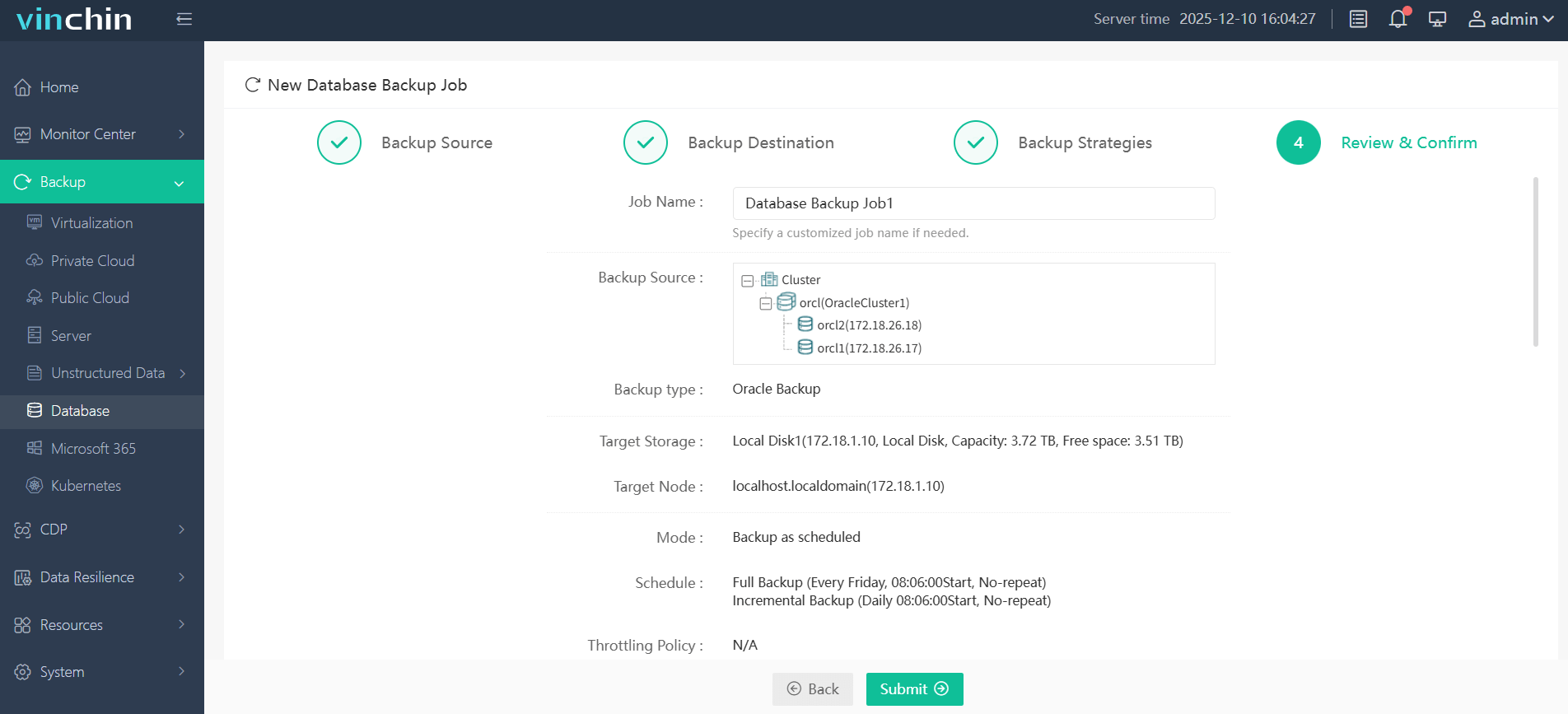
The intuitive web console makes safeguarding Oracle databases straightforward:
Step 1. Select the Oracle database to back up;
Step 2. Choose the desired backup storage location;
Step 3. Define strategy parameters such as scheduling frequency and retention rules;
Step 4. Submit the job for automated execution—all within minutes even for complex setups.
Recognized globally by thousands of enterprises for its security focus and ease-of-use interface—with top industry ratings—Vinchin Backup & Recovery offers a fully functional free trial lasting 60 days so you can evaluate its benefits firsthand before committing further.
Oracle RMAN Backup Archivelog FAQs
Q1: How do I see which archive logs have not yet been backed up?
A1: Run LIST ARCHIVELOG ALL NOT BACKED UP 1 TIMES; in RMAN to display unprotected archive logs on disk.
Q2: What should I do if my server runs low on space due to many archive logs?
A2: Increase frequency of archive log backups with DELETE INPUT, monitor usage closely with OS tools like df or du commands between cycles.
Q3: How do I set retention policies so old archive log backups get removed automatically?
A3: Use CONFIGURE RETENTION POLICY TO REDUNDANCY n; then run DELETE OBSOLETE; regularly within RMAN prompt.
Conclusion
Backing up Oracle archive logs with RMAN protects against data loss at every level—from daily mishaps to major disasters—and keeps compliance teams happy too! With careful scripting plus regular monitoring/troubleshooting routines gaps disappear fast; Vinchin makes everything easier through automation under one friendly dashboard interface—all risk reduced at once!