Backing up your Oracle database is not just about saving datafiles—it’s about ensuring you can recover from any disaster or mistake at any point in time. This is where archivelogs come into play. When your Oracle database runs in ARCHIVELOG mode, every change made to your data gets recorded in archived redo log files—archivelogs—which are essential for point-in-time recovery.
Losing archivelogs means losing the ability to restore your database to a specific moment before an incident occurred. So how do you make sure these critical files are always protected? In this guide, we’ll walk through both manual and automated methods using Oracle RMAN (Recovery Manager) to back up archivelogs safely and reliably.
What Is Oracle RMAN Archivelog Backup?
Oracle RMAN is the built-in tool designed specifically for backing up and restoring Oracle databases efficiently. An "archivelog backup" refers to copying archived redo log files—these logs capture every transaction that occurs within your database—to secure storage locations.
Why does this matter? If you ever need to perform a point-in-time recovery after accidental data loss or corruption, having both recent datafile backups and complete sets of archivelogs lets you roll forward your database right up until just before trouble struck. Without these logs, recovery options become severely limited.
Why Back Up Archivelogs with RMAN?
Backing up archivelogs isn’t just recommended—it’s required if you want full recoverability beyond your last full backup. When running in ARCHIVELOG mode:
Every committed change gets written first to online redo logs
Once those logs fill up or switch out, they’re archived as archivelogs
These archived logs form an unbroken chain of changes since your last backup
If disaster strikes—a hardware failure, user error like dropping a table by mistake, or even logical corruption—you need all relevant archivelogs plus recent datafile backups to restore everything accurately.
RMAN streamlines this process by automating which logs get backed up when; it also manages retention policies so old logs don’t clog disk space unnecessarily. By using RMAN instead of manual file copies or ad-hoc scripts, you reduce risk while gaining flexibility over what gets backed up—and when.
Method 1. Manual Oracle RMAN Backup Archivelog
Manual backups give you direct control over what happens—and when—but require careful attention to detail.
First things first: connect as a privileged user (usually SYSDBA). Open a terminal session on your server and start RMAN:
rman target /
To see which archivelogs exist according to the control file:
RMAN> list archivelog all;
This lists every known archived redo log file tracked by Oracle’s internal catalog.
To back up all available archivelogs:
RMAN> backup archivelog all;
If you only want new logs that haven’t been backed up yet:
RMAN> backup archivelog all not backed up 1 times;
Important Safety Note:
Using delete input tells RMAN to remove original archive log files from disk after confirming they’ve been successfully backed up:
RMAN> backup archivelog all delete input;
Be cautious! If something goes wrong during backup—or if you haven’t verified previous backups—using delete input could mean permanent loss of recovery options. Always check that backups completed successfully before deleting source files.
For more targeted operations:
RMAN> backup archivelog from sequence 100 until sequence 120 delete input;
Or based on time range:
RMAN> backup archivelog from time 'SYSDATE-1' until time 'SYSDATE' delete input;
After running backups, verify what has been saved:
RMAN> list backup of archivelog all;
Or see which have been backed up at least once:
RMAN> list archivelog all backed up 1 times to disk;
Here “to disk” specifies querying disk-based backups; use “to device type sbt” if working with tape libraries instead.
When cleaning out old logs no longer needed (for example after multiple successful backups):
RMAN> delete archivelog all backed up 1 times to disk;
This removes both physical files (if present) and their entries from the repository—unlike delete expired, which only cleans catalog records for missing/moved files:
RMAN> crosscheck archivelog all;
RMAN> delete expired archivelog all;
Method 2. Automated Oracle RMAN Backup Archivelog
For most production environments—and busy administrators—automation is key. Automating regular backups ensures consistency while reducing human error risk dramatically.
Setting Up Automated Backups
Start by creating an RMAN script file such as backup_archivelog.rman. Here’s an example script suitable for scheduled execution:
run {
    allocate channel c1 device type disk format '/backup/%U';
    sql 'alter system archive log current';
    crosscheck archivelog all;
    backup archivelog all delete input;
    delete noprompt expired archivelog all;
}
This script does several things:
Allocates a dedicated channel for writing backups
Forces current redo log switch so nothing remains unarchived
Cross-checks catalog vs actual files
Backs everything up then deletes originals only after success
Cleans out expired catalog entries
Next: schedule this script using OS-level tools like cron (Linux/Unix) or Task Scheduler (Windows). For instance—to run hourly via cron:
Edit crontab (crontab -e) and add:
0 * * * * /u01/app/oracle/scripts/run_rman_archlog_backup.sh
Where /u01/app/oracle/scripts/run_rman_archlog_backup.sh might contain:
#!/bin/bash
export ORACLE_SID=yourdb
export ORACLE_HOME=/u01/app/oracle/product/19.0.0/dbhome_1
$ORACLE_HOME/bin/rman target / cmdfile=/u01/app/oracle/scripts/backup_archlog.rman log=/u01/app/oracle/scripts/backup_archlog.log
grep -E "ORA-|RMAN-" /u01/app/oracle/scripts/backup_archlog.log && echo "Backup issues detected!" | mail -s "Archlog Backup Alert" admin@example.com
exit $?
This approach ensures regular protection without relying on memory—or luck!
How to Back Up Oracle Databases with Vinchin Backup & Recovery?
Beyond traditional methods, organizations seeking streamlined enterprise-grade protection for their Oracle environments often turn to specialized solutions. Vinchin Backup & Recovery stands out as a professional platform supporting today’s mainstream databases—including Oracle, MySQL, SQL Server, MariaDB, PostgreSQL, PostgresPro, and TiDB—making it ideal for diverse IT infrastructures where comprehensive coverage is crucial.
Key features such as batch database backup, incremental backup, cloud backup and tape archiving, integrity check, and WORM protection help automate processes while maximizing security and reliability across large-scale deployments. Together these capabilities ensure efficient storage management, rapid disaster recovery readiness, regulatory compliance support, and peace of mind against ransomware threats—all managed through one unified solution.
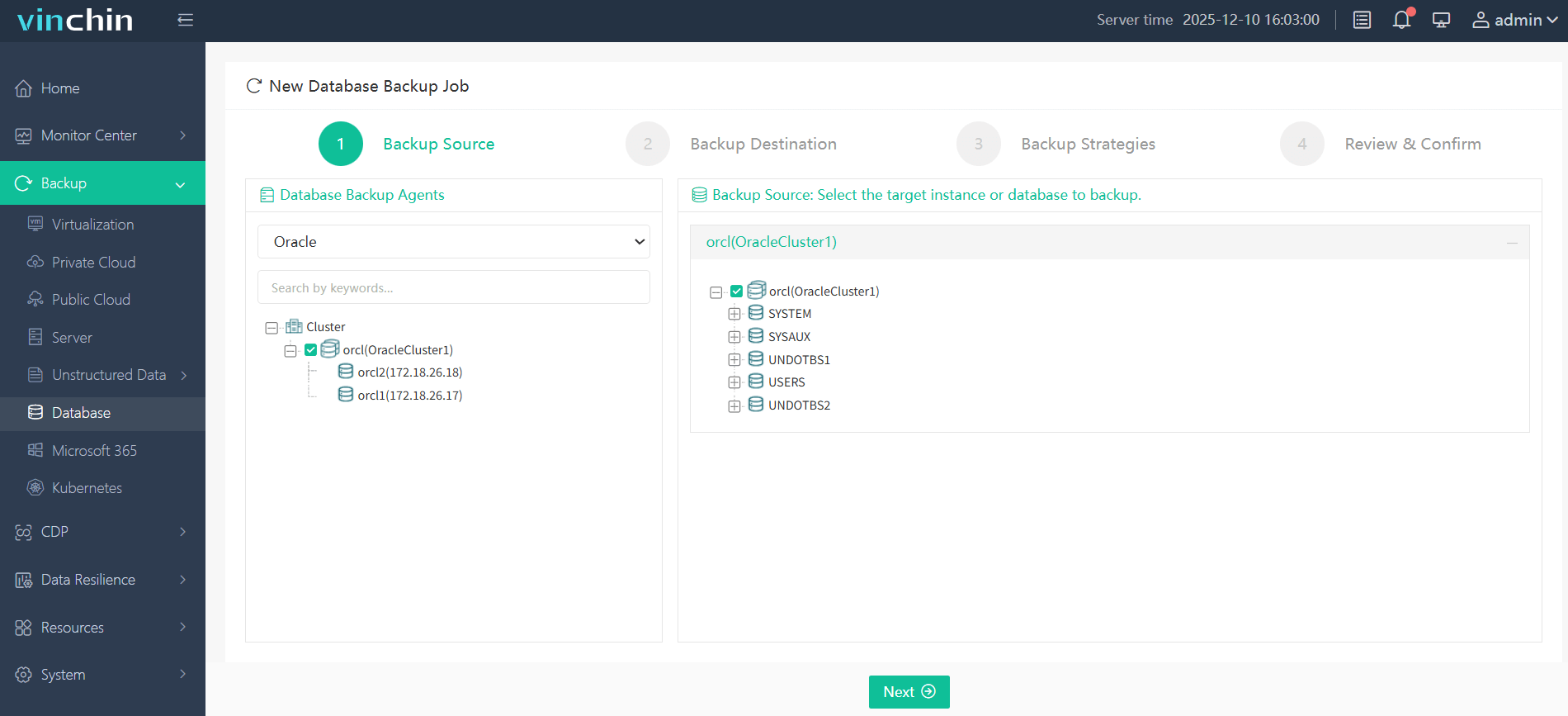
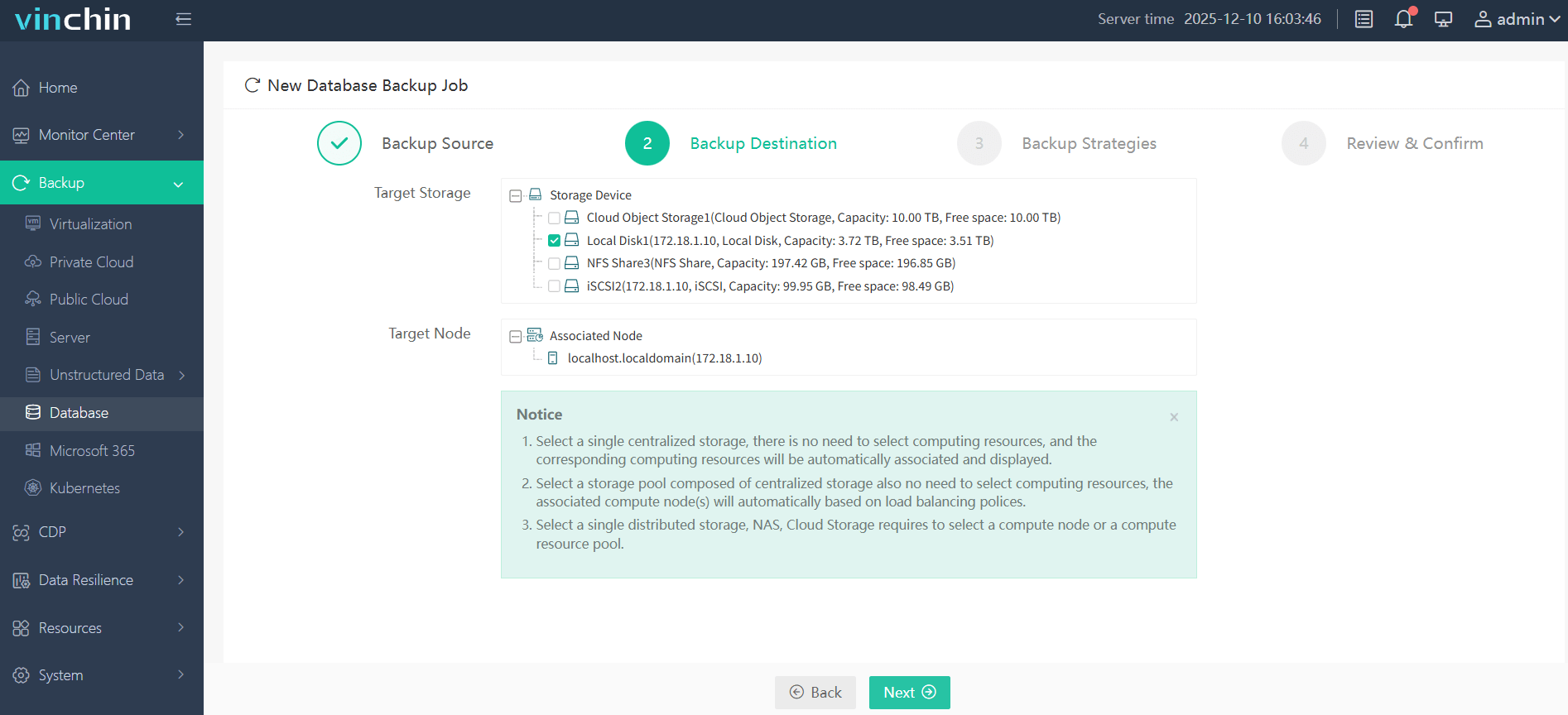
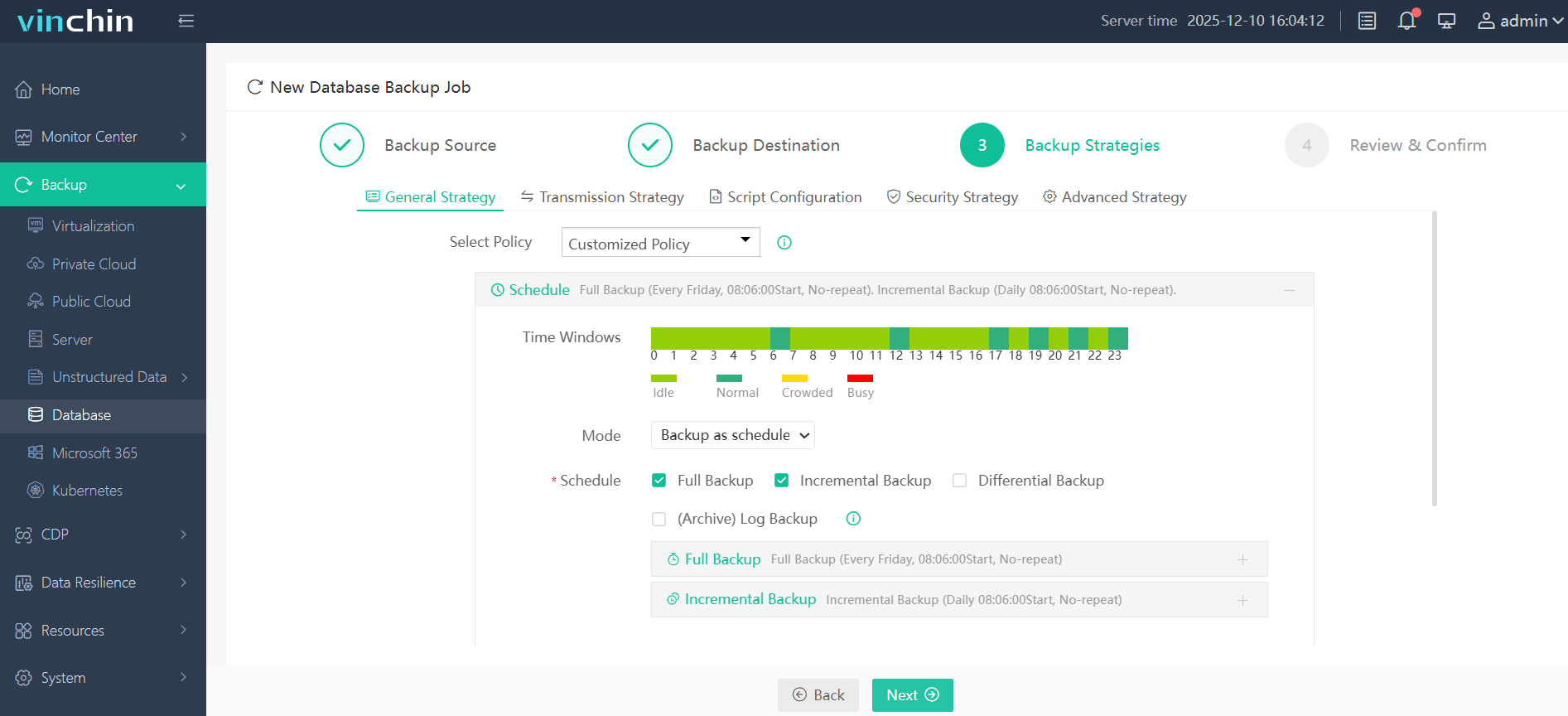
The intuitive web console makes protecting your Oracle environment straightforward:
Step 1. Select the Oracle database to back up
Step 2. Choose the backup storage
Step 3. Define the backup strategy
Step 4. Submit the job
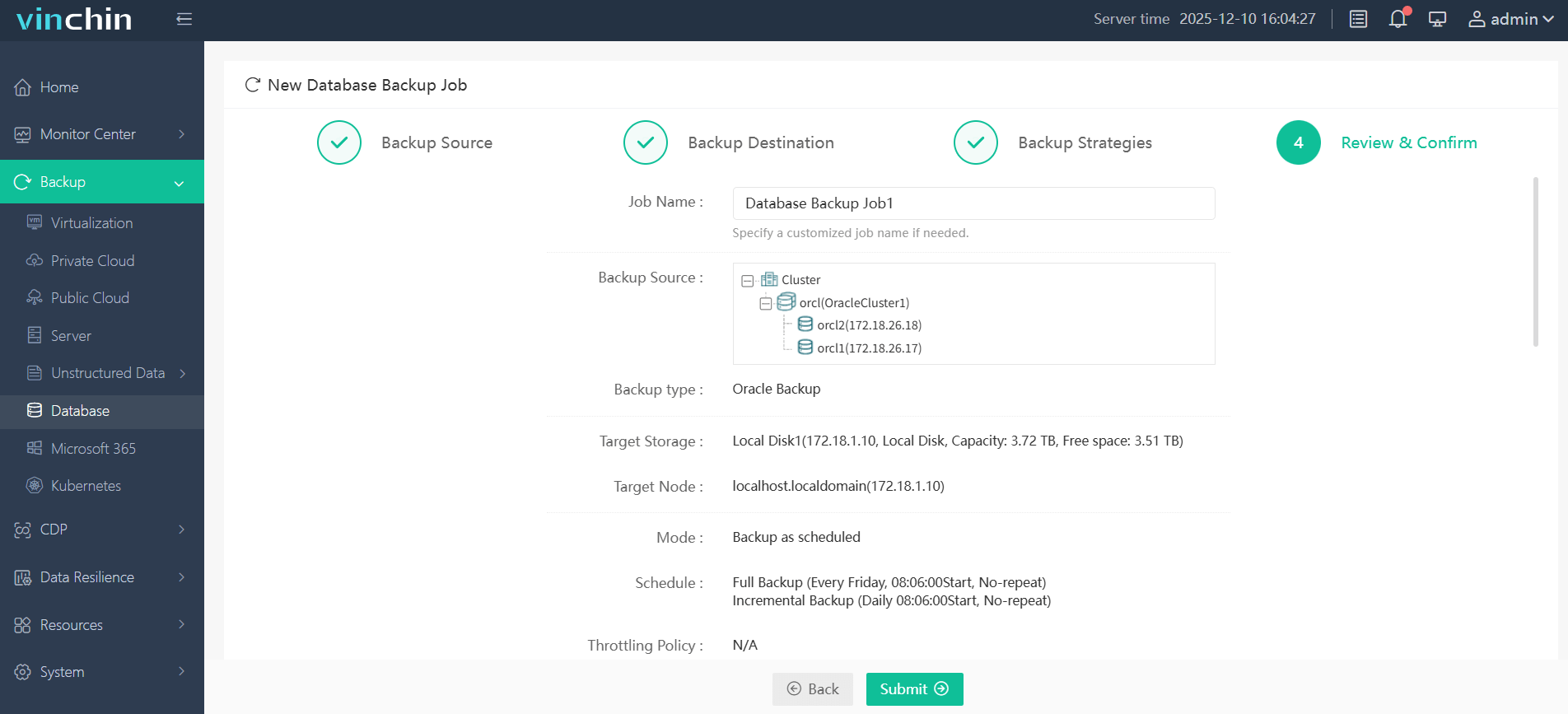
Recognized globally among enterprises for its reliability and top customer satisfaction ratings, Vinchin Backup & Recovery offers a fully featured free trial for sixty days—click Download now and experience leading-edge enterprise data protection firsthand.
Oracle RMAN Backup Archivelog FAQs
Q1: How do I quickly find which specific archive logs still need backing up?
A1: Run LIST ARCHIVELOG ALL BACKED UP 0 TIMES TO DISK in RMAN; this shows unprotected logs immediately needing attention.
Q2: What should I do if my archive destination fills close to capacity?
A2: Monitor usage regularly using SELECT * FROM V$RECOVERY_AREA_USAGE;, set alerts near limits—and schedule frequent automated deletions post-backup completion.
Q3: Will running frequent archive log backups slow down my production system?
A3: Minimal impact occurs since sequential reads dominate; however avoid overlapping heavy workloads by scheduling during off-hours or targeting separate storage devices.
Conclusion
Protecting your Oracle environment means never overlooking reliable oracle rman backup of every vital archived redo log file—not just main datafiles themselves! Whether handled manually or through robust automation plus vigilant monitoring routines described above—you safeguard business continuity against unexpected events large or small.
Vinchin makes comprehensive enterprise-grade protection easy—with advanced features accessible through one intuitive console interface.