Backing up your Oracle Database Express Edition (XE) is critical for data safety and business continuity. Whether you run a small application or support a larger environment, losing data can be costly and disruptive. Oracle XE comes with Recovery Manager (RMAN), a built-in tool designed to make backup and recovery reliable and straightforward.
This guide explains what RMAN is, why it matters for Oracle XE users, and how to perform both manual and automated oracle xe rman backup procedures step by step. You’ll also learn how to validate your backups, restore from them if disaster strikes, troubleshoot common issues, and see how Vinchin can simplify your workflow even further.
What Is RMAN in Oracle XE?
RMAN stands for Recovery Manager—a utility provided by Oracle to manage database backup and recovery tasks efficiently. In all supported versions of Oracle XE—including 10g, 11g, 18c, and 21c—RMAN is integrated into the installation.
With RMAN in Oracle XE, you can back up essential components like datafiles, control files, server parameter files (SPFILE), and archived redo logs if enabled. You interact with RMAN using command-line tools or scripts available through your operating system’s menus.
RMAN supports full database backups as well as incremental ones that only capture changes since the last backup. It also enables point-in-time recovery so you can restore your database to a specific moment if needed—an essential feature when facing accidental deletions or corruption.
Why Use RMAN for Backup?
Choosing RMAN as your primary oracle xe rman backup method offers several advantages over manual file copying:
Consistency: Unlike basic file copies that risk capturing partial transactions or inconsistent states, RMAN ensures all data remains consistent—even during online backups if ARCHIVELOG mode is active.
Efficiency: Backups run while the database stays online (with ARCHIVELOG mode), minimizing downtime.
Automation: Built-in scripts allow easy scheduling of regular backups using system tools like Task Scheduler or cron jobs.
Retention Management: Old backups are automatically deleted based on retention policies set within scripts.
Recovery Simplicity: Restoring from an RMAN backup involves fewer steps than piecing together individual files manually.
For operations administrators who value reliability and peace of mind during disaster recovery scenarios—or just want less hassle day-to-day—using RMAN is a smart investment.
How to Perform a Manual RMAN Backup in Oracle XE?
Manual oracle xe rman backup procedures are simple thanks to preconfigured scripts included with most installations of Oracle XE.
First things first—ensure you have proper permissions:
Menu locations may vary slightly depending on your installed version of Oracle XE; adjust paths accordingly if needed:
1. On Windows:
Click Start, go to Programs or All Programs, open Oracle Database Express Edition, then select Backup Database.
2. On Linux with Gnome:
3. On Linux with KDE:
A console window opens showing script progress messages as it runs an internal batch file (BACKUP.BAT on Windows; backup.sh on Linux). If your database operates in ARCHIVELOG mode—which must be enabled by a DBA beforehand—the script performs an online backup without shutting down services.
If running in NOARCHIVELOG mode (the default after installation), expect these steps:
The script prompts you before shutting down the database engine
Enter y at confirmation
The script backs up all necessary files
Once complete, it restarts services automatically
After completion:
Review log output for errors
On Linux: $HOME/oxe_backup_current.log
On Windows: C:\ORACLEXE\APP\ORACLE\PRODUCT\10.X.X\SERVER\DATABASE\OXE_BACKUP_CURRENT.LOG (replace 10.X.X with your installed version)
Check these logs carefully—not just for success messages but also any warnings (ORA- codes) that might signal incomplete coverage or permission issues.
This process creates a full oracle xe rman backup including all files required for later restoration—datafiles plus configuration metadata such as control files.
How to Schedule Automated RMAN Backups in Oracle XE?
Automating regular oracle xe rman backup jobs means you never forget this vital task—even during busy periods or staff turnover events.
Oracle XE provides ready-made scripts suitable for automation via standard OS schedulers:
On Windows systems:
Locate C:\oraclexe\app\oracle\product\<version>\server\BIN\BACKUP.BAT
Replace <version> with your actual install directory name (10.x.x, 11.x.x, etc.)
On Linux systems:
To schedule daily execution:
1. For Windows Task Scheduler:
Open Task Scheduler from Control Panel
Choose “Create Basic Task”
Set trigger time (for example every night at 2 AM)
Browse to select BACKUP.BAT
Assign task ownership to an account within ORA_DBA group—not just any user—to avoid permission errors
2. For Linux cron jobs:
0 2 * * * /usr/lib/oracle/xe/app/oracle/product/<version>/server/config/scripts/backup.sh
These scheduled scripts handle retention automatically by keeping two complete sets of recent full database backups at any given time—older sets are deleted once new ones succeed unless otherwise configured within script logic itself.
By automating oracle xe rman backup routines this way you reduce human error risk while ensuring compliance with internal policies around data protection.
How to Restore from an Oracle XE RMAN Backup?
Even well-managed databases sometimes need restoration—from hardware failures through accidental deletions right up through ransomware attacks targeting production servers directly!
Here’s how basic restoration works using previously created oracle xe rman backup sets:
Before starting restoration always confirm which version/build number matches between source/destination hosts; mismatches may cause compatibility issues requiring extra migration steps outside scope here.
Typical full-database restore sequence:
1. Stop current instance if running abnormally (SHUTDOWN IMMEDIATE)
2. Start instance but keep it mounted only (STARTUP MOUNT)
3. Connect via command line interface (rman target /)
4. Issue these commands sequentially:
RESTORE DATABASE;
RECOVER DATABASE;
ALTER DATABASE OPEN RESETLOGS;
Each step brings more structure back online—from physical file replacement through logical transaction replay until finally opening live access again.
For partial restores involving single tablespaces/datafiles consult official documentation since syntax varies depending on scenario complexity.
Always test restores periodically using non-production clones so there are no surprises when real emergencies occur!
Enterprise-Level Database Protection with Vinchin Backup & Recovery
Beyond native tools like RMAN, organizations often seek comprehensive solutions that streamline management across multiple platforms—including Oracle databases such as those used in this guide’s examples. Vinchin Backup & Recovery is a professional enterprise-level solution supporting today’s mainstream databases: starting prominently with Oracle, along with MySQL, SQL Server, MariaDB, PostgreSQL, PostgresPro, and TiDB environments.
Key features include advanced source-side compression where supported (such as on Oracle), incremental backup capabilities tailored specifically for platforms like Oracle and MariaDB, batch database processing for efficiency at scale, robust data retention/GFS policy controls ensuring compliance needs are met effortlessly, plus cloud/tape archiving options—all managed under unified policies that maximize storage savings while simplifying administration workflows overall.
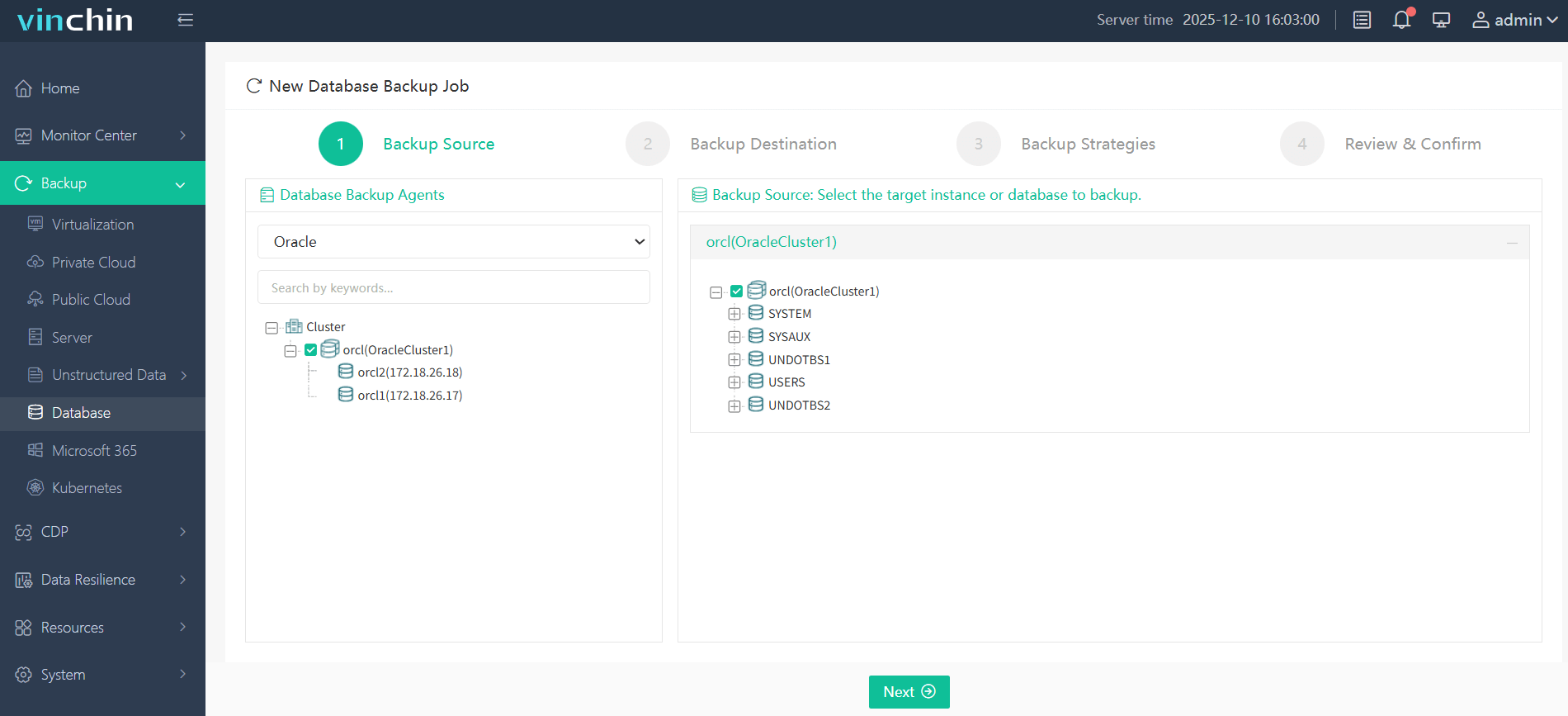
The intuitive web console makes protecting your databases remarkably straightforward:
Step 1. Select the Oracle database to back up
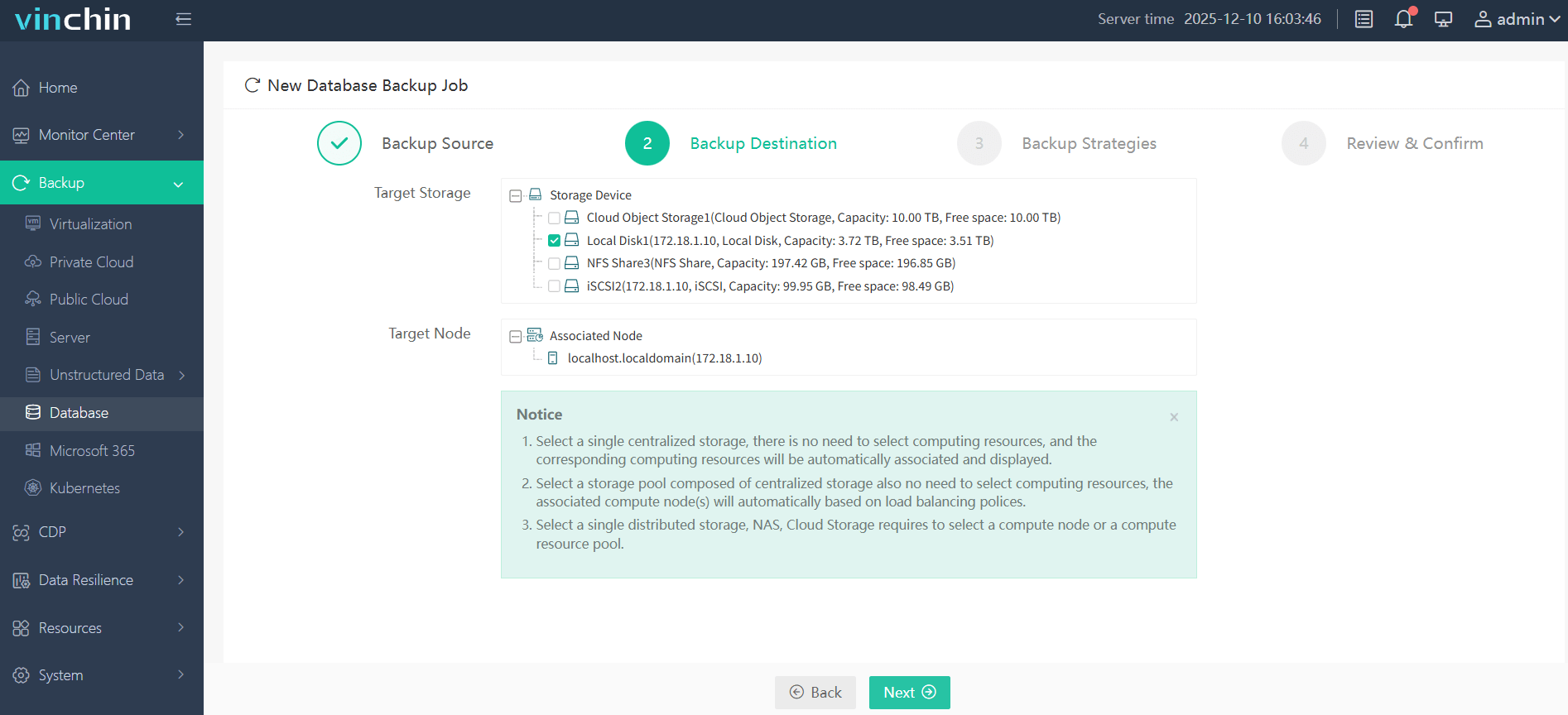
Step 2. Choose the backup storage
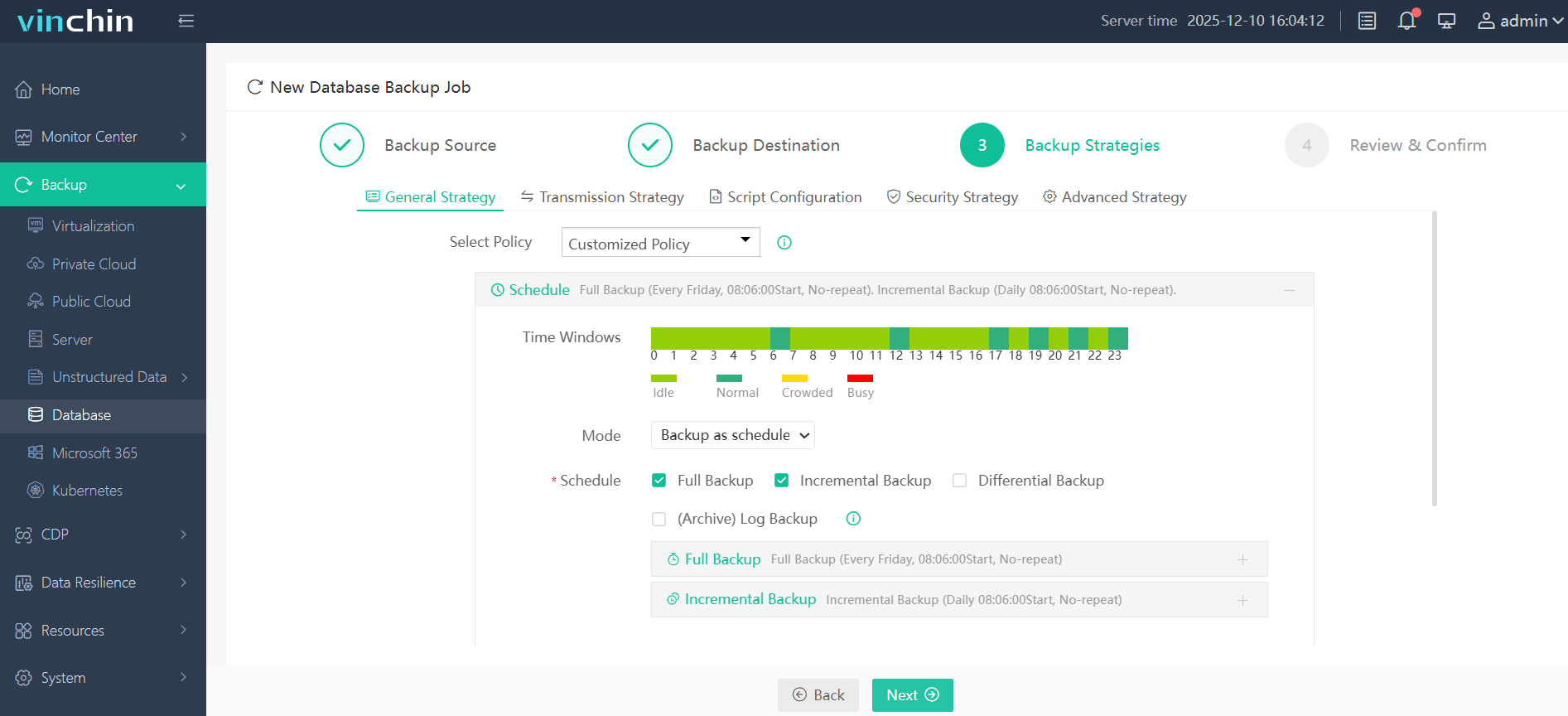
Step 3. Define the backup strategy
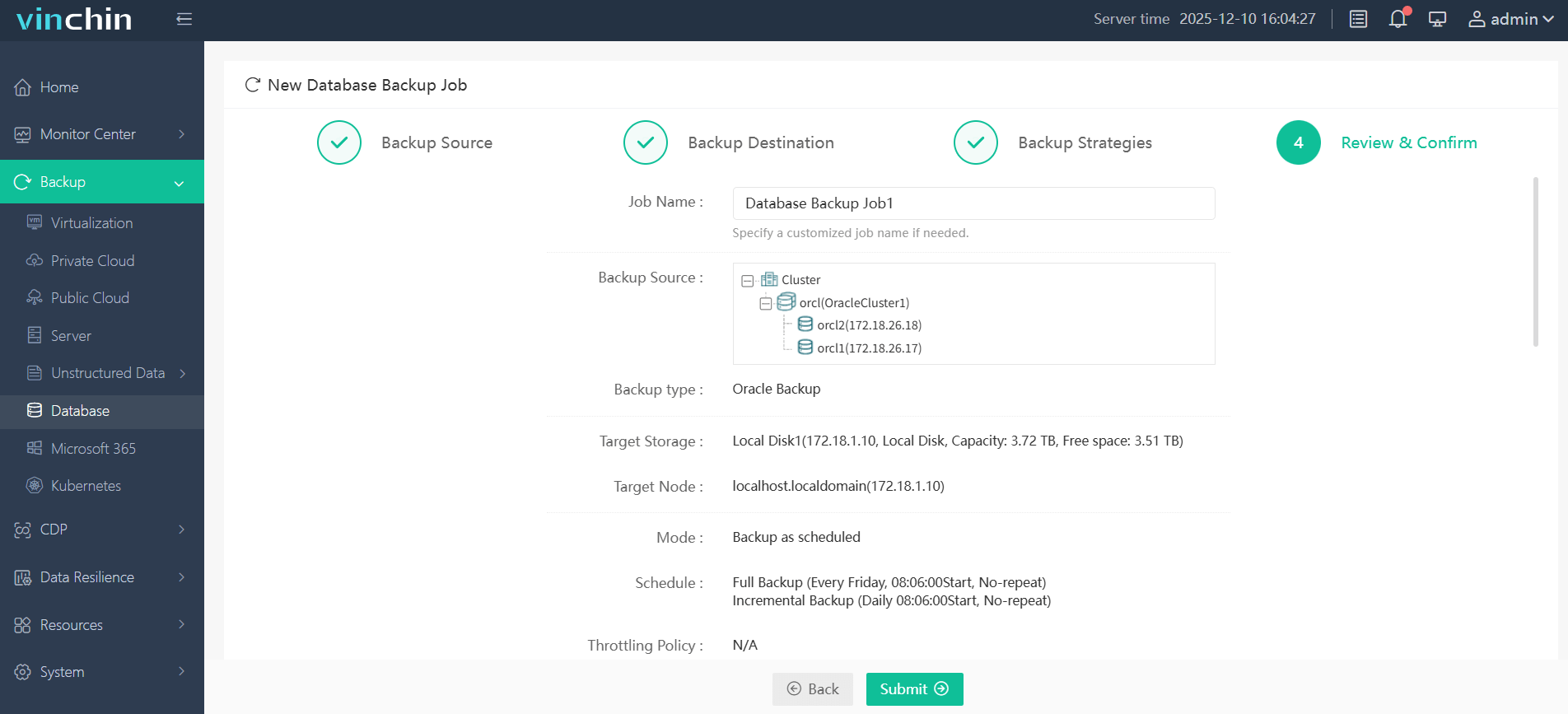
Step 4. Submit the job
Vinchin Backup & Recovery has earned global recognition among enterprises seeking reliable data protection—with thousands of satisfied customers worldwide and top industry ratings! Experience its power yourself: start today with their fully featured free 60-day trial by clicking download below.
Oracle XE RMAN Backup FAQs
Q1: Can I perform an oracle xe rman backup while users are connected?
Yes—but only if ARCHIVELOG mode is enabled; otherwise users must disconnect during offline backups.
Q2: What should I do if my scheduled automated oracle xe rman backup fails overnight?
Check log files first then verify disk space network connectivity permissions before rerunning job manually via command line interface
Q3: Where does my default oracle xe rman backup store its output?
On Windows check C:\ORACLEXE\APP\ORACLE\<version>\SERVER\DATABASE; on Linux look under $HOME directory unless custom paths were set during installation
Conclusion
RMAN remains essential for reliable oracle xe rman backups whether managed manually scheduled automatically validated regularly restored confidently. For even greater flexibility, try Vinchin’s advanced features today—protecting enterprise databases has never been easier so far.