Backing up your Oracle database is essential for protecting business data from loss or corruption. Sometimes you do not need to back up the entire database—just a specific tablespace that holds important or frequently changing data. Oracle Recovery Manager (RMAN) makes this task straightforward with flexible options for both online and offline backups.
In this article, you will learn what an Oracle tablespace is, why you might choose to back up only one tablespace instead of the whole database, how to prepare for a successful backup operation, detailed steps for using RMAN in different modes, tips on validating your backups afterward, and common pitfalls to avoid along the way.
What Is an Oracle Tablespace?
An Oracle tablespace is a logical storage unit within an Oracle database that helps organize data into manageable pieces. Each tablespace contains one or more physical data files stored on disk. By grouping related objects together—such as user data in one tablespace or indexes in another—you can control access rights more easily and manage storage growth over time.
Oracle supports two types of tablespaces: bigfile (with a single large data file) and smallfile (with multiple smaller files). Both types use the same RMAN backup commands; their main difference is in file management flexibility.
Tablespaces allow administrators to isolate workloads or departments within a single database instance. This means you can perform maintenance tasks like backup or restore at a granular level without affecting other parts of your system.
Why Backup Tablespaces with RMAN?
Backing up at the tablespace level gives you flexibility when managing large databases or environments with varying activity levels across different applications. If only certain areas—like reporting modules or temporary workspaces—change often while others remain static, it makes sense to focus your resources on those active parts.
RMAN is Oracle’s built-in tool designed specifically for efficient backup and recovery operations. It understands internal structures such as control files, redo logs, archived logs, and individual tablespaces. With RMAN you can:
Run full or incremental backups
Track all backup metadata automatically
Automate schedules through scripts
Ensure consistency even during active transactions
For example: imagine your finance department updates its records daily while HR data changes monthly; backing up just the finance tablespace every night saves time and storage compared to full-database jobs.
RMAN also integrates tightly with Oracle security features so that only authorized users can initiate sensitive operations like restoring production systems from backup sets.
Preparing for Tablespace Backup
Before running any RMAN command against a specific tablespace, take some basic steps to ensure success:
First, verify whether your database runs in ARCHIVELOG mode if you plan online backups (while users are connected). Only databases in ARCHIVELOG mode support consistent online backups because they archive all redo log changes made during the process.
To check this status:
SQL> ARCHIVE LOG LIST;
If it says "Database log mode: Archive Mode," you're ready; otherwise consider switching modes if business needs require online protection.
Next, confirm there’s enough free space at your default backup destination—often specified by DB_RECOVERY_FILE_DEST parameter—or set a custom path using FORMAT in your RMAN script:
RMAN> SHOW ALL;
This displays current channel configurations including default locations.
Check dependencies too: make sure no critical processes rely solely on the target tablespace during maintenance windows (for example active undo segments). Notify affected users ahead of time if downtime may occur due to offline operations.
Finally—and most importantly—test recovery procedures regularly! A successful backup means little unless you know how quickly it restores production service when needed.
Method 1: Online Tablespace Backup with RMAN
Online backups let you protect important data without disrupting normal business activity; users stay connected throughout the process thanks to ARCHIVELOG mode capturing all ongoing changes behind-the-scenes.
Here’s how you perform an online oracle rman backup tablespace operation:
1. Connect securely via command line:
$ rman target /
2. To back up a single named tablespace (e.g., USERS), enter:
RMAN> BACKUP TABLESPACE users;
3. For multiple spaces at once—for example USERS plus DATA—list them separated by commas:
RMAN> BACKUP TABLESPACE users, data;
4. Add descriptive tags if desired so future audits identify job purpose easily:
RMAN> BACKUP TABLESPACE users TAG 'usertsbak';
By default these jobs store results at your configured destination unless overridden by specifying FORMAT directly inside each command:
RMAN> BACKUP TABLESPACE users FORMAT '/u01/backups/users_%U.bkp';
Remember: online tablepsace backups require ARCHIVELOG mode enabled! If unsure about current settings double-check before proceeding using SQL*Plus as shown earlier.
Method 2: Offline Tablespace Backup with RMAN
Offline backups provide maximum consistency since no transactions occur during copying—but they require taking affected areas out of service temporarily which impacts end-users until complete.
Follow these steps carefully:
1. Log into SQL*Plus as DBA
2. Take target area offline gracefully so checkpoints finish cleanly:
SQL> ALTER TABLESPACE users OFFLINE NORMAL;
3. Start Recovery Manager session again:
$ rman target /
4. Issue standard backup command just like before:
RMAN> BACKUP TABLESPACE users;
5. Once finished bring everything back online promptly so staff resumes work:
SQL> ALTER TABLESPACE users ONLINE;
Always ensure no open sessions hold locks on objects inside that space before starting downtime window; coordinate closely with application owners whenever possible.
How Can You Back Up Oracle Tablespaces More Easily? Introducing Vinchin Backup & Recovery
While traditional methods offer robust control over oracle rman backup tablespaces, many organizations seek greater simplicity combined with enterprise-grade features across diverse environments. Vinchin Backup & Recovery is a professional solution designed specifically for enterprise-level database protection—it supports mainstream platforms including Oracle (as well as MySQL, SQL Server, MariaDB, PostgreSQL, PostgresPro, TiDB).
Vinchin Backup & Recovery delivers powerful capabilities such as batch database scheduling across multiple servers; advanced source-side compression; incremental backups; flexible retention policies including GFS strategies; cloud/tape archiving integration; instant restore-to-new-server functionality; automated integrity checks; WORM protection; storage ransomware defense; point-in-time recovery—and much more—all aimed at maximizing reliability while minimizing administrative effort.
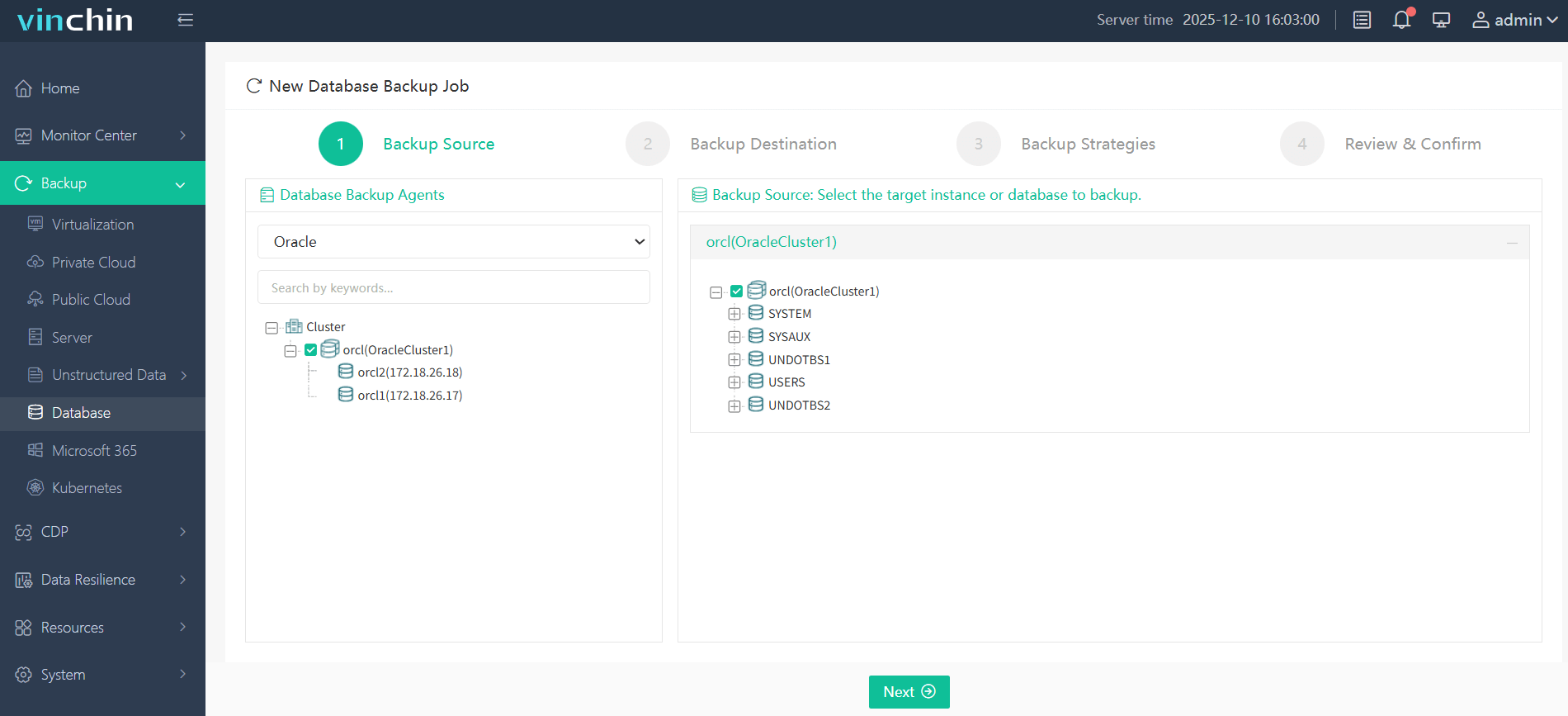
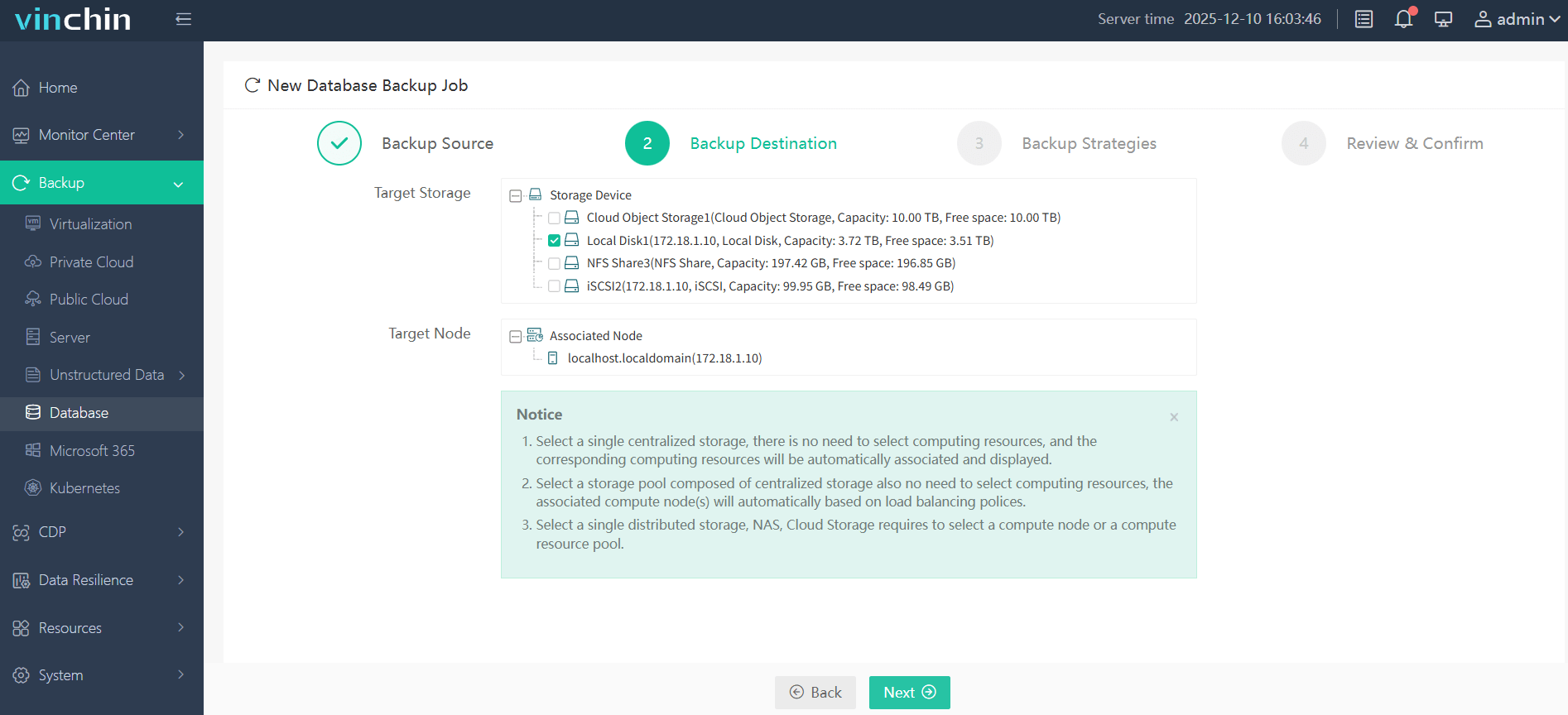
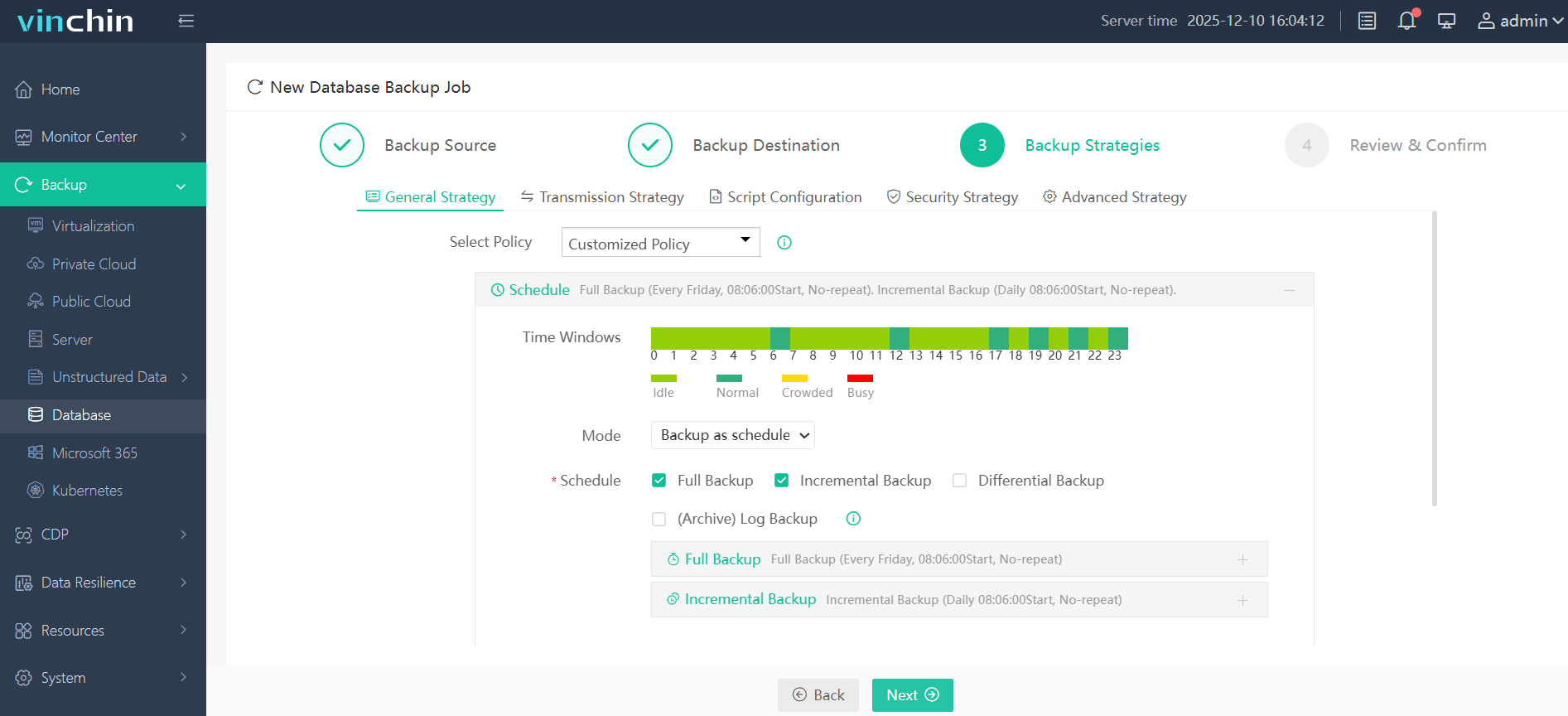
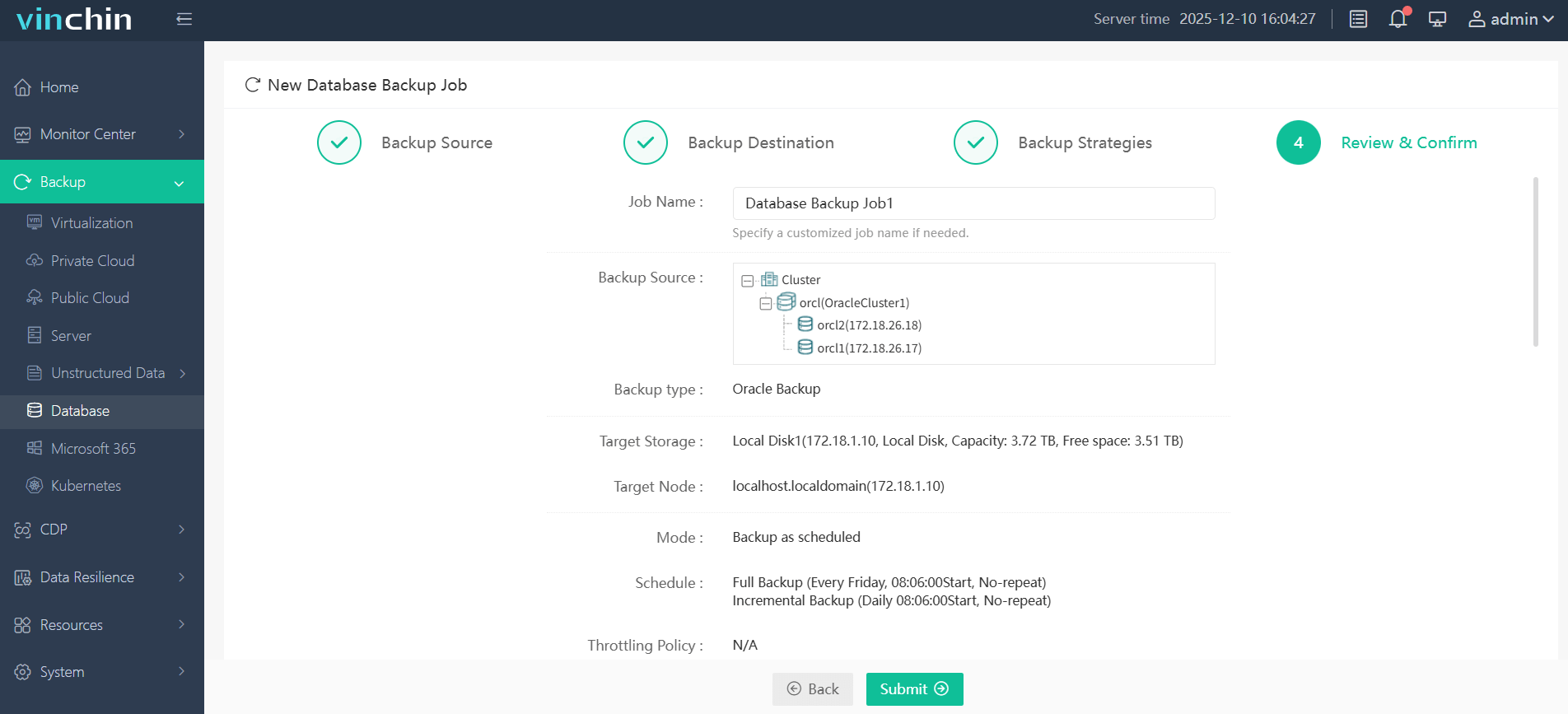
The intuitive web console streamlines complex workflows into four easy steps tailored for Oracle environments:
Step 1. Select the Oracle database to back up
Step 2. Choose the backup storage
Step 3. Define the backup strategy
Step 4. Submit the job
Recognized globally among IT professionals—with top ratings from thousands of customers worldwide—Vinchin Backup & Recovery offers a risk-free 60-day full-featured trial experience so you can see its value firsthand.
Oracle RMAN Backup Tablespace FAQs
Q1: Can I automate regular oracle rman backup tablespace jobs?
Yes—you can schedule recurring tasks using either DBMS_SCHEDULER within Oracle itself or external tools like cron calling shell scripts containing pre-written RMAN commands.
Q2: How do I confirm my latest oracle rman backup tablespace succeeded?
Run LIST BACKUP OF TABLESPACE [tablespacename]; inside Recovery Manager prompt then review output status codes immediately after completion.
Q3: What should I do if my oracle rman backup fails due insufficient disk space?
Free up room at designated destination directory then rerun original command—or specify alternate path via FORMAT option next attempt.
Conclusion
Performing targeted oracle rman backup tablespace operations lets administrators balance speed versus coverage efficiently—even across very large production systems prone frequent change cycles in select areas only. Vinchin further streamlines these workflows thanks intuitive interface plus advanced automation capabilities trusted worldwide by leading enterprises seeking peace-of-mind around mission-critical assets protection strategies alike!