When disaster strikes or data corruption occurs, restoring your Oracle database quickly and correctly is critical. Oracle Recovery Manager (RMAN) is the built-in tool for backup and recovery, trusted by database administrators worldwide. But how do you actually perform an Oracle RMAN restore? In this guide, we’ll walk through the process step by step—from basic restores to advanced options—so you can recover your data with confidence.
What Is Oracle RMAN Restore?
Oracle RMAN restore is the process of copying data from RMAN backup sets or image copies back into the database. This operation comes into play when data files, control files, or archived redo logs are lost or damaged. With RMAN, you can restore your entire database, specific tablespaces, or even individual data files based on what was affected. The restore process usually ends with a recovery step that applies archived redo logs to bring your database back to a consistent state.
Restoring with RMAN means you’re not just copying files—you’re using metadata stored in the backup catalog so that every piece lands exactly where it should be. This precision helps avoid mistakes during stressful incidents.
Why Choose RMAN for Database Recovery?
RMAN is Oracle’s recommended tool for backup and recovery because it integrates tightly with the database engine itself. It automates complex tasks like tracking backups and managing dependencies between files. By reducing manual steps, it lowers the risk of human error—a big deal when time matters most.
Advanced features such as block-level recovery let you fix only what’s broken instead of restoring everything. Encrypted backups keep sensitive information safe at rest. Since RMAN tracks all backup metadata automatically in its repository (the control file or a dedicated catalog), you always know which backups are available for use.
Perhaps most importantly: with point-in-time recovery support, you can roll back your database to any moment before trouble hit—minimizing downtime and potential loss.
Method 1. Using Basic Oracle RMAN Restore
The basic RMAN restore process covers most everyday recovery scenarios. Before starting any restoration job:
First, make sure your environment variables are set correctly—especially ORACLE_HOME, ORACLE_SID, and PATH—and that you have SYSDBA privileges on your system account. Without these settings in place, many commands will fail before they begin.
Here’s how to perform a full database restore:
1. Start the Database in NOMOUNT Mode
Begin by opening a terminal window:
   sqlplus / as sysdba
   SHUTDOWN IMMEDIATE
   STARTUP NOMOUNT
   EXIT
Starting in NOMOUNT mode allows access to instance memory without mounting any control file yet—a necessary first step if those files might need restoration themselves.
2. Start RMAN and Connect to Target Database
Launch Recovery Manager:
rman target /
3. Restore Server Parameter File (if needed)
If your server parameter file (spfile) has been lost:
   RESTORE SPFILE FROM AUTOBACKUP;
   SHUTDOWN IMMEDIATE;
   STARTUP NOMOUNT;
Restoring this file ensures correct startup parameters before moving forward.
4. Restore Control File (if needed)
If your control file is missing or corrupted:
    RESTORE CONTROLFILE FROM AUTOBACKUP;
    SHUTDOWN IMMEDIATE;
    STARTUP MOUNT;
Mounting after this step attaches restored control structures but doesn’t open user data yet.
5. Restore Database Data Files
With everything mounted:
RESTORE DATABASE;
This command tells RMAN to copy all required datafiles from their latest available backups into place automatically—it chooses which pieces are needed based on metadata tracked during previous jobs.
6. Recover Database
Next,
RECOVER DATABASE;
Here’s where archived redo logs come into play: this command applies all changes since the last backup so that every transaction up until failure gets replayed onto restored files—bringing things up-to-date.
7. Open Database
To finish:
ALTER DATABASE OPEN RESETLOGS;
The RESETLOGS clause creates new online redo logs; it also starts a new incarnation of your database history.
ALTER DATABASE OPEN;
If you need to roll back only partway—for example after accidental deletion—you can add point-in-time logic:
RUN {
  SET UNTIL TIME "TO_DATE('2023-11-27 14:00:00', 'YYYY-MM-DD HH24:MI:SS')";
  RESTORE DATABASE;
  RECOVER DATABASE;
}
This sequence restores everything up until just before trouble began—a lifesaver after user errors!
Method 2. Advanced Options for Oracle RMAN Restore
Sometimes standard procedures aren’t enough—you may need more flexibility due to hardware failures or special requirements like encrypted storage policies.
Before diving in: remember that advanced restores often require careful planning around storage paths and security credentials; always test on non-production systems first if possible!
Restoring Data Files to New Locations
Suppose original disk locations are gone but backups remain accessible elsewhere? Use SET NEWNAME within an execution block:
RUN {
  SET NEWNAME FOR DATAFILE 1 TO '/newpath/system01.dbf';
  RESTORE DATABASE;
  SWITCH DATAFILE ALL;
  RECOVER DATABASE;
}
This approach redirects output so restored files land safely at alternate destinations—and updates internal pointers accordingly via SWITCH DATAFILE ALL.
Restoring Specific Tablespaces or Data Files
You don’t always want—or need—to bring back everything at once! For targeted repairs:
To recover just one tablespace:
SQL> ALTER TABLESPACE users OFFLINE IMMEDIATE;
RMAN> RESTORE TABLESPACE users;
RMAN> RECOVER TABLESPACE users;
SQL> ALTER TABLESPACE users ONLINE;
Or focus on one damaged file:
RMAN> RESTORE DATAFILE 5;
RMAN> RECOVER DATAFILE 5;
These methods help minimize downtime while isolating fixes only where needed most urgently.
Previewing & Validating Restores
Worried about whether backups exist—or if they’re usable? Don’t guess; check ahead!
Preview which pieces would be used next time:
RESTORE DATABASE PREVIEW;
Validate physical integrity without making changes:
RESTORE DATABASE VALIDATE;
Validation reads each piece end-to-end looking for corruption—a best practice before disaster strikes!
Handling Encrypted Backups
Security-conscious shops often encrypt their backups using Transparent Data Encryption (TDE) or password-based encryption:
For TDE-protected sets: ensure wallet/keystore access exists on destination host prior to running restores; otherwise decryption fails outright.
For password-encrypted sets:
SET DECRYPTION IDENTIFIED BY 'your_password';
RESTORE DATABASE;
Restoring from Remote Hosts
In cross-site DR setups—or when leveraging standby databases—you might pull directly over network links using service names registered with listener processes:
RESTORE DATABASE FROM SERVICE 'remote_service_name';
With these advanced tools at hand, even complex migrations become manageable projects rather than emergencies!
Vinchin Backup & Recovery for Enterprise-Level Oracle Protection
Beyond native tools like RMAN, organizations seeking streamlined management should consider Vinchin Backup & Recovery—a professional enterprise-grade solution supporting today’s leading databases including Oracle, MySQL, SQL Server, MariaDB, PostgreSQL, PostgresPro, and TiDB (with special focus here on robust Oracle protection). Key features include incremental backup for efficient storage use on large datasets; batch management across multiple databases simultaneously; flexible retention policies such as GFS retention policy for compliance needs; cloud backup plus tape archiving integration for long-term safeguarding; and comprehensive integrity checks ensuring reliable recoverability under real-world conditions—all designed to maximize uptime while minimizing administrative overheads.
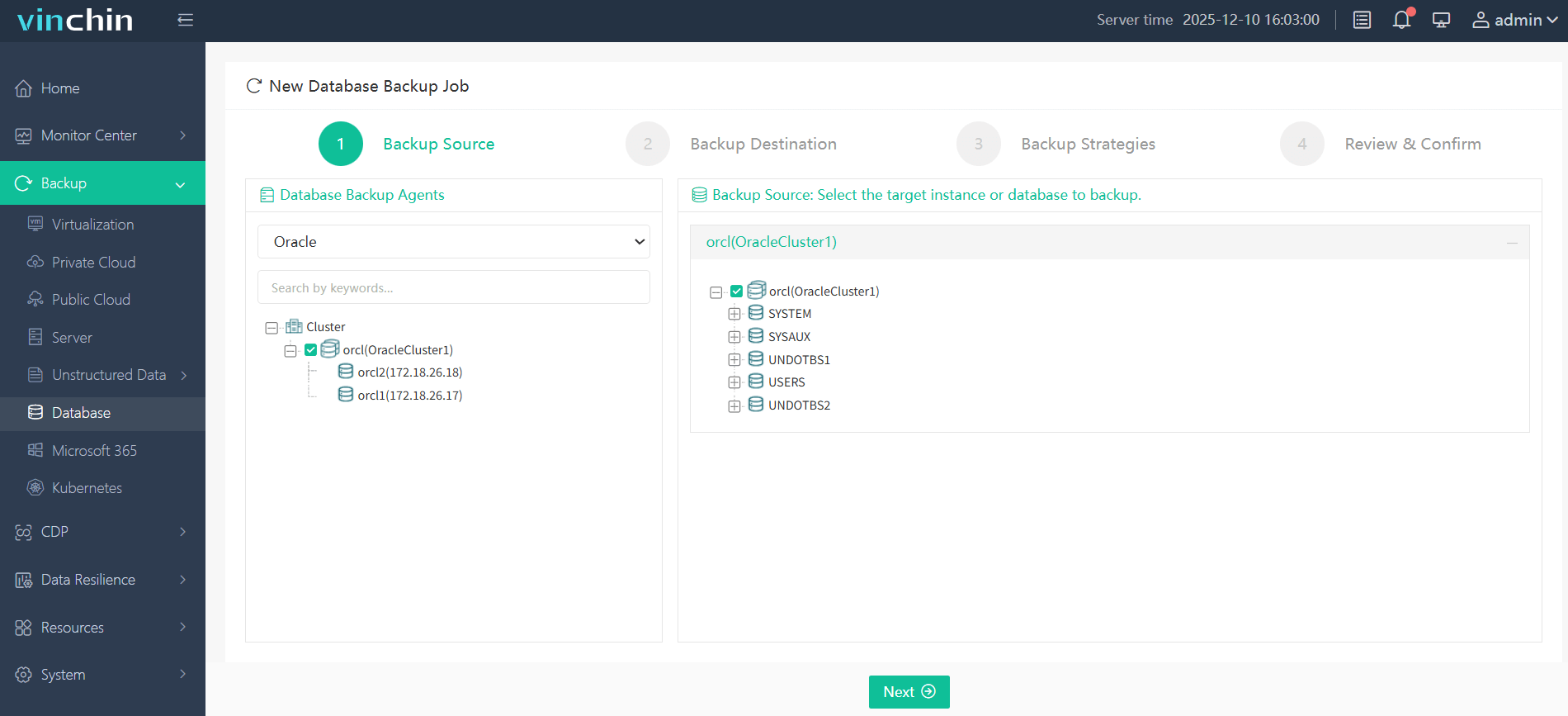
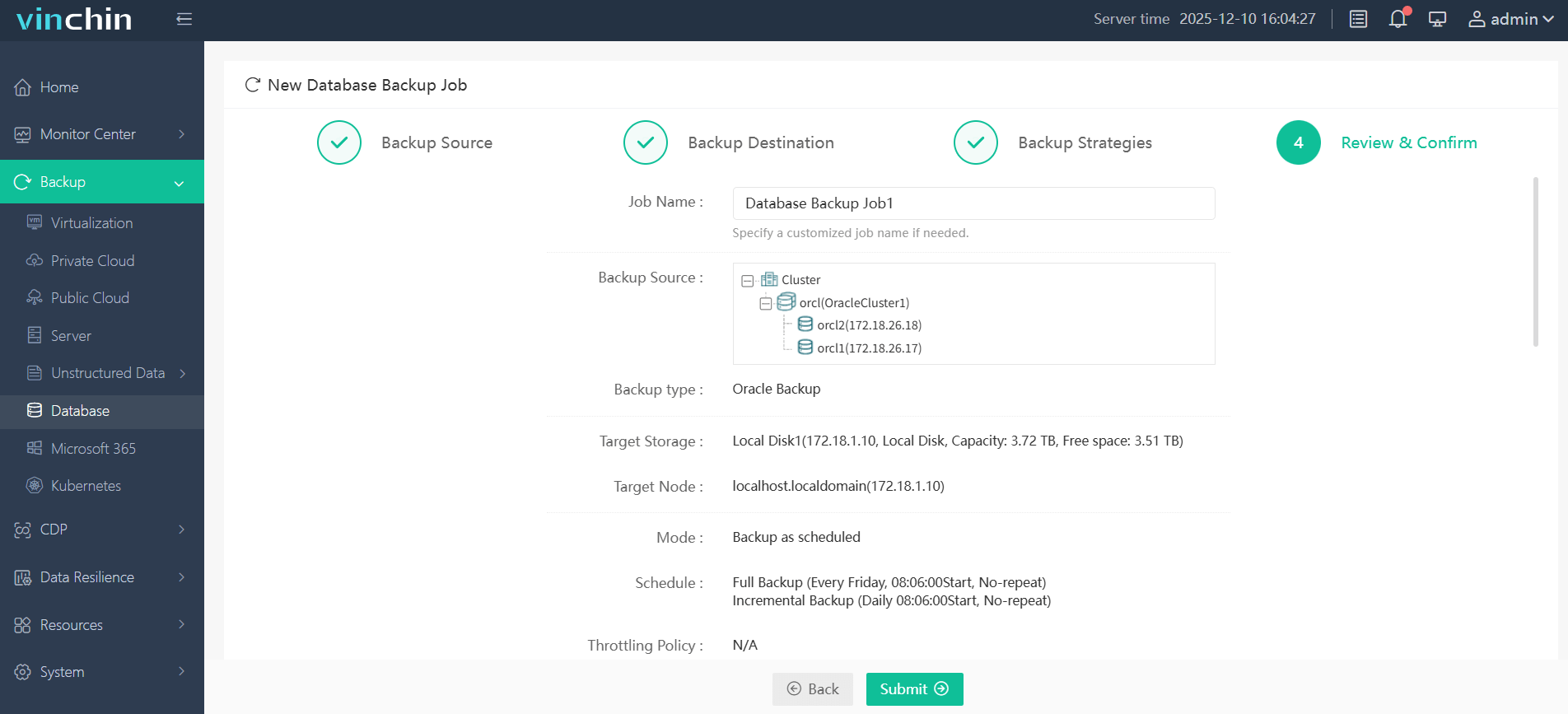
Vinchin Backup & Recovery offers an intuitive web console simplifying every stage of protection—even across complex environments—with four straightforward steps tailored specifically for Oracle databases:
Step 1 – Select the Oracle database to back up
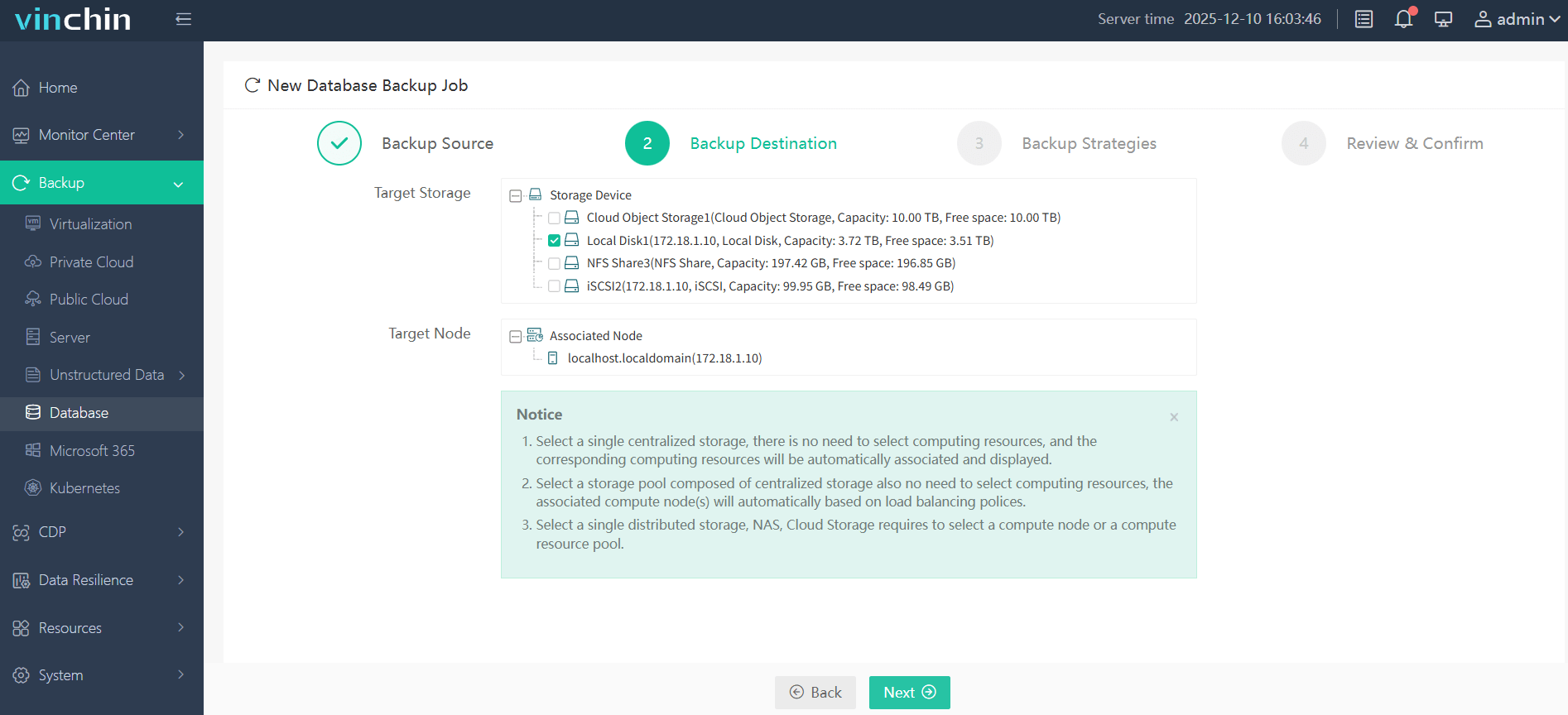
Step 2 – Choose preferred backup storage location
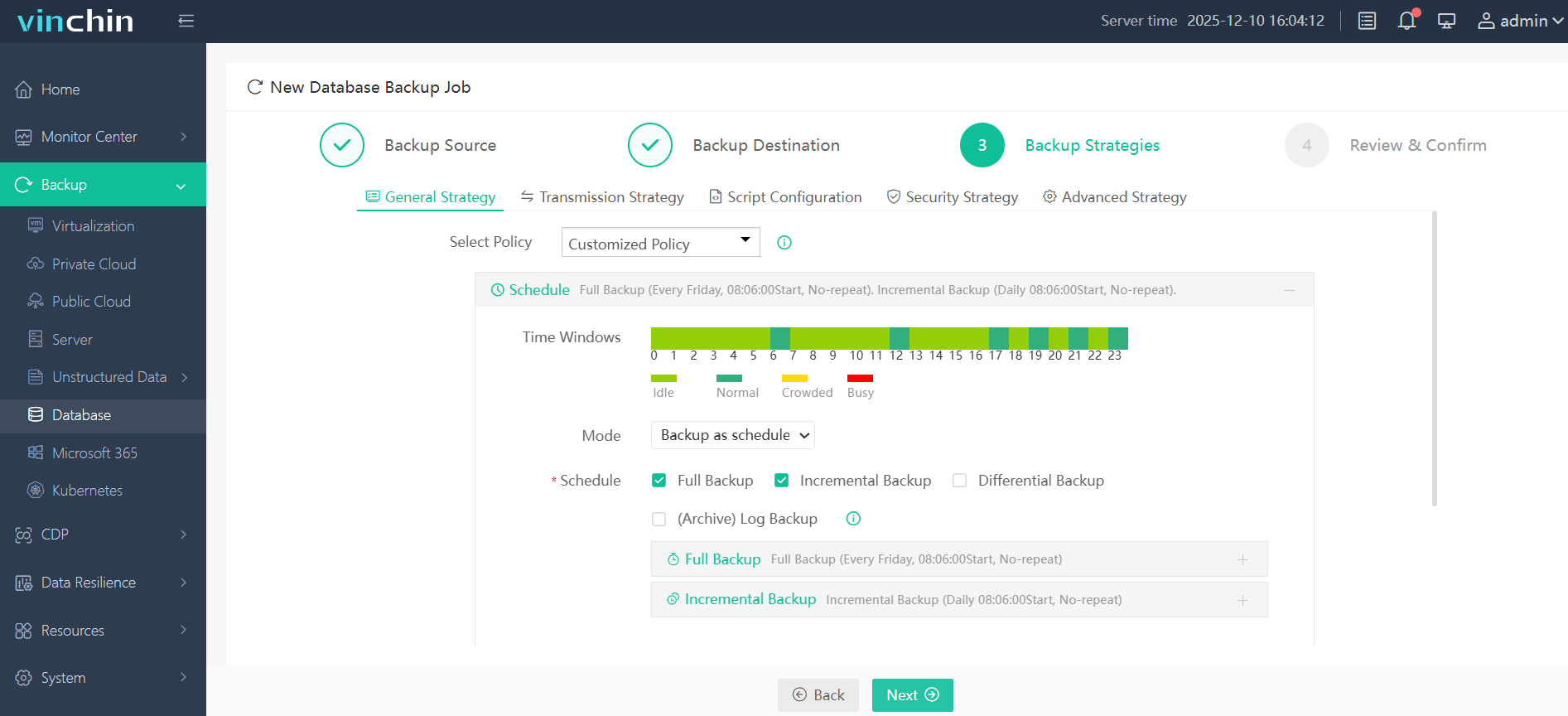
Step 3 – Define detailed backup strategy according to business requirements
Step 4 – Submit the job and monitor progress seamlessly
Recognized globally by thousands of enterprises and top-rated by industry analysts, Vinchin Backup & Recovery delivers proven reliability at scale—start protecting critical workloads today with a free full-featured trial (60 days). Click below to download instantly!
Oracle RMAN Restore FAQs
Q1: Can I use RMAN restore if my original server crashed completely?
Yes—as long as valid backups exist plus compatible software/hardware versions match—you may transfer pieces then run standard procedures outlined above remotely too!
Q2: How do I validate my existing backups without doing an actual restore?
Connect via rman target / then run RESTORE DATABASE VALIDATE command—it checks physical integrity non-destructively ensuring readiness anytime needed later on demand instantly!
Q3: What should I do if my archive logs required for recovery are missing?
Try recovering whatever's possible first then investigate supplemental log sources/backups—or consider incomplete recovery ending with ALTER DATABASE OPEN RESETLOGS if absolutely necessary under guidance from documentation/support resources provided officially by vendor channels directly always please…
Conclusion
Restoring an Oracle database with RMAN gives reliable results when following proven steps—from basics through advanced scenarios like point-in-time rollback or encrypted set handling alike! For streamlined automation across enterprise environments consider Vinchin's comprehensive solution today—it makes protecting mission-critical workloads easier than ever before!