Backing up your Oracle database is not just a best practice—it’s essential. On Windows systems, many administrators rely on Oracle RMAN (Recovery Manager) scripts to automate and secure their backups. But how do you create these scripts and schedule them for reliable, hands-off protection? In this guide, we’ll walk through everything from basic concepts to advanced automation techniques.
What Is Oracle RMAN Backup?
Oracle RMAN is a built-in tool that helps you back up, restore, and recover Oracle databases. It works directly with the database engine to provide consistent backups at any point in time. With RMAN, you can perform both full and incremental backups. It also manages archived redo logs, control files, and server parameter files (SPFILEs). This makes it a powerful choice if you need robust backup solutions that are easy to script.
RMAN’s integration with Oracle means it understands internal structures better than generic file-based tools. For example, it tracks which blocks have changed since the last backup so incremental jobs are efficient. You can also use RMAN for automated recovery after failures or disasters—a critical feature for business continuity.
Why Use RMAN Scripts on Windows?
Using scripts with RMAN on Windows brings several advantages over manual methods or GUI tools. First, scripting standardizes your backup procedures across environments or teams. This reduces human error because every run follows the same logic.
Second, automation becomes simple when you combine scripts with Windows Task Scheduler. Scheduled tasks ensure regular protection without needing someone present at odd hours or during holidays.
Third, scripts let you customize every detail—backup locations, retention policies for old data, logging paths—all tailored to your organization’s needs or compliance rules.
Finally, using text-based scripts makes troubleshooting easier because you can review exactly what was run if something goes wrong later.
How to Create Oracle RMAN Backup Script Windows?
Creating an effective Oracle RMAN backup script on Windows involves two main parts: an RMAN command file containing your backup logic and a batch file that sets up the environment before calling RMAN itself.
Let’s start by building the command file—let’s call it backup.rman. Here’s an example script that performs a full database backup along with archive logs cleanup:
run {
  allocate channel c1 device type disk;
  allocate channel c2 device type disk;
  crosscheck backup;
  crosscheck archivelog all;
  delete noprompt expired backup;
  delete noprompt expired archivelog all;
  backup as compressed backupset database format 'D:\RMAN_BACKUP\%d_%T_%U.bkp' include current controlfile;
  backup as compressed backupset archivelog all format 'D:\RMAN_BACKUP\archive_%d_%T_%U.arc' delete all input;
  backup current controlfile format 'D:\RMAN_BACKUP\controlfile_%d_%T.ctl';
  delete noprompt backup completed before 'sysdate-7';
  delete noprompt archivelog all completed before 'sysdate-7';
  release channel c1;
  release channel c2;
}
This script does several things step by step:
1. Allocates two channels so backups run in parallel.
2. Checks existing backups and archive logs for consistency.
3. Deletes any expired items found during crosschecks.
4. Backs up the entire database as compressed sets—including the current control file.
5. Backs up all archive logs then deletes them after successful copy.
6. Saves another copy of just the control file.
7. Cleans out old backups and archive logs older than seven days.
8. Releases resources at the end.
Adjust paths like D:\RMAN_BACKUP\ as needed for your system; make sure these folders exist before running anything! Also note: %d, %T, %U insert unique values into filenames so each job creates separate files without overwriting previous ones.
Next comes your batch file—let’s call it run_rman_backup.bat. This prepares environment variables then calls RMAN:
@echo off
SET ORACLE_HOME=C:\app\oracle\product\12.2.0\dbhome_1
SET ORACLE_SID=ORCL
SET PATH=%ORACLE_HOME%\BIN;%PATH%
for /f "tokens=2 delims==" %%I in ('wmic os get localdatetime /value') do set datetime=%%I
set LOGFILE=D:\RMAN_BACKUP\logs\backup_%datetime:~0,8%_%datetime:~8,6%.log
rman target / cmdfile='D:\scripts\backup.rman' log='%LOGFILE%'
exit /b %ERRORLEVEL%
Here are some important points:
Replace C:\app\oracle\product\12.2.0\dbhome_1 with your actual ORACLE_HOME path.
Set ORACLE_SID to match your target instance name.
The date/time code ensures log filenames are unique even if jobs run close together; this avoids accidental overwrites due to locale differences in %DATE%.
Always check that both D:\RMAN_BACKUP and its subfolder logs exist—and grant write permissions to whichever user will run this batch job!
The final line passes any error codes back so Task Scheduler can detect failures automatically.
You can test everything by double-clicking the batch file or running it from Command Prompt while logged in as an account with proper privileges.
How to Automate RMAN Backups in Windows?
Once your scripts work manually, automation is next! Most admins use Task Scheduler built into every modern version of Windows Server or desktop editions.
To automate your Oracle RMAN backups:
1. Open Task Scheduler from Start menu or Control Panel.
2. Click Create Task in right pane—not “Basic Task” since advanced options may be needed later!
3. On General tab enter a clear name like “Nightly Oracle Backup” plus description if desired.
4. Switch to Triggers tab; click New, set schedule such as daily at 02:00 AM (or whatever fits maintenance windows).
5. Go to Actions tab; click New, set Action field to Start a program, then browse or paste full path of your .bat file (D:\scripts\run_rman_backup.bat).
6. Adjust settings under Conditions (like “Wake computer”) or Settings tabs if needed—for example enabling “Run task as soon as possible after missed start.”
7.Click OK when finished; enter credentials if prompted so scheduled runs have access rights!
After first scheduled execution completes check generated log files carefully—they should show no errors (“ORA-“ or “RMAN-“ codes) near bottom lines indicating success (“Recovery Manager complete.”).
If anything fails verify folder permissions match user context used by scheduler—not just interactive login accounts!
Enterprise-Level Protection: Vinchin Backup & Recovery for Oracle Databases
For organizations seeking streamlined yet robust protection beyond native scripting alone, enterprise-grade solutions offer significant advantages over manual processes described above—especially when managing large-scale deployments across multiple platforms such as Oracle databases, MySQL, SQL Server, MariaDB, PostgreSQL, PostgresPro, and TiDB environments worldwide.
Vinchin Backup & Recovery stands out as a professional solution supporting these mainstream databases while delivering features highly relevant for operational reliability: incremental backups (for Oracle), advanced source-side compression, flexible GFS/data retention policies tailored per workload requirements, integrity checks ensuring recoverability of each copy created via automated SQL-script verification routines—all complemented by secure storage protection against ransomware threats and WORM support where regulatory mandates apply.
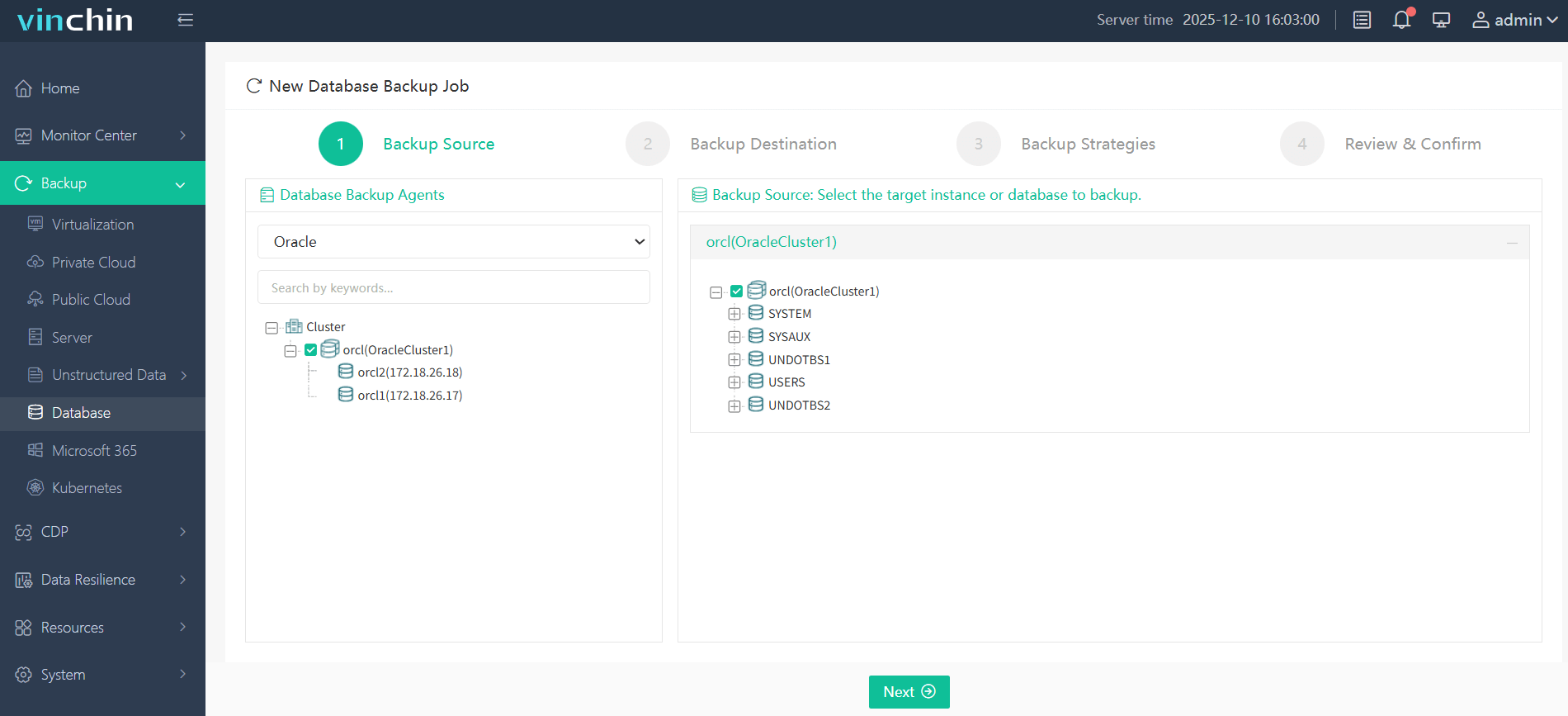
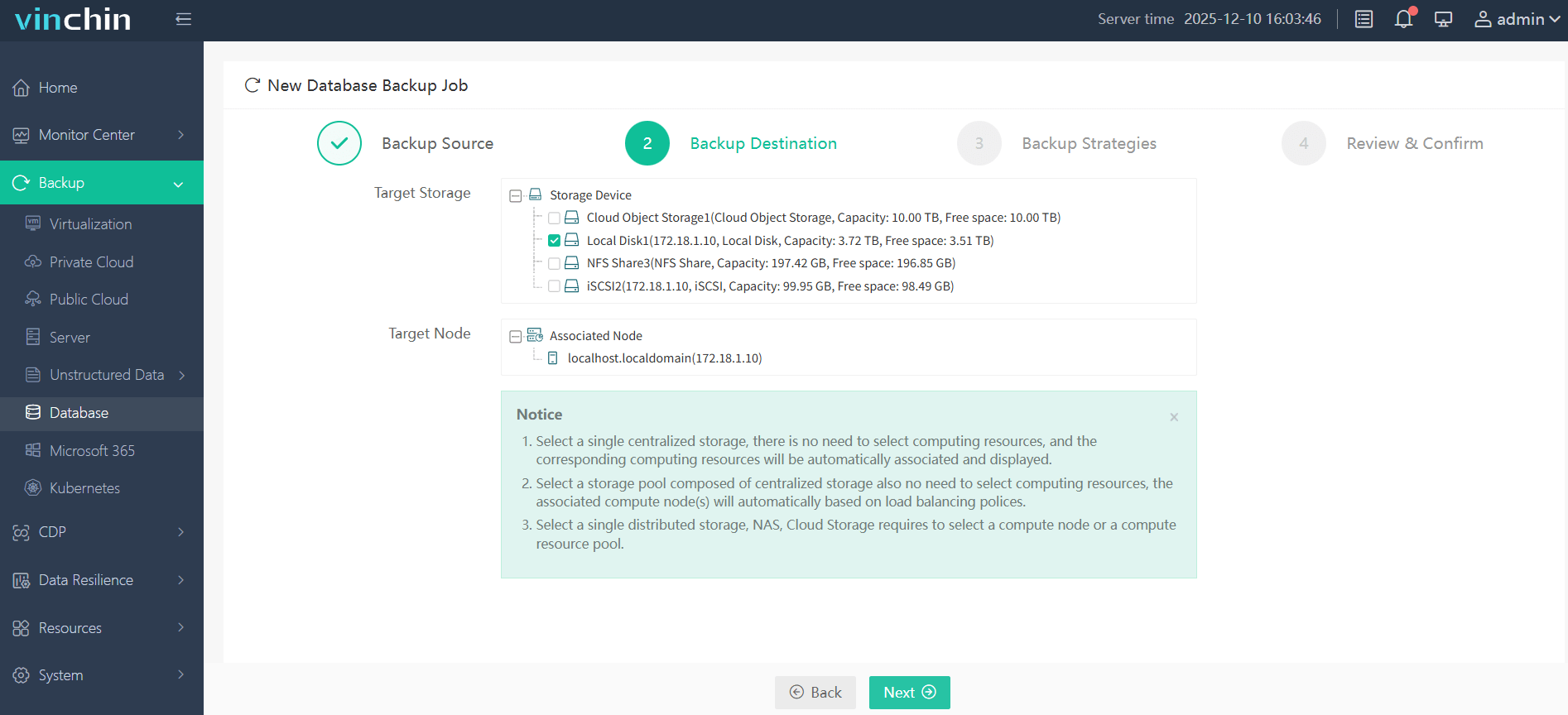
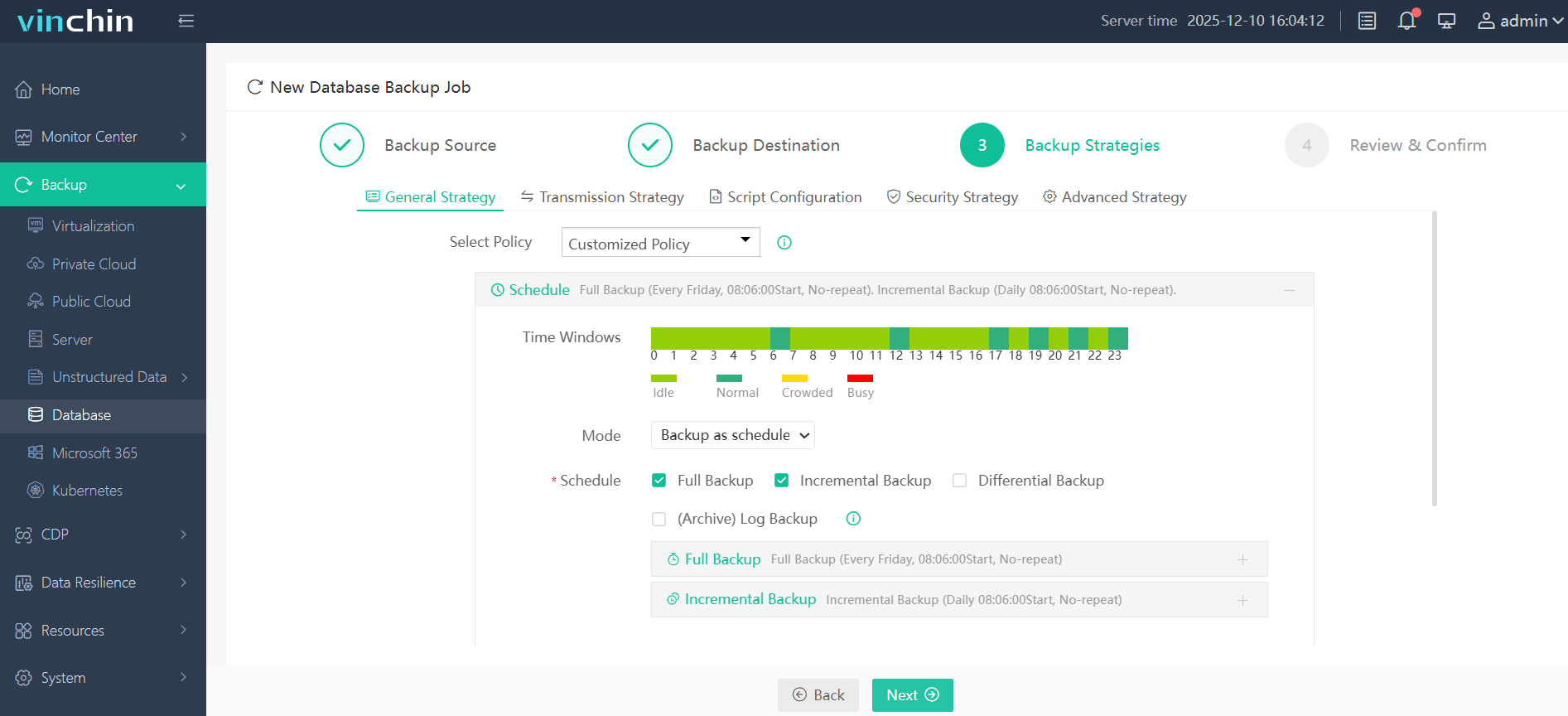
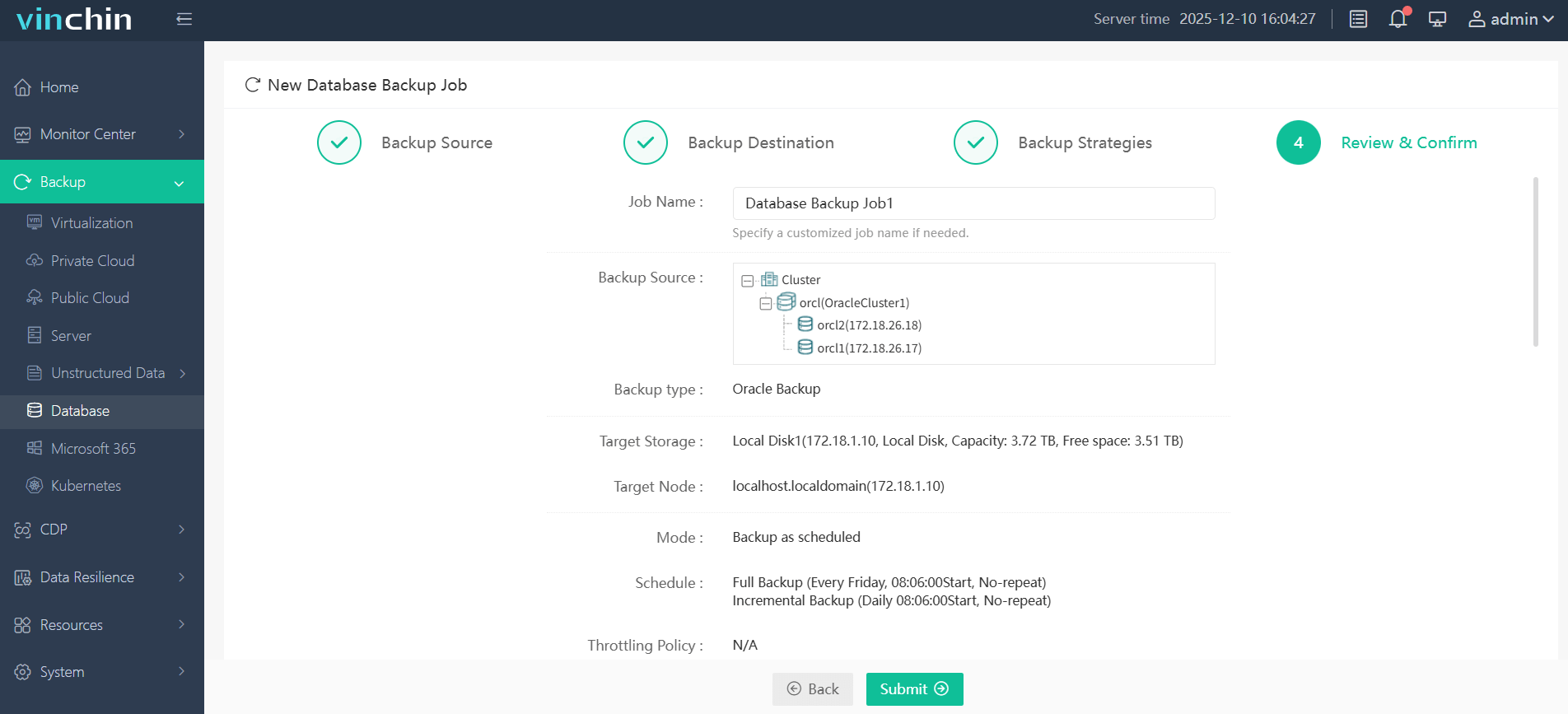
The intuitive web console simplifies administration dramatically; backing up an Oracle database typically takes just four steps:
Step 1: Select the Oracle database to back up
Step 2: Choose the destination storage
Step 3: Define scheduling/retention strategies
Step 4: Submit the job
Recognized globally among enterprise users—with top ratings from thousands of customers—Vinchin Backup & Recovery offers a risk-free experience via its fully featured free trial (60 days). Click below to download now and discover why leading organizations trust Vinchin software for mission-critical data protection.
Oracle RMAN Backup Script Windows FAQs
Q1: Can I schedule different databases’ backups on one server?
Yes—create separate .bat/.rman pairs per instance setting correct ORACLE_SID each time so jobs don’t interfere.
Q2: How do I confirm my nightly job succeeded?
Open its log then search near bottom for "Recovery Manager complete."; absence means investigate earlier "ORA-"/“"RMAN-"” errors above first!
Q3: What causes scheduled tasks not to run?
Common reasons include missing folder permissions incorrect environment variables insufficient disk space wrong user context—or antivirus blocking .bat/.exe.
Conclusion
Automating Oracle RMAN backups on Windows is straightforward once you master scripting basics plus monitoring essentials described above. For even greater ease Vinchin delivers robust enterprise-grade protection across platforms. Try our free trial now—and safeguard critical data confidently every day!