Protecting your Oracle database is essential for every business that values its data. Data loss can strike at any time—from hardware failure to human error—and having a reliable backup strategy keeps you safe from disaster. Oracle Recovery Manager (RMAN) is the built-in tool designed specifically for this job. In this guide, we’ll explain what an Oracle RMAN backup is, why it matters so much, and how you can perform both full and incremental backups step by step. We’ll also cover best practices for verifying your backups and automating routine tasks so you can manage even large environments with confidence.
What Is Oracle RMAN Backup?
An Oracle RMAN backup uses Oracle’s Recovery Manager (RMAN) utility to create secure copies of your database files. This command-line tool comes standard with every Oracle Database installation and gives you powerful control over backup, restore, and recovery operations.
With RMAN, you can back up not only data files but also control files and archived redo logs—critical pieces needed for complete recovery after a failure. Unlike manual copy methods that risk missing important metadata or introducing corruption, RMAN understands internal file structures to ensure consistent backups every time.
You can run an oracle rman backup directly to disk or tape storage using flexible configuration options. Both full database copies and incremental changes are supported out of the box.
Why Use Oracle RMAN Backup?
Oracle RMAN backup has become the industry standard because it automates complex tasks that would otherwise require custom scripts or risky manual steps.
First off, RMAN detects block-level corruption during backups—catching problems before they turn into disasters later on. It manages retention policies automatically so old backups don’t fill up your storage unnecessarily.
Compression features help save space while keeping performance high—even when backing up large databases daily or hourly.
Point-in-time recovery lets you restore your database to any moment before an incident occurred—a lifesaver if someone accidentally deletes key records or drops a table by mistake.
By relying on oracle rman backup routines instead of ad hoc solutions, you reduce human error risks while making sure your data protection meets business needs efficiently.
Method 1: How to Perform a Full Database Backup with RMAN?
A full oracle rman backup creates complete copies of all data files plus control files—and optionally archived redo logs—for total protection against loss.
Before starting a full backup while your database remains open (online), make sure it runs in ARCHIVELOG mode. This setting allows ongoing transactions to be safely captured during the process; otherwise only cold (offline) backups are possible when using NOARCHIVELOG mode—which requires shutting down the entire instance first.
To check if ARCHIVELOG mode is enabled:
Open SQL*Plus
Run ARCHIVE LOG LIST
If you see "Database log mode: Archive Mode," you're ready for online backups; otherwise consult official documentation on enabling archive logging.
Here’s how to perform a full oracle rman backup:
1. Start RMAN and connect to your database
Open a terminal window as your Oracle user account
Type:
rman target /
This connects locally as SYSDBA by default
2. Check current configuration settings
Enter:
SHOW ALL;
Review output for default device type (usually DISK), retention policy (how long old backups are kept), parallelism settings (for speed), etc.
3. Set destination path for new backups
By default, RMAN writes files under $ORACLE_HOME/dbs using unique names (%U). For better organization use an absolute path:
   CONFIGURE CHANNEL DEVICE TYPE DISK FORMAT '/your/backup/location/%U';
   CONFIGURE RETENTION POLICY TO RECOVERY WINDOW OF 7 DAYS;
4. Run the full backup command
To include both database files and archived logs:
BACKUP AS BACKUPSET DATABASE PLUS ARCHIVELOG;
If only backing up current datafiles:
BACKUP AS BACKUPSET DATABASE;
5. Verify completion of your backup
List recent jobs with:
LIST BACKUP OF DATABASE;
Full oracle rman backups should be scheduled during periods of low activity since they consume significant resources—especially on large production systems where downtime isn’t acceptable.
Method 2: How to Perform Incremental Backups Using RMAN?
Incremental oracle rman backups capture only those blocks changed since your last baseline—saving both time and storage compared to repeated full copies.
There are two main types: Level 0 (the base image) and Level 1 (changes since last Level 0 or previous Level 1). Differential Level 1 includes changes since most recent lower-level backup; Cumulative Level 1 includes all changes since last Level 0 regardless of other incrementals taken in between.
Follow these steps:
1. Connect to RMAN
As before,
rman target /
2. Create a baseline Level 0 incremental
This acts like a fresh full copy but marks itself as parent for future incrementals:
BACKUP INCREMENTAL LEVEL 0 DATABASE;
3. Take regular Level 1 incrementals
BACKUP INCREMENTAL LEVEL 1 DATABASE;
For cumulative changes since last Level 0 only:
BACKUP INCREMENTAL LEVEL 1 CUMULATIVE DATABASE;
4. Review available incremental sets
Check status anytime with:
LIST BACKUP OF DATABASE;
For best results combine weekly Level 0s with daily—or even hourly—Level 1s depending on how often critical data changes in your environment.
Vinchin Backup & Recovery: Enterprise-Level Protection for Oracle Databases
For organizations seeking streamlined management beyond native tools, Vinchin Backup & Recovery delivers robust enterprise-grade protection tailored specifically for Oracle databases—as well as MySQL, SQL Server, MariaDB, PostgreSQL, PostgresPro, and TiDB environments. With support for advanced source-side compression and incremental backup on Oracle platforms, batch database operations, multiple levels of data compression, GFS/data retention policies, log archiving capabilities, point-in-time recovery options, cloud/tape integration, WORM protection against ransomware threats, integrity checks, recovery verification via SQL scripts—and more—it covers all critical aspects of modern enterprise data safety in one solution while reducing operational overhead through automation and efficiency gains across diverse infrastructures.
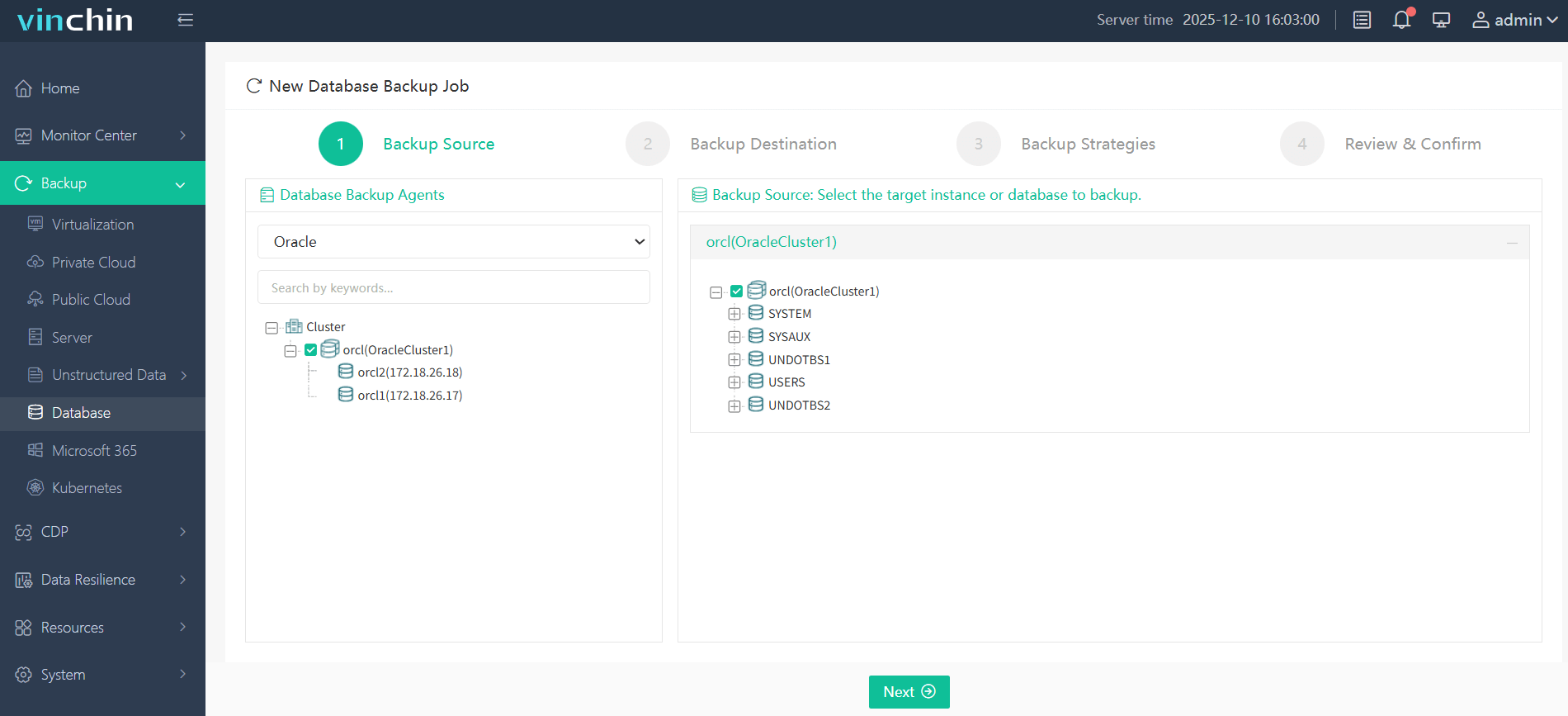
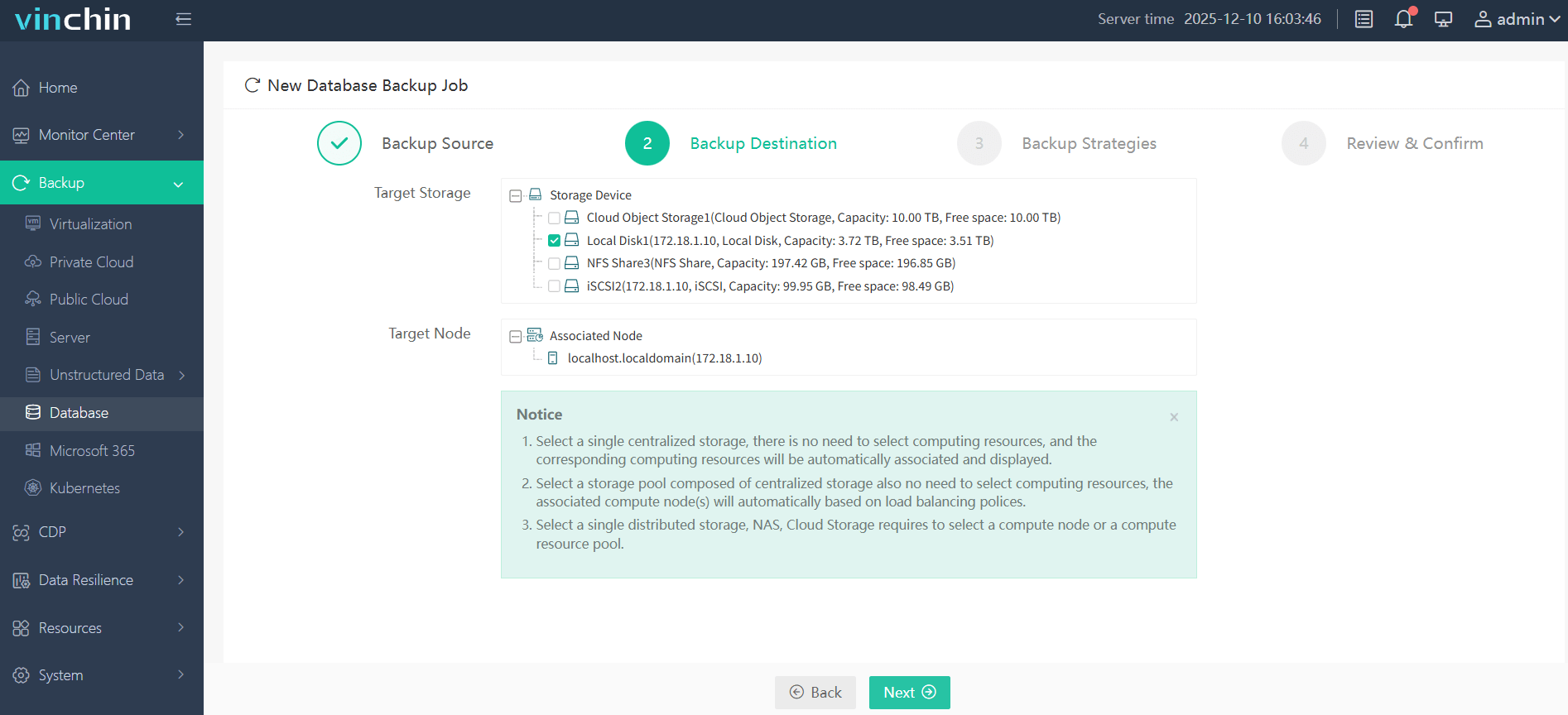
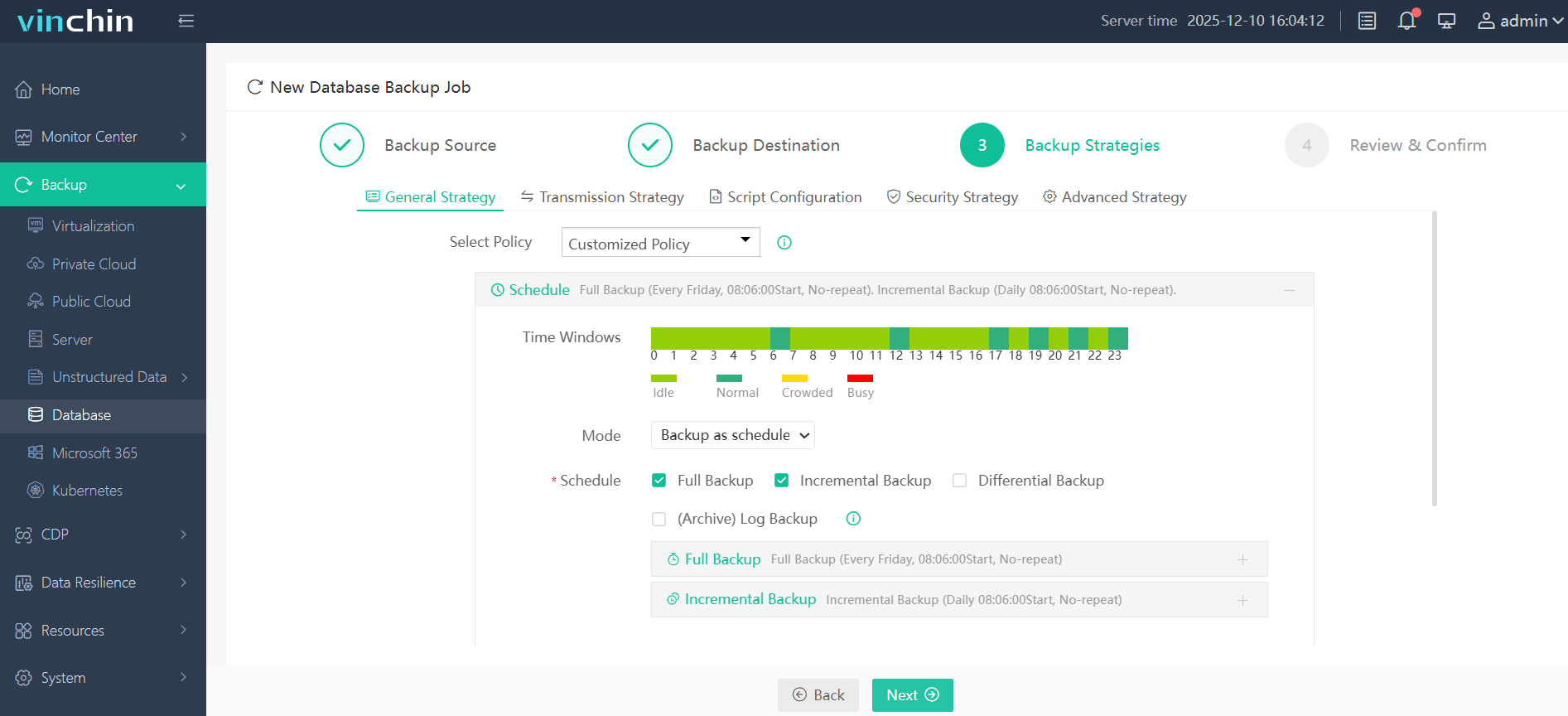
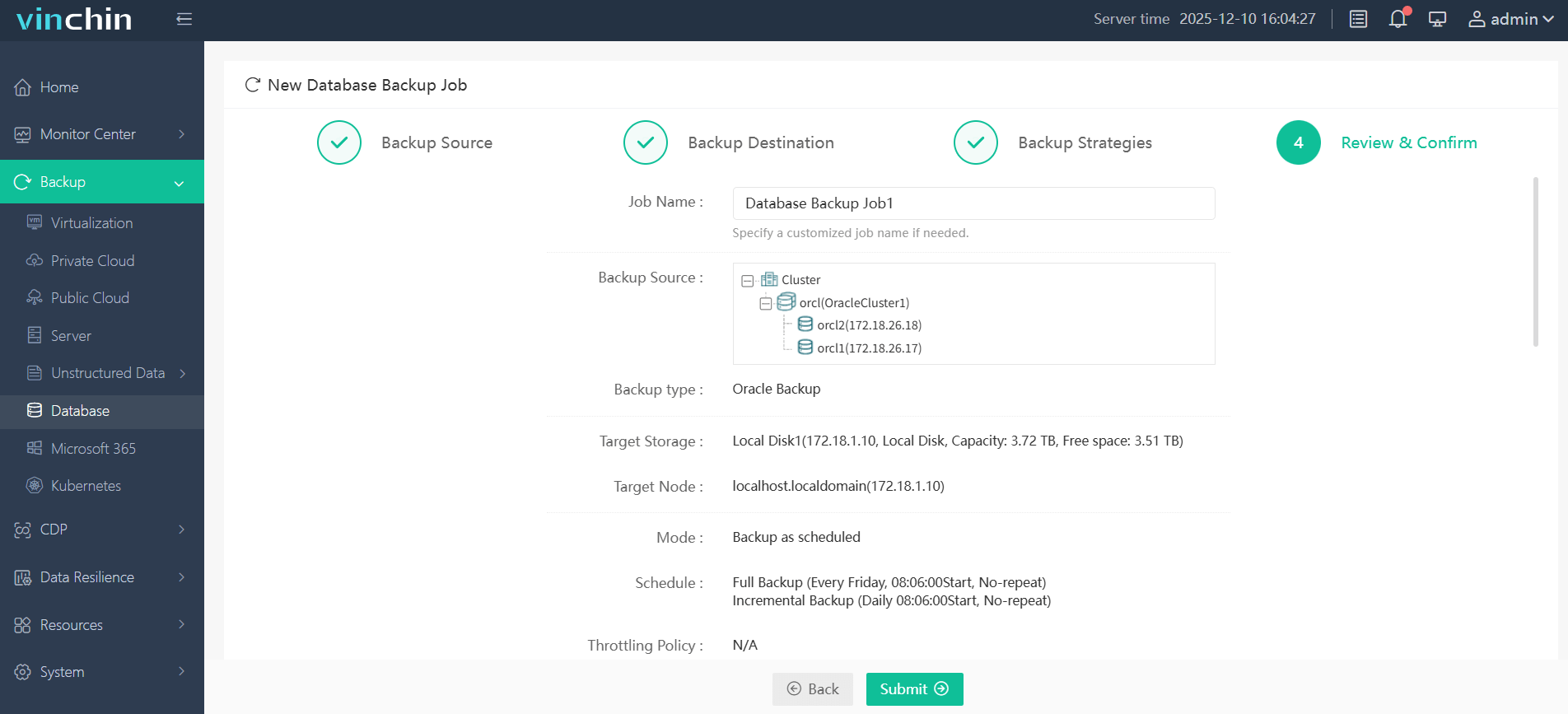
The intuitive web console makes safeguarding your Oracle environment remarkably simple:
Step 1—Select the Oracle database to back up;
Step 2—Choose the desired storage location;
Step 3—Define scheduling and retention strategies;
Step 4—Submit the job—all within minutes.
Recognized globally by thousands of enterprises with top ratings in independent reviews,Vinchin Backup & Recovery offers a fully featured free trial valid for sixty days.Click below to experience comprehensive enterprise-grade protection firsthand!
Oracle RMAN Backup FAQs
Q1: Can I run multiple oracle rman backups simultaneously across different databases?
Yes—you can launch separate RMAN sessions targeting different databases at once if system resources allow it safely.
Q2: What happens if my scheduled oracle rman backup fails due to lack of disk space?
The job stops immediately; review error logs then free space before rerunning—the failed partial set won’t be usable until completed successfully next time around!
Q3: How do I encrypt my oracle rman backups natively?
Use CONFIGURE ENCRYPTION FOR DATABASE ON then add BACKUP AS ENCRYPTED ...; remember encryption keys must be managed securely outside just password-protected accounts.
Conclusion
Oracle RMAN backup provides robust protection through automated routines that minimize risk while maximizing efficiency across any size deployment.For streamlined management plus advanced features,Vinchin delivers everything modern enterprises need—all accessible through one easy platform.Try it free today!