VMware vSphere can help companies build and manage virtual environment and in daily management, IT administrators might need to backup and migrate VM for load balancing or other uses. Since virtual machine is composed of many files, is there a way to migrate VM with the files, for instance, converting VMDK file to OVF?
The Difference Between VMDK and OVF?
Here are a clear compare table:
| Feature | VMDK | OVF |
Definition | VMDK (Virtual Machine Disk) is a VMware proprietary disk file format that stores the contents of a virtual hard disk | OVF (Open Virtualization Format) is an open standard for packaging and distributing complete virtual machine |
| Purpose | Store virtual disk data (OS, applications, files, etc.) | Packages the entire virtual machine, including configuration and virtual disk files |
| Contents | Contains only virtual disk data | Includes OVF descriptor (.ovf), one or more VMDK files, manifest file (.mf), and optional certificate files |
| Includes VM Configuration | It does not contain VM configuration | It contains VM configuration (CPU, memory, network, hardware settings, etc.) |
| File Format | Proprietary (VMware-specific) | Open standard (DMTF standard) |
| Protability | Limited portability. Primarily used within VMware environments
| High portability. Can be imported into multiple virtualization platforms that support OVF |
| Use Case | Used as a virtual hard disk in VMware environments (ESXi, vSphere, Workstation, etc.) | Used for VM template distribution, migration, backup portability, and cross-platform deployment |
| Import/Export | Cannot be imported alone as a VM. Requires a VM configuration to be usable | Can be imported as a complete VM in supported platforms |
| Human Readable | No, it is a binary disk file | Yes, OVF descriptor is an XML file that can be opened and edited |
| Typical File Extension | .vmdk | .ovf (descriptor), .vmdk (disk), .mf (manifest), can be packaged as .ova (single archive) |
| Compression/Packaging | Not packaged, exists as a standalone disk file (or split into multiple files) | Can be packaged as .ova (a single archive) for easy distribution and deployment |
Export OVF from vSphere Client
vCenter will provide a GUI to help directly export VM. If you can't find the original VM, use the vmdk file to create a new VM and then export it in this way.
1. Log in to vCenter
2. Locate the VM to export and right-click it
3. Select Template
4. Select Export OVF Template
The download might be blocked if pop-ups are not allowed so check settings if the download didn't start.
When you create new VM, select Deploy OVF Template to use it. vCenter could also export VM to OVA template before but now OVF template is the only choice. If you still need OVA template, use OVF Tool to export OVA template.
Convert VMDK to OVF with OVF Tool
You might want to get the OVF file because it can be used to perform full VM migration and this can be completed by VMware OVF Tool (Open Virtualization Format Tool) and the process to export OVF file is competed in CMD.
1. Download and install OVF Tool from VMware (remember the installation directory)
2. Open CMD.exe
3. Go the installation location by typing
cd "<C:Program FilesVMwareVMware> OVF Tool"
This is the default installation location and make sure the directory is correct.
4. Export OVF file by typing
ovftool.exe –noSSLVerify vi://ip_of_esxi_host where the machine resides/name of source_machine "D:ovf_export_name.ovf"
5. Input the credential of the host when asked and then wait for exporting
After it says Completed successfully, you will find the OVF file in the specified location.
When you feel like deploying the OVF file, type the command below
ovftool -ds=DestinationDatastore -n=DestinationVMName OVF.ovf vi://username:password@vCenter2/Datacenter2/host/Cluster2e
Convert Using VMware Workstation
For smaller environments:
1. Open VMware Workstation, load the virtual machine
2. Navigate to File > Export to OVF
3. Specify the destination folder
Backup and Move VM with Vinchin Backup & Recovery
To manage virtual environement via an easier way, you can upgrade you solution. Vinchin Backup & Recovery is a professional VM backup and migration solution, supporting VMware vSphere 8/7/6/5/4, Hyper-V, XenServer, Red Hat Virtualization, Oracle Linux KVM, etc. (native KVM is not supported for now)
The backup and migration process will be easy:
Agentless backup makes it easy to add the VMs to the backup system and then you just need to select the VMs to easily create a backup job with a wizard in a web console.
If you would like to move a VM to another host, even on a different virtualization platform, you just need to select its VM backup and create a restore job to start it on the new host.
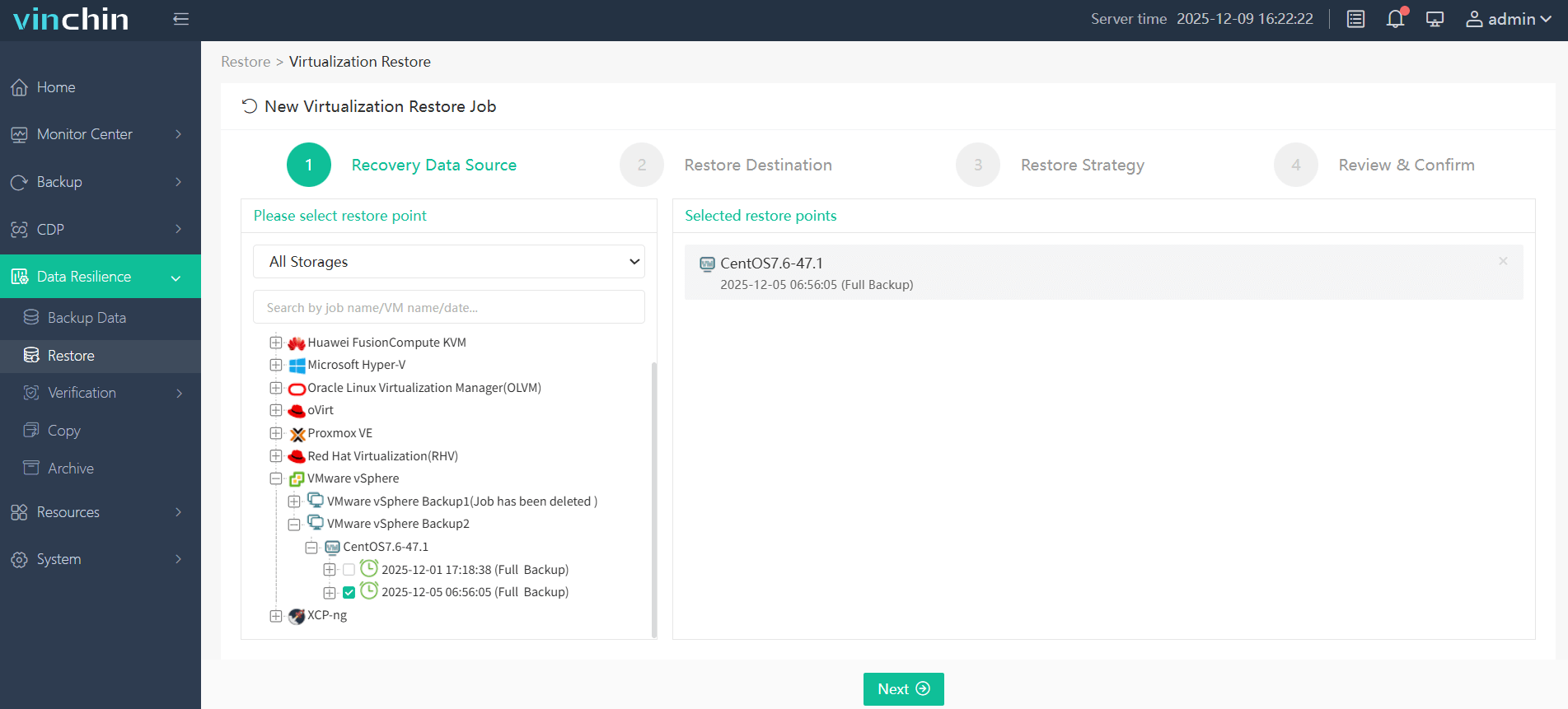
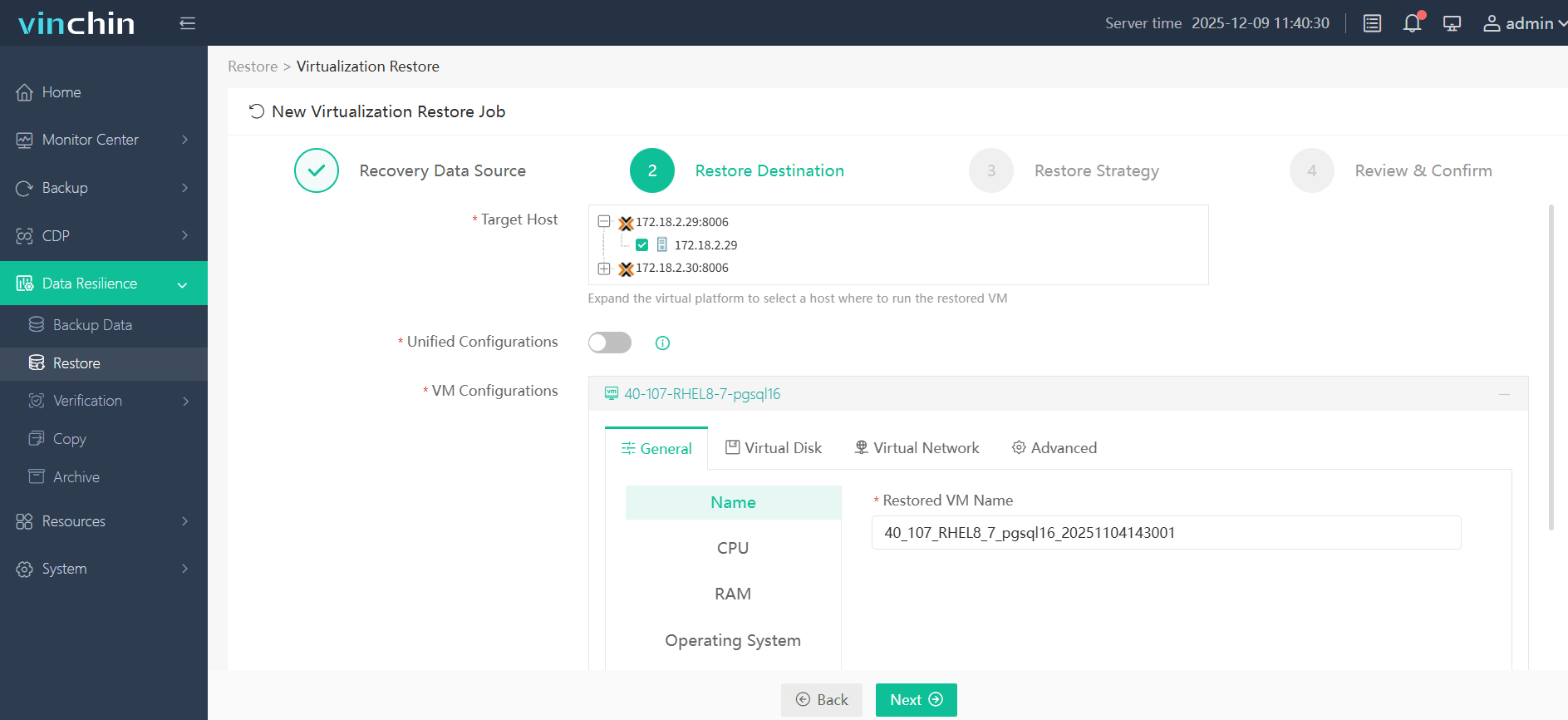
For example, you can directly restore VMware backup to Proxmox for migration:
1. Select the VMware backup
2. Select the Proxmox host as the target
3. Select the strategies
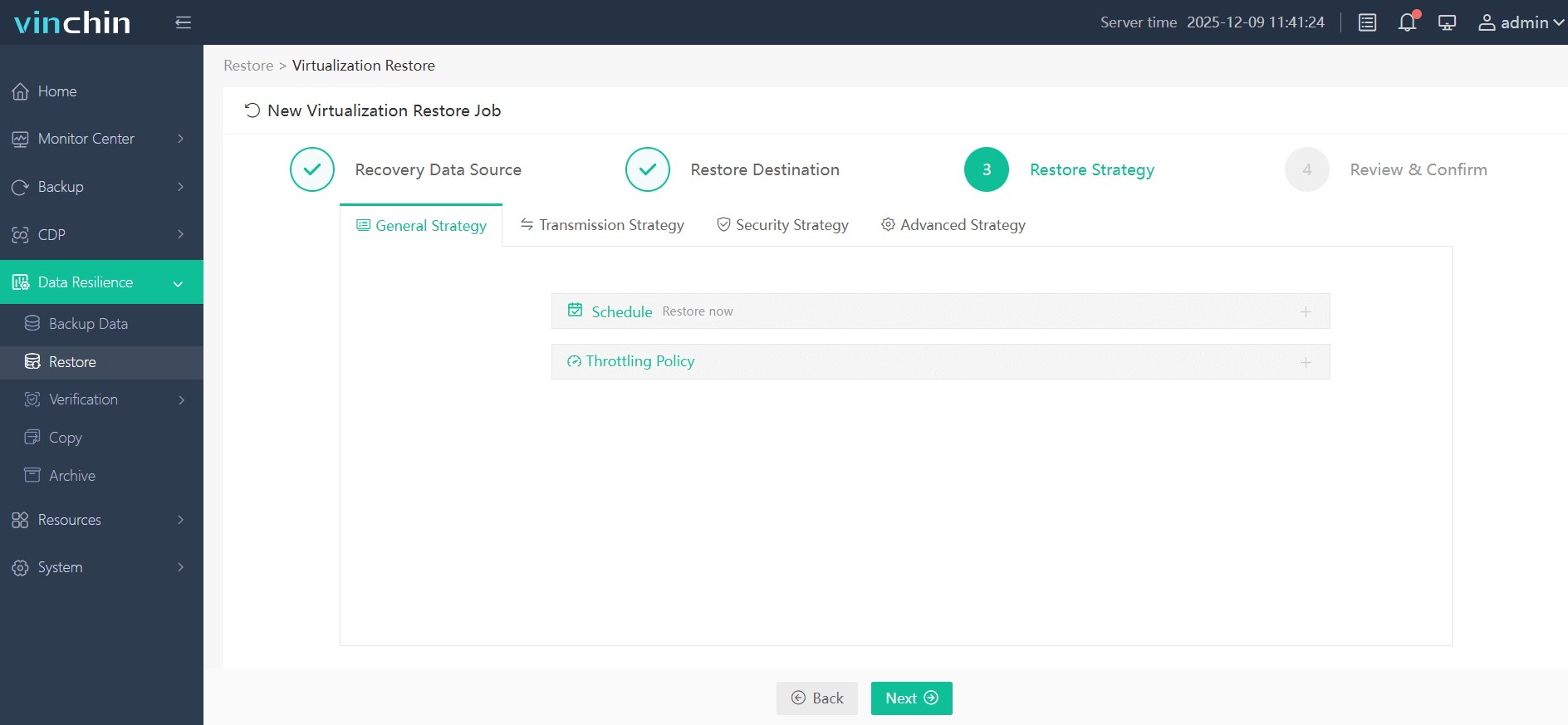
4. Submit the job
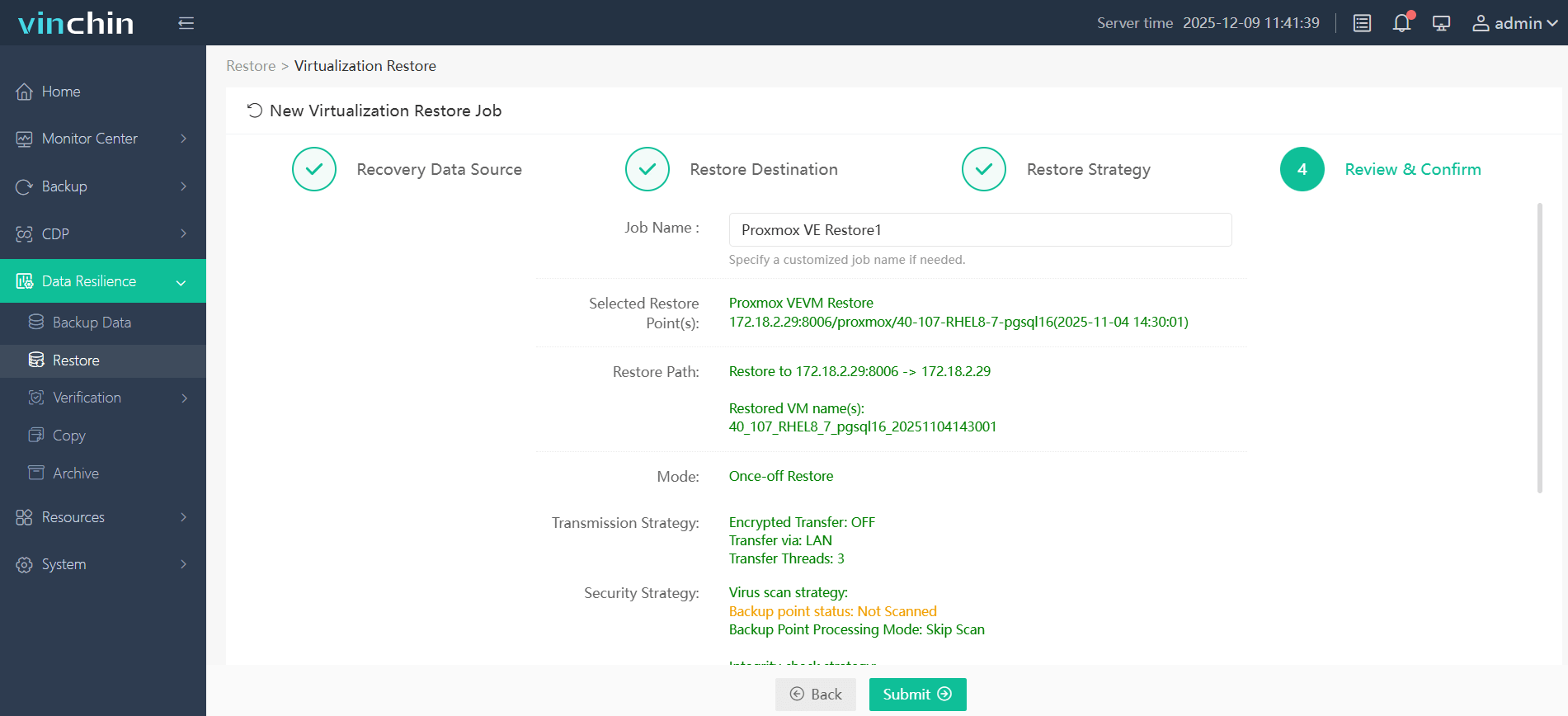
RTO is crucial to business systems. Vinchin Instant Recovery technology will help you rescue a failed VM from its backup in 15 seconds, largely reducing downtime.
This brilliant solution is free to try now. Just download it to get a 60-day full-featured free trial to see how it makes disaster recovery easy and efficient.
VMDK to OVF Conversion FAQs
1. Can you convert a running VM's vmdk virtual disk to OVF?
No, you can’t because you have to export the vmdk while the VM is shut down.
2. What if you don’t have the original VM configuration file?
Usually, a standard configuration will be added to the VM but you don’t have to worry about the configuration because you can modify it later when or after you import the OVF file.
3. How long is it to convert the vmdk to OVF?
Usually, it depends on the size of the virtual disk but you have to make a backup of it because sometimes the process with OVF Tool can occasionally crash.
Conclusion
Converting VMDK to OVF remains one of the most effective ways to package and migrate VMware virtual machines. Whether you're moving workloads between vSphere environments, distributing virtual appliances, or preparing systems for cloud deployment, OVF provides a portable and standardized format that preserves both virtual disks and machine configurations.
For occasional migrations, VMware OVF Tool and vSphere exports are typically sufficient. However, for enterprise-scale protection and disaster recovery, organizations should complement VM exports with dedicated backup solutions such as Vinchin Backup & Recovery to ensure data resilience and operational continuity.