Restoring an Oracle database from an RMAN backup with a different name is a core skill for database administrators. You may need this process to create test environments that mirror production data or to recover from disaster without touching your live system. There are two main ways to do this: using RMAN’s automated DUPLICATE command or performing a manual restore-and-recover sequence. Each method has its strengths depending on your needs.
In this guide, we explain what it means to restore an Oracle database under a new name, why you might do it, how to prepare your environment, step-by-step instructions for both approaches, troubleshooting tips for common problems, and answers to frequent questions.
What is restoring Oracle database with different name?
Restoring an Oracle database with a different name means creating a brand-new instance based on backups from another database but assigning it a unique DB_NAME. This operation is often called cloning or duplicating. The result is two independent databases—one original and one clone—that can run side by side on the same server or separately.
The cloned database does not interfere with your source system. This makes it safe for testing upgrades or patches before rolling them out in production. It also allows you to extract specific data sets without risking operational data loss.
Why restore Oracle database from RMAN backup with different name?
There are several reasons organizations choose this approach:
First, many teams need development or QA environments that match production as closely as possible. Cloning lets you build these quickly from recent backups.
Second, sometimes you must recover lost data without affecting users on the live system. By restoring under a new name elsewhere, you can extract what you need safely.
Third, migrations—whether moving databases between servers or platforms—often require renaming during transfer.
Finally, disaster recovery drills benefit from cloning because they let teams practice full restores in isolation.
By restoring with a different name instead of overwriting existing systems, you reduce risk and gain flexibility in managing your Oracle environment.
Prerequisites
Before starting either method below, make sure these conditions are met:
You have valid RMAN backups of your source database—including all necessary datafiles and control files—and access rights to read them on the target server. The target machine must have compatible Oracle software installed (same version or newer than source). Sufficient disk space should be available at all locations where files will be restored; check quotas ahead of time if needed.
If connecting across servers (for example using network-based duplication), confirm that TNS connectivity works between hosts using tools like tnsping. For remote duplication via RMAN’s DUPLICATE, ensure password files exist for both source and auxiliary instances; otherwise authentication will fail.
Plan out directory structures in advance if file paths differ between source and target systems—you may need conversion parameters later such as DB_FILE_NAME_CONVERT or LOG_FILE_NAME_CONVERT in your initialization parameter file (pfile) or within RMAN commands themselves.
Method 1: Using RMAN DUPLICATE command
The DUPLICATE command automates most steps required to clone an Oracle database from backup under a new name. It’s efficient for standard scenarios where minimal customization is needed.
Begin by preparing your environment:
Set up Oracle software on the target server if not already present. Create any required directories for datafiles and logs ahead of time so permissions are correct.
Next create an initialization parameter file (pfile) tailored for the new instance:
-- Example pfile snippet
DB_NAME=newdb
DB_UNIQUE_NAME=newdb
CONTROL_FILES='/u01/oradata/newdb/control01.ctl'
DB_FILE_NAME_CONVERT='/u01/oradata/olddb/','/u01/oradata/newdb/'
LOG_FILE_NAME_CONVERT='/u01/oradata/olddb/','/u01/oradata/newdb/'
Adjust paths as needed so restored files land in appropriate directories rather than overwriting originals.
Start up the auxiliary instance:
export ORACLE_SID=newdb
sqlplus / as sysdba
STARTUP NOMOUNT PFILE='/path/to/new/init_newdb.ora'
Now connect through RMAN:
rman TARGET sys@olddb AUXILIARY sys@newdb
Here TARGET refers to your source (original) database; AUXILIARY points at the new instance started above in NOMOUNT mode.
If duplicating entirely from backup pieces (no connection to running source), omit TARGET credentials but specify BACKUP LOCATION explicitly:
rman AUXILIARY sys@newdb
Run DUPLICATE:
DUPLICATE DATABASE TO newdb
  BACKUP LOCATION '/path/to/rman/backups'
  NOFILENAMECHECK;
Replace newdb with your chosen name; set BACKUP LOCATION accordingly; use NOFILENAMECHECK only if directory structures match exactly between old and new systems—otherwise rely on filename conversion parameters set earlier in pfile.
RMAN now restores control files first (creating them at specified locations), then recovers all datafiles automatically based on available backups—it even adjusts internal references according to conversion rules provided above!
When finished:
sqlplus / as sysdba
ALTER DATABASE OPEN RESETLOGS;
SELECT NAME FROM v$database;
SELECT DBID FROM v$database;
Check that output matches expectations—the right DB_NAME appears alongside a unique DBID confirming independence from original system.
This method handles most details behind-the-scenes but always review logs afterward for warnings about missing files or skipped objects that could affect application behavior later.
Method 2: Manual restore and rename steps
Manual restoration gives you maximum control over every stage of cloning—ideal when customizations are needed beyond what DUPLICATE supports natively (such as relocating individual tablespaces).
Begin by copying all relevant backup pieces—including control file autobackups—to accessible storage on target host using secure copy tools like SCP if working across networks.
Prepare an initialization parameter file (pfile) reflecting desired settings:
-- Example pfile snippet
DB_NAME=newdb
CONTROL_FILES='/u02/oradata/newdb/control01.ctl'
...
Start up instance in NOMOUNT mode:
export ORACLE_SID=newdb
sqlplus / as sysdba
STARTUP NOMOUNT PFILE='/path/to/init_newdb_manual.ora'
Restore control file using RMAN:
rman TARGET /RESTORE CONTROLFILE FROM AUTOBACKUP;-- Or specify exact piece if known:-- RESTORE CONTROLFILE FROM '/backup/location/cf_autobackup.bkp';ALTER DATABASE MOUNT;CATALOG START WITH '/path/to/all/backups/';-- Ensures all pieces are registered before proceeding further.RESTORE DATABASE;-- If relocating files individually add SET NEWNAME clauses inside RUN block:RUN { SET NEWNAME FOR DATAFILE 1 TO '/new/path/datafile1.dbf'; SET NEWNAME FOR DATAFILE 2 TO '/new/path/datafile2.dbf'; RESTORE DATABASE; SWITCH DATAFILE ALL;}RECOVER DATABASE;-- Applies archived redo logs found among cataloged pieces.ALTER DATABASE OPEN RESETLOGS;SELECT NAME FROM v$database;-- At this point DB_NAME may still reflect old value!-- To finalize renaming process change both DBID & DB_NAME using nid utility:SHUTDOWN IMMEDIATE;STARTUP MOUNT PFILE='/path/to/init_newdb_manual.ora';nid TARGET=SYS/password DBNAME=newdb LOGFILE=/tmp/nid.log-- Review log output carefully! If successful proceed:SHUTDOWN IMMEDIATE;STARTUP MOUNT PFILE='/path/to/init_newdb_manual.ora';ALTER DATABASE OPEN RESETLOGS;SELECT NAME FROM v$database;SELECT DBID FROM v$database;Afterward validate everything: query V$TABLESPACE/V$DATAFILE views ensuring expected layout; check application schemas load correctly; verify listener configuration if clients will connect directly.How to protect Oracle database with Vinchin Backup & Recovery?
Once you've successfully restored or duplicated your Oracle environment, robust protection becomes essential going forward. Vinchin Backup & Recovery is an enterprise-grade solution designed specifically for safeguarding mainstream databases including Oracle, MySQL, SQL Server, MariaDB, PostgreSQL, PostgresPro, and TiDB—with comprehensive support tailored especially well for complex Oracle deployments like yours.
Key features such as incremental backup support, batch database backup management, advanced source-side compression capabilities, flexible retention policies including GFS retention policy options, and multi-level data compression help streamline operations while maximizing storage efficiency and ensuring rapid recovery readiness at any scale—all managed centrally through one platform built for reliability and ease-of-use by IT professionals worldwide.
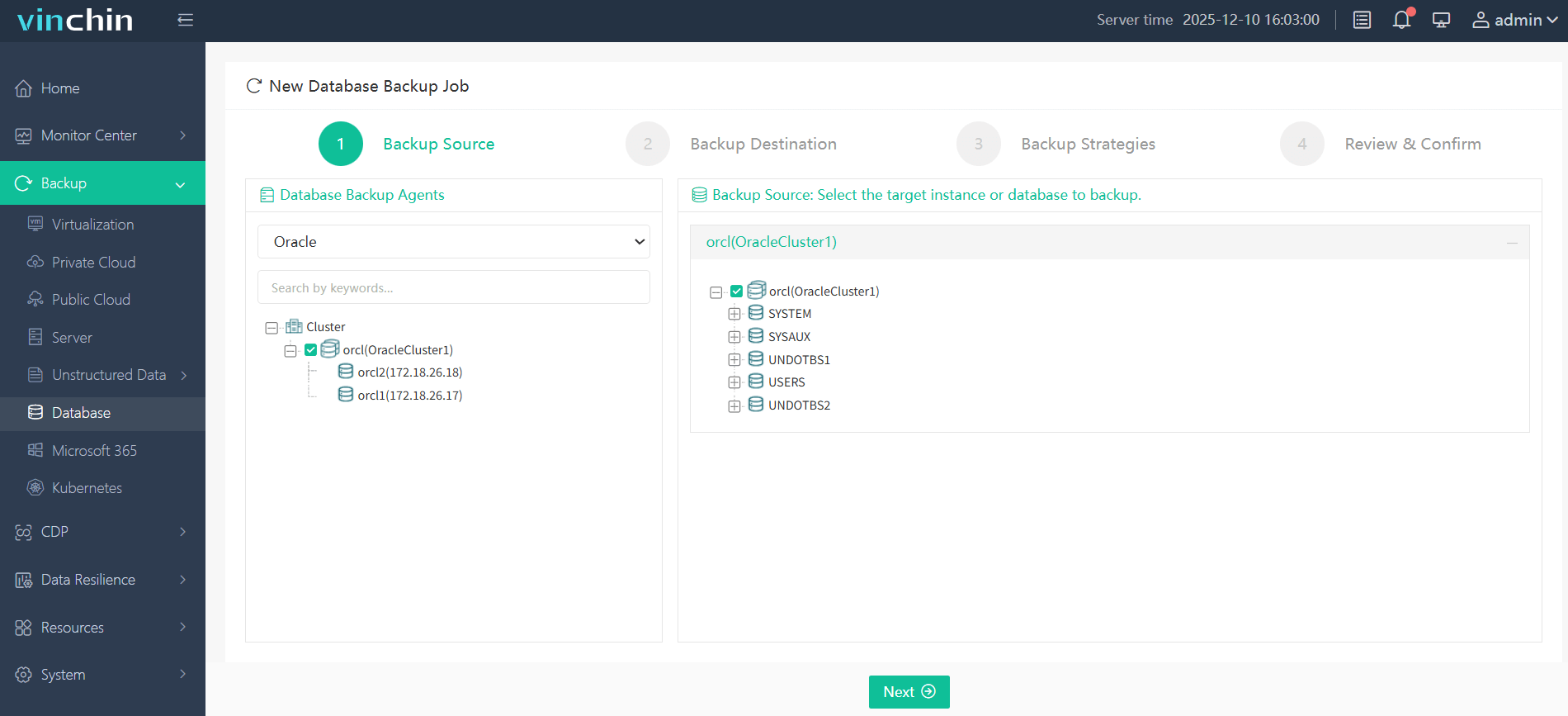
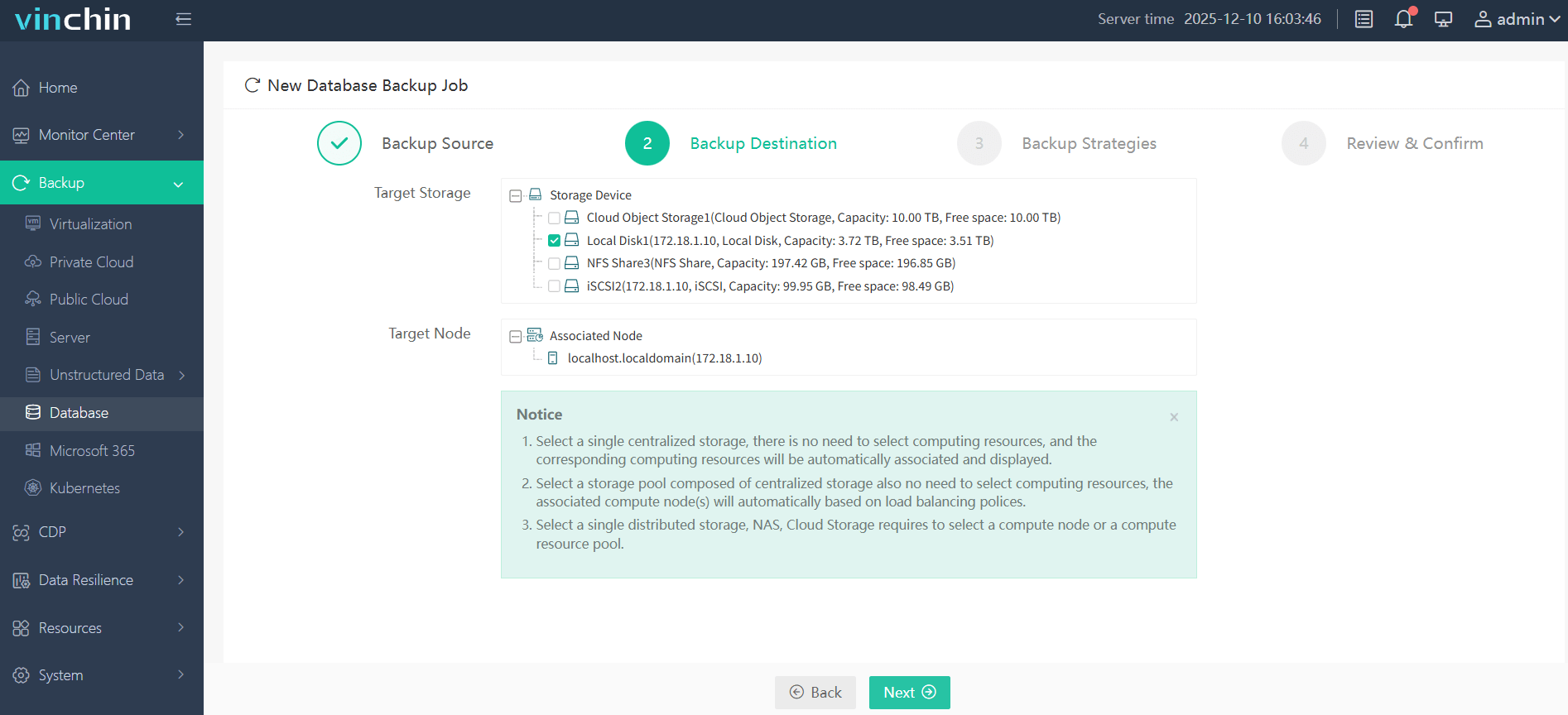
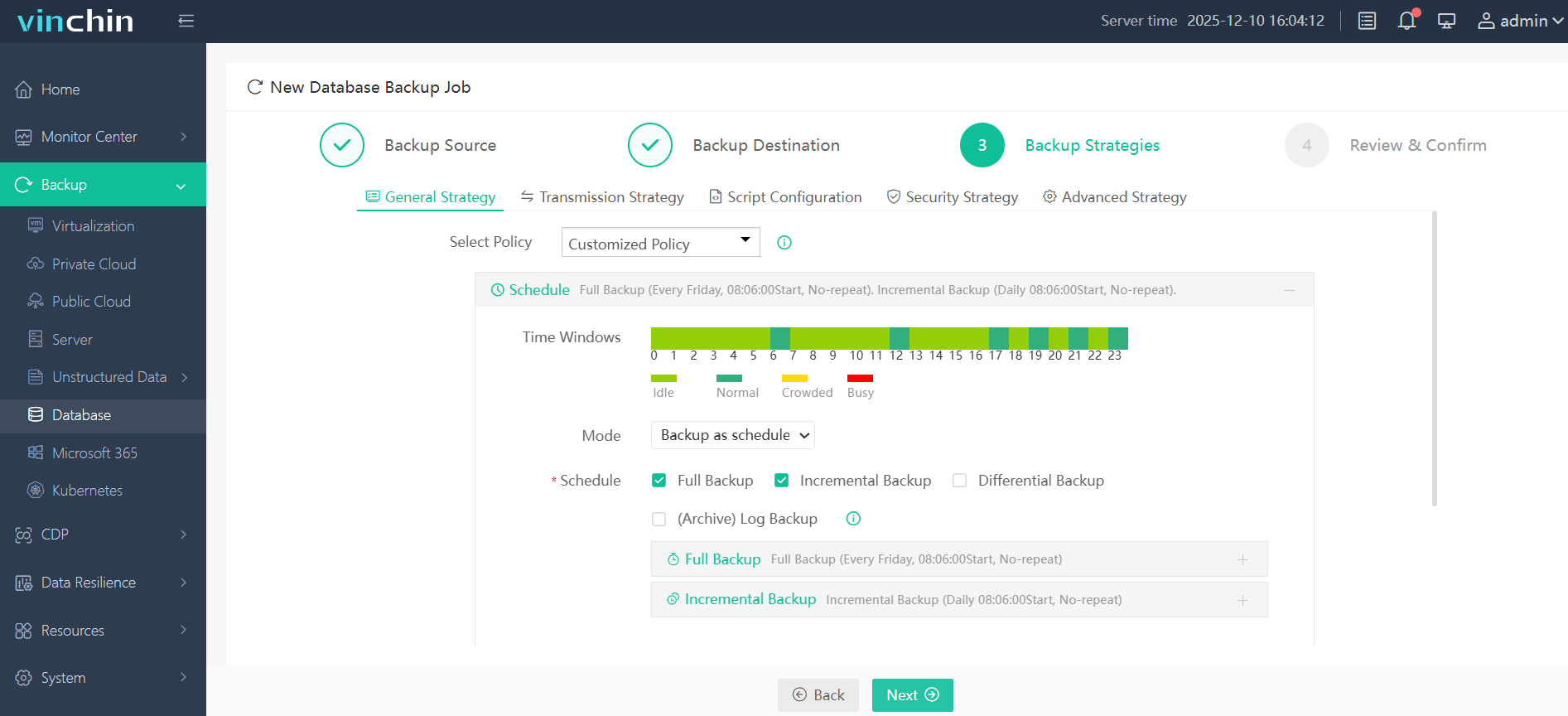
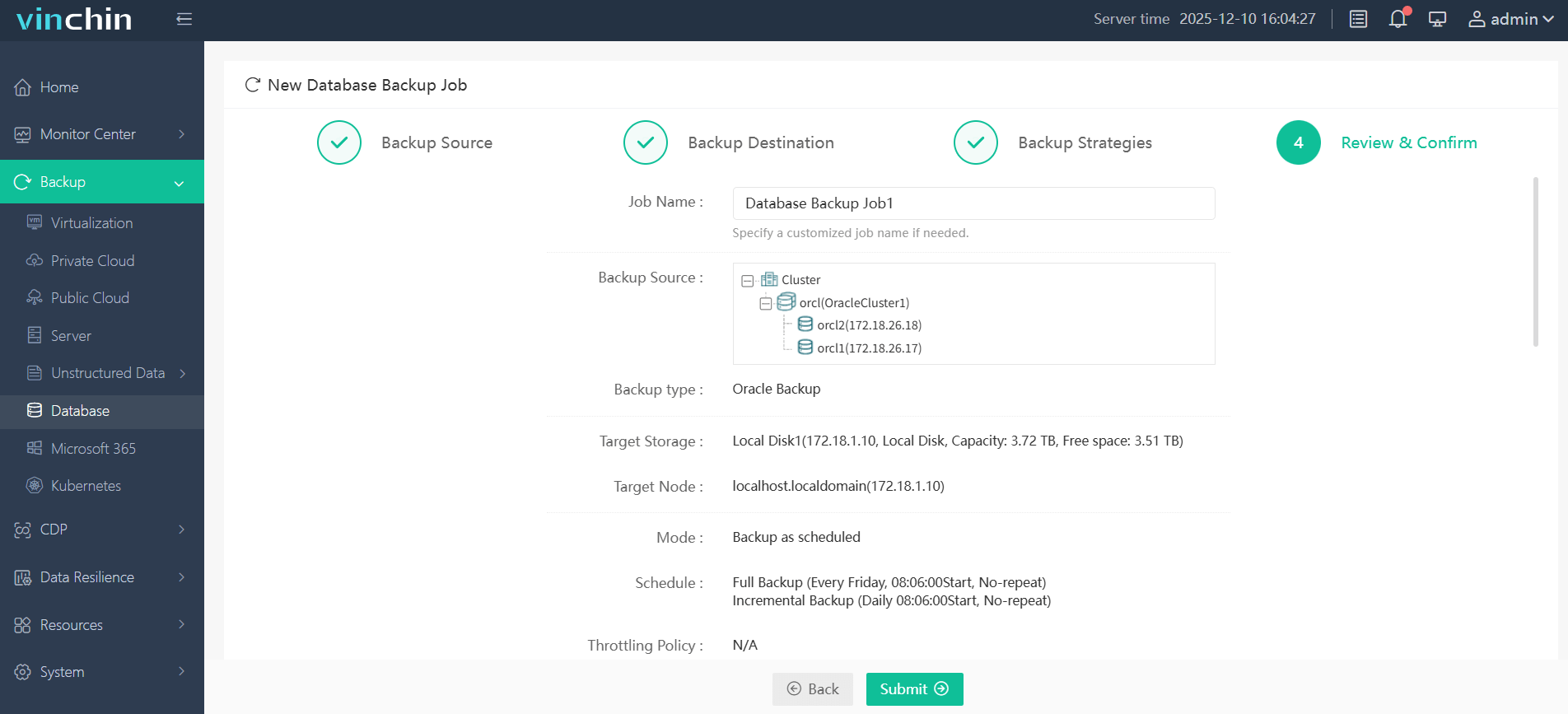
With Vinchin Backup & Recovery's intuitive web console interface backing up your Oracle environment takes just four straightforward steps:
Step 1. Select the Oracle database to back up
Step 2. Choose the backup storage
Step 3. Define the backup strategy
Step 4. Submit the job
Vinchin Backup & Recovery is trusted globally by thousands of enterprises seeking proven protection solutions rated among industry leaders—start today with their fully featured free trial (60 days) by clicking download below!
Restore oracle database from RMAN backup FAQs
Q1: Can I restore my production RMAN backups onto cloud-hosted virtual machines?
Yes—as long as compatible Oracle software runs there—you can copy backups over securely then follow either duplicate/manual procedures described above after configuring network access properly.
Q2: What happens if my restored clone shows same DBID as original?
You must run NID utility after initial open/resetlogs cycle so cloned instance receives unique identity—this prevents conflicts during registration into central catalogs.
Q3: How do I troubleshoot “ORA-19870 error reading backup piece” during restore?
Check physical accessibility of referenced piece first > verify correct path > re-catalog missing/moved items > retry operation.
Conclusion
Restoring an Oracle database from an RMAN backup under another name helps keep production safe while enabling flexible testing or migration workflows tailored precisely per project needs—choose automated DUPLICATE when speed matters most or manual steps when custom layouts matter more! Vinchin ensures ongoing protection once setup completes so future recoveries stay fast—and stress-free!