Choosing backup software for Proxmox Virtual Environment (VE) is a decision that shapes your business’s ability to recover from disaster. The right solution impacts measurable outcomes—like Recovery Time Objective (RTO) and Recovery Point Objective (RPO)—that define how quickly you can restore operations after an outage or data loss. Reliable backups mean less downtime, lower risk of lost revenue, and greater confidence in meeting compliance targets.
In today’s enterprise IT landscape, only robust backup tools deliver consistent high-speed performance and proven data integrity at scale. Your choice determines not just technical efficiency but also business continuity and resilience.
Why Reliability & Performance Matter in Enterprise Environments
Reliable performance in backup systems is essential for enterprises that depend on virtualized infrastructure. When systems go down or data becomes corrupted, every minute counts toward lost productivity and potential financial penalties.
● Minimizing Downtime keeps critical services available. According to Gartner research, average downtime costs can reach $5,600 per minute for large organizations. A slow or unreliable backup system extends outages and increases these losses.
● Reducing Data Loss Risk ensures that recent changes are always protected. If backups fail or lag behind production workloads, you risk losing hours—or even days—of valuable work.
● Meeting Compliance Requirements protects your organization from regulatory fines. Many industries require strict data retention policies; failure to restore records quickly can result in non-compliance with standards like GDPR or HIPAA.
● Maintaining Customer Trust depends on fast recovery from incidents. Extended outages erode confidence among clients who expect continuous service availability.
A backup system must perform reliably under pressure—handling large volumes of data without bottlenecks—to keep your organization secure as it grows.
How To Choose The Best Proxmox Backup Solution for Reliability & Performance?
Selecting a Proxmox backup solution requires careful evaluation against real-world demands found in enterprise environments. Look for solutions proven at scale—those supporting high VM densities (100+ VMs per host) and rapid throughput rates (hundreds of GB/hour).
● Proven Scalability allows your backup system to grow alongside your infrastructure without major reconfiguration. Solutions should support parallel processing and multi-threaded operations so multiple jobs run simultaneously without delays.
● Incremental Backups & Changed Block Tracking (CBT) optimize speed by capturing only changed data blocks since the last job. This reduces storage needs while ensuring frequent protection—a key factor when aiming for low RPOs across many VMs.
● Automation Reduces Operational Risk by minimizing manual steps such as scheduling jobs or verifying integrity. Automated processes—including regular consistency checks and offsite replication—lower human error rates while keeping backups current.
● Comprehensive Monitoring & Reporting provide visibility into all activities through dashboards and audit logs. These features help IT teams stay audit-ready for internal reviews or external compliance checks.
● Flexible Compatibility ensures your chosen solution adapts as technology evolves—supporting new hypervisor versions or integrating with cloud storage options without complex migrations.
The best Proxmox backup software combines these capabilities into one robust platform that remains easy to manage—even as complexity increases over time.
Proxmox Backup Server: Enterprise-Grade Protection for Proxmox VE
Proxmox Backup Server (PBS) is the enterprise-grade backup solution purpose-built for Proxmox VE. Developed by the same team behind Proxmox VE, PBS offers deep integration, high performance, and reliability at scale. Let’s break down what makes it stand out.
Key Features:
Incremental Backups: After the first full backup, PBS only saves changes, reducing storage needs and network load. This makes frequent backups practical, even for large environments.
Global Deduplication: PBS stores only unique data blocks, so identical files across multiple VMs are saved once. This dramatically reduces storage requirements, especially in environments with many similar virtual machines.
Compression and Encryption: Backups are compressed to save space and encrypted (AES-256) for security, both in transit and at rest.
Granular Restore: Need to recover a single file or directory? PBS allows you to restore individual files from VM or container backups, saving time and reducing downtime.
Data Verification: Built-in integrity checks ensure your backups are valid and restorable, so you’re never caught off guard during a disaster.
Centralized Management: The intuitive web interface lets you schedule, monitor, and manage all backup operations from one place.
Seamless Integration: PBS is fully integrated with Proxmox VE. You can configure backup jobs, retention policies, and restores directly from the Proxmox VE interface.
Vinchin Backup & Recovery: Unified Protection Across Virtualization Platforms
For enterprises seeking advanced protection beyond native tools like Proxmox Backup Server—and especially those managing diverse virtualization platforms—Vinchin Backup & Recovery delivers comprehensive coverage across more than 15 mainstream environments including VMware vSphere/ESXi/vCenter, Hyper-V, oVirt/RHV/OLVM/XCP-ng/XenServer/OpenStack/ZStack/Huawei FusionCompute/H3C CAS-UIS/FusionOne Compute/InCloud Sphere/Sangfor HCI/Arcfra Cloud Platform—and notably seamless integration with Proxmox VE itself.
Vinchin Backup & Recovery stands out through features such as forever-incremental backup using CBT where supported; LAN-free backup on platforms like VMware/XenServer/oVirt/RHV/ZStack/Proxmox; instant recovery capability; granular restore; plus powerful deduplication/compression—all designed to maximize efficiency while minimizing downtime across complex infrastructures handling hundreds of VMs daily. These capabilities enable rapid recovery times (low RTO), reduced storage costs via deduplication/compression strategies, flexible migration between platforms (V2V), strong ransomware defense through encryption/multi-thread transmission/data verification routines—all managed centrally via an intuitive web console tailored for scalability as workloads grow over time.
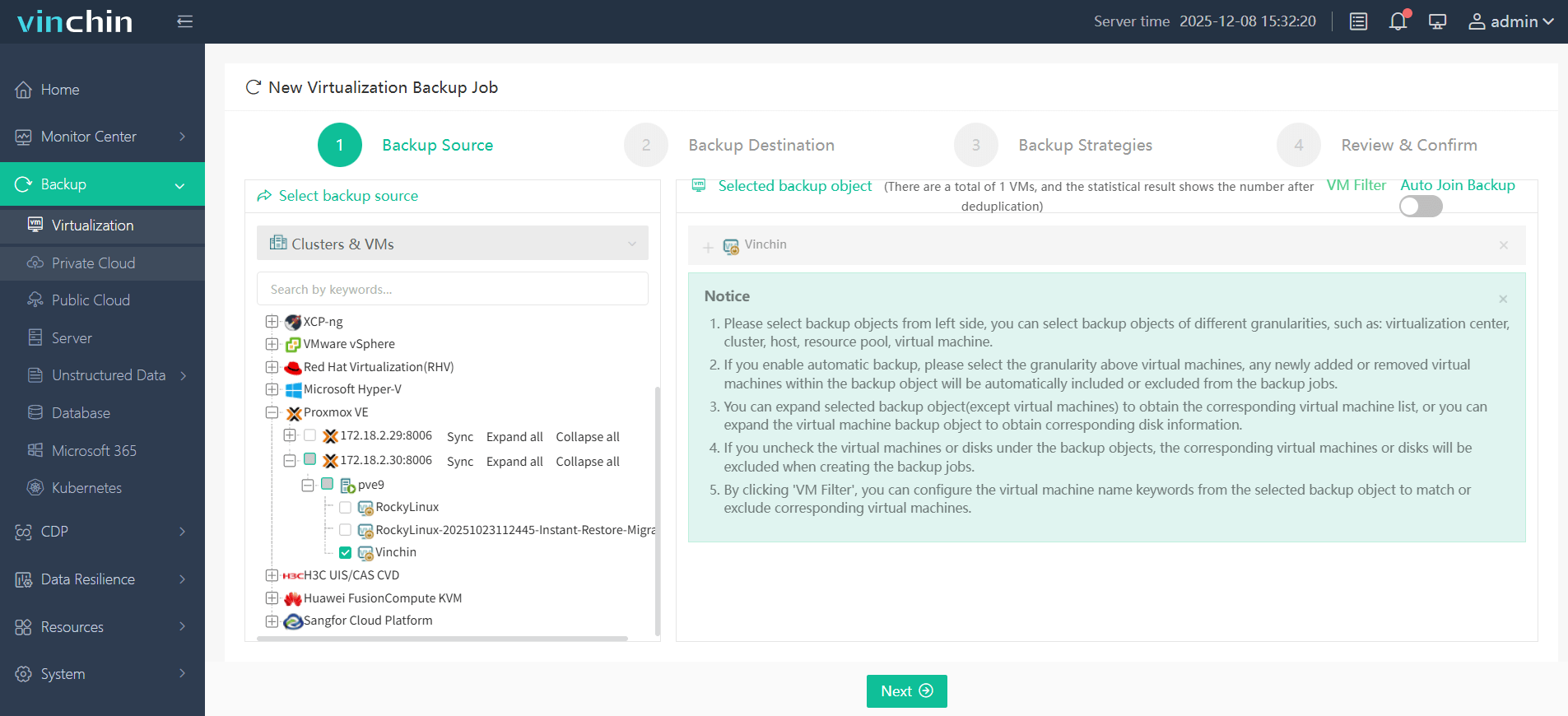
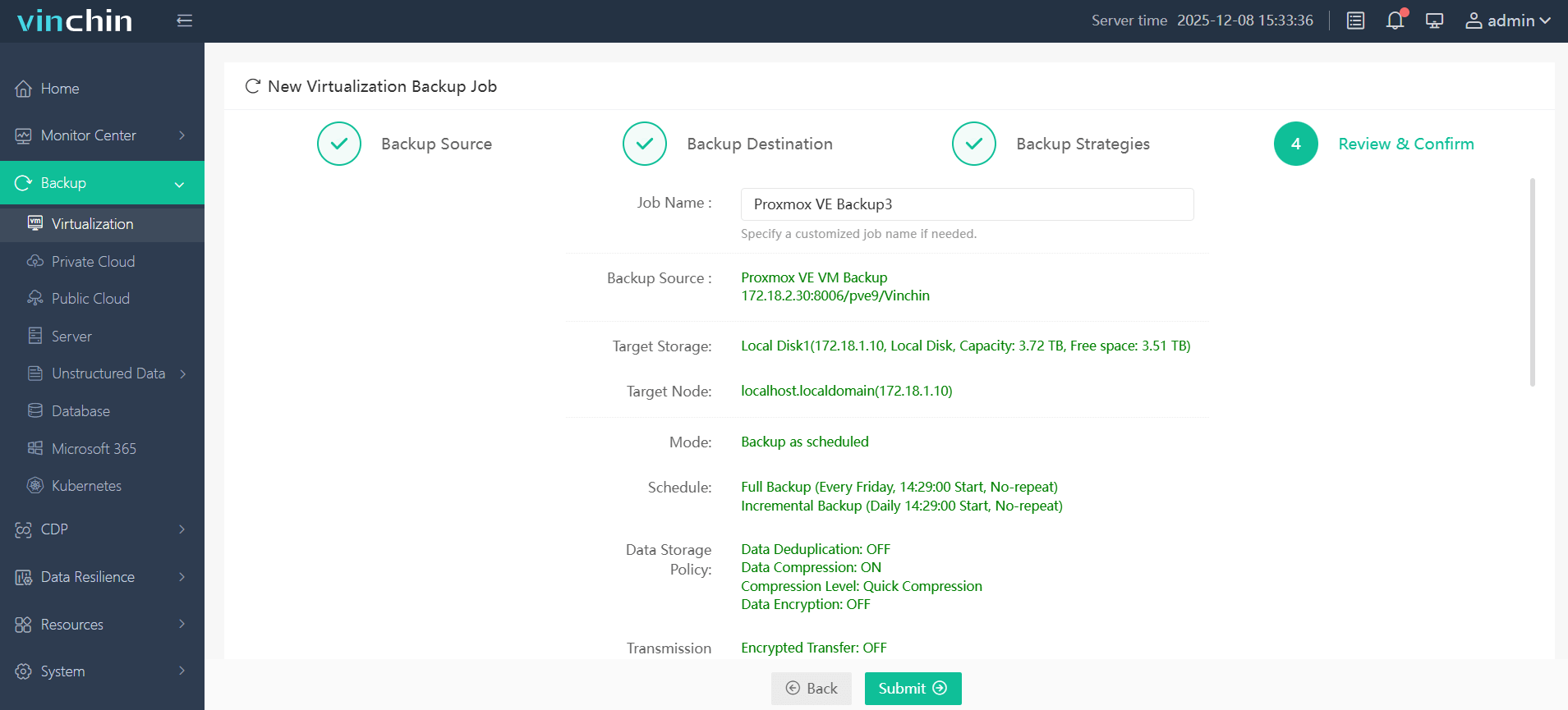
Backing up a Proxmox VM with Vinchin Backup & Recovery is straightforward thanks to its user-friendly web console:
Step 1: Select the Proxmox VM to back up
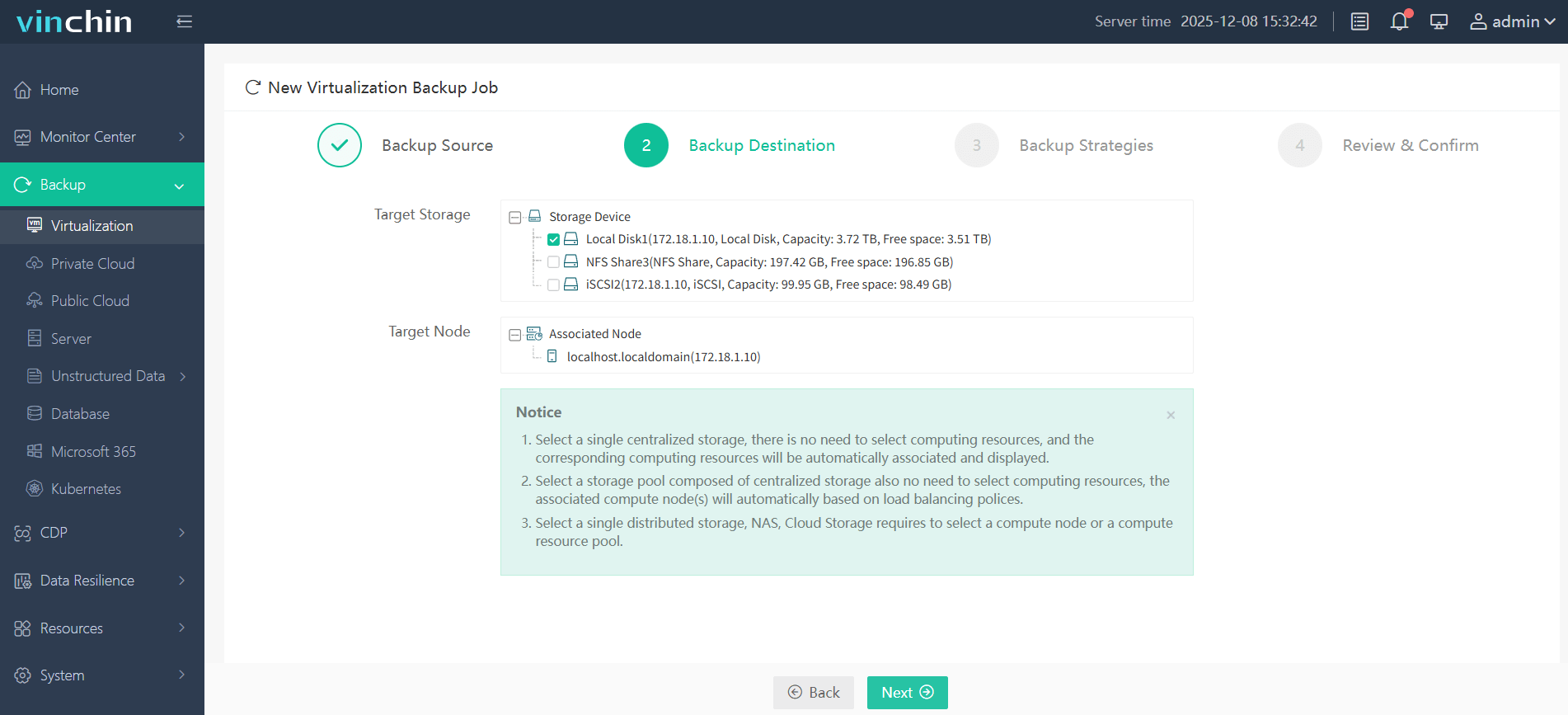
Step 2: Choose the target backup storage
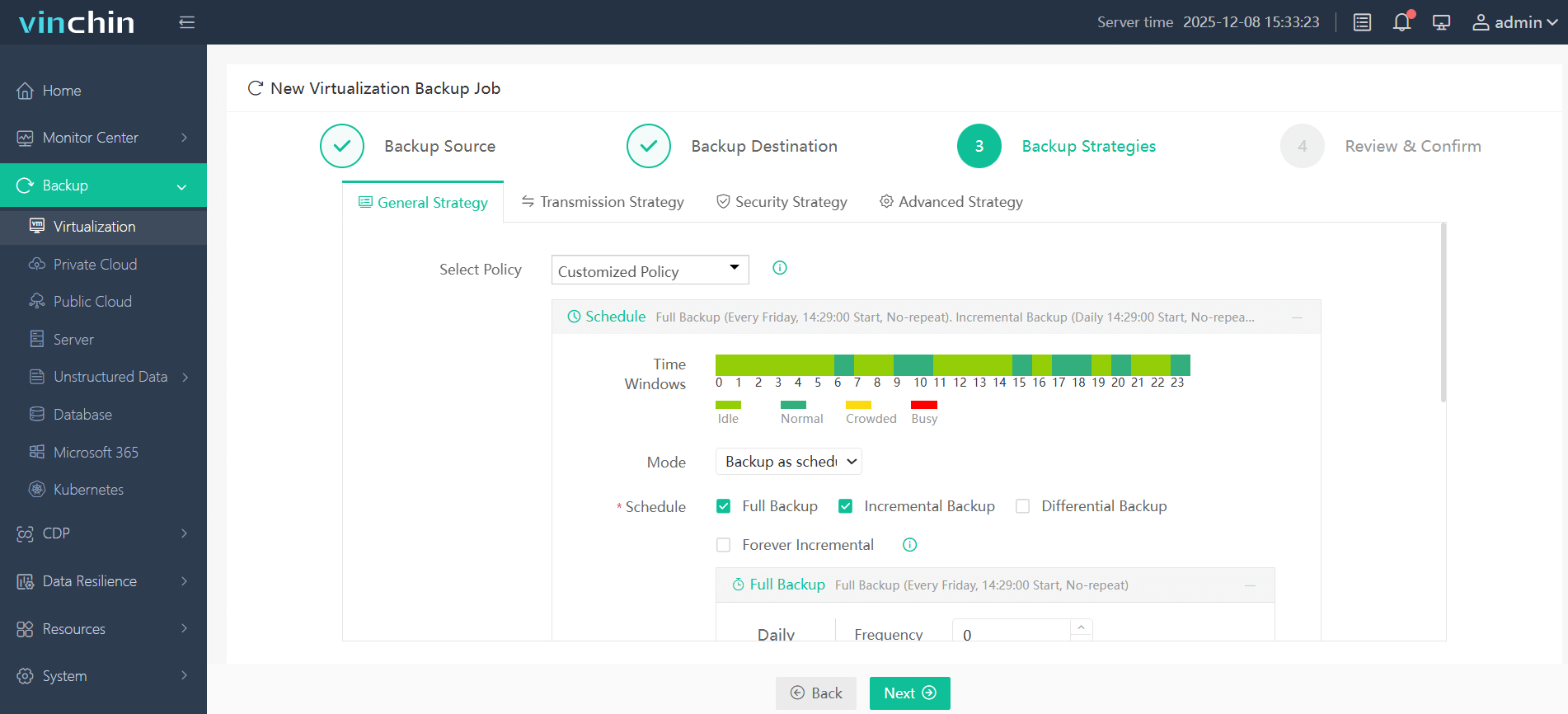
Step 3: Configure an appropriate strategy based on business needs
Step 4: Submit the job
With global recognition among enterprise users worldwide—and top ratings backed by thousands of customers—Vinchin Backup & Recovery offers a fully-featured 60-day free trial so you can evaluate its fit risk-free before making any commitment.
Proxmox Backup Software FAQs
Q1: How does enterprise-grade backup improve reliability on Proxmox?
Enterprise-grade solutions automate consistent snapshot creation using technologies like scheduled policies combined with built-in verification routines that check each archive’s integrity after completion—minimizing risks associated with manual errors/data corruption during busy periods when stakes are highest!
Q2: What performance factors should enterprises prioritize?
Prioritize parallel processing capabilities allowing multiple concurrent streams per node; leverage Changed Block Tracking (CBT) which captures only modified segments between cycles speeding up incremental runs significantly! Invest in fast network links such as 10GbE interfaces ensuring bottleneck-free transfers even under peak loads seen during nightly batch windows!
Q3: Can scalable solutions adapt as our environment grows?
Yes! Leading platforms feature flexible architectures supporting seamless expansion whether adding hosts/storage nodes/new hypervisor versions—all managed centrally via unified consoles/licensing models designed around dynamic growth patterns typical within modern datacenters today!
Q4: How do advanced features impact compliance?
Advanced reporting/auditing modules track every action taken inside platform generating detailed logs suitable for external review against frameworks like GDPR/HIPAA/SOX etc.; encryption-at-rest/in-transit plus granular retention controls further align practices directly w/legal mandates governing sensitive information management worldwide!
Q5: Is it possible to restore individual files from a backup?
Absolutely! Both native/professional solutions offer granular recovery workflows enabling selective restoration of single documents/directories straight outta comprehensive image sets—saving time/resources compared traditional full-system rollbacks previously required elsewhere!
Q6: How do I protect backups from ransomware?
Deploy layered defenses including AES-level encryption locking archives against tampering; enable immutable storage preventing unauthorized deletions/modifications post-write event completion; replicate copies offsite/cloud locations isolating them physically/logically away from compromised production assets whenever feasible too!
Conclusion
Choose deep integration with PBS for reliable scale-out protection on pure-Proxmox stacks; select Vinchin when cross-platform flexibility matters most—all while maximizing uptime security across evolving infrastructures everywhere!