Virtual machines play a key role in modern enterprise cloud and virtualization environments by improving resource utilization and deployment flexibility. VMware is one of the leading virtualization vendors, and many enterprises rely on products such as vSphere to manage their IT infrastructure.
One of the key advantages of VMware’s virtualization ecosystem is its mature live migration capability, which allows virtual machines to move between hosts with minimal disruption.
In many data center environments, administrators often need to perform server maintenance, hardware upgrades, or load balancing. In such cases, migrating running virtual machines without downtime becomes essential. To ensure business continuity during these operations, VMware provides vMotion. This article explains what VMware vMotion is, how it works, and how to use it for live VM migration in vCenter.
What Is VMware vMotion?
vMotion is a VMware technology that enables live migration of running virtual machines between ESXi hosts without downtime. It allows a VM to continue operating while its compute resources are transferred to another physical server. During this process, applications and operating systems remain fully available, with no service interruption for end users.
A related feature is Storage vMotion, which allows migration of VM storage while the VM remains powered on. However, unlike vMotion, Storage vMotion focuses on moving virtual disks rather than changing the compute host.
What Is VMware vMotion Used for?
Now that we understand what vMotion is, let’s look at where it is commonly used in enterprise environments. vMotion is widely used in the following scenarios:
Hardware maintenance: When a host requires maintenance or upgrades, running VMs can be migrated to another host without downtime.
Load balancing: If one ESXi host is heavily loaded while another has available resources, vMotion can redistribute workloads to improve performance.
Host failure prevention: When hardware issues or alerts are detected, VMs can be proactively migrated to a healthy host to avoid service disruption.
Resource optimization with DRS: vMotion works closely with VMware DRS (Distributed Resource Scheduler) to automatically balance workloads across a cluster.
Note: If a vMotion task fails, the VM typically remains on the original host and continues running normally. Standard vMotion is limited to migration within the same vCenter environment. For cross-vCenter migration, Cross vCenter vMotion is required.
Requirements and limitations of Utilizing VMware vMotion
While vMotion is a powerful feature, it requires proper configuration in the virtualization environment.
Before using vMotion, ensure the following requirements are met:
1. vMotion must be properly licensed and enabled in vCenter.
2. Source and destination hosts must use compatible management network configurations.
3. A high-speed network (typically 10 GbE or higher) is recommended for vMotion traffic.
4. CPU compatibility must be ensured between source and destination hosts (EVC may be required in some cases).
5. Shared storage or properly configured datastore access is typically required depending on migration type.
There are additional requirements depending on specific VMware configurations and environments. More details can be found in VMware documentation.
If vMotion is not available, alternative migration methods may be required.
How to Use VMware vMotion in vCenter to Perform a Live Migration?
After you know what is VMware vMotion and whether it could be performed in your virtual infrastructure, now you could try to execute it.
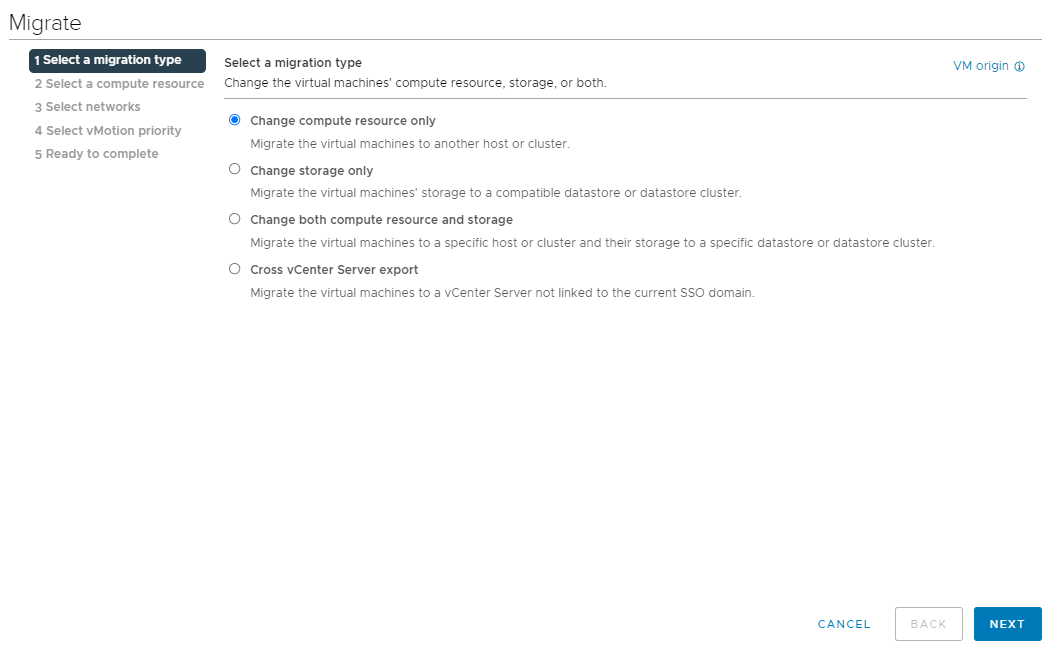
Step 1. Open VMware vSphere client > right click the virtual machine you want to migrate > select Change computer resource only
Step 2. You could see all the available servers and their CPU consuming status. Select the server you want to migrate the virtual machine to and click Next
Step 3. Select network if you have created a vSphere distributed switch and port group. If not, just click Next to skip this step
Step 4. Review your migration job and click Finish. Virtual machine would be migrated in a while.
If vMotion failed, you can fix the issue with this guide: Fix Unable to Migrate VM to Another ESXi Host
An Easier Way to Secure VM Data and Migrate VMware
A good resource distribution plan could make your virtual machines and hosts always have excellent performance. In addition, a good disaster recovery plan would make your data and business safe. VMware vMotion is powerful but it works only in the VMware environment. For V2V migration like moving VM from VMware to Hyper-V, you need a more professional solution.
Vinchin Backup & Recovery is an excellent virtual machine backup solution, which is easy to deploy in virtual infrastructure and has outstanding performance for VM backup. Its key features include:
Agentless Backup: Vinchin Backup & Recovery supports agentless backup on 15+ virtual platforms to help you reduce related work and cost, including VMware.
Cross-platform Migration: You could migrate VM not only between hosts running the same virtual platform now, but also migrate it from one virtual platform to another. For example, your VMware backup could be used on Hyper-V to reallocate the workload.
Instant Recovery: To guarantee the continuity of your business, Vinchin Backup & Recovery would recover your failed VM from downtime in 15 seconds, by recovering the VM to the original host or another.
Unified Web Console: A centralized console is enough for you to manage and backup virtual machines on all the platforms.
For instance, if you would like to migrate VM from VMware to Hyper-V (remerber to back up the VMware VM in advance):
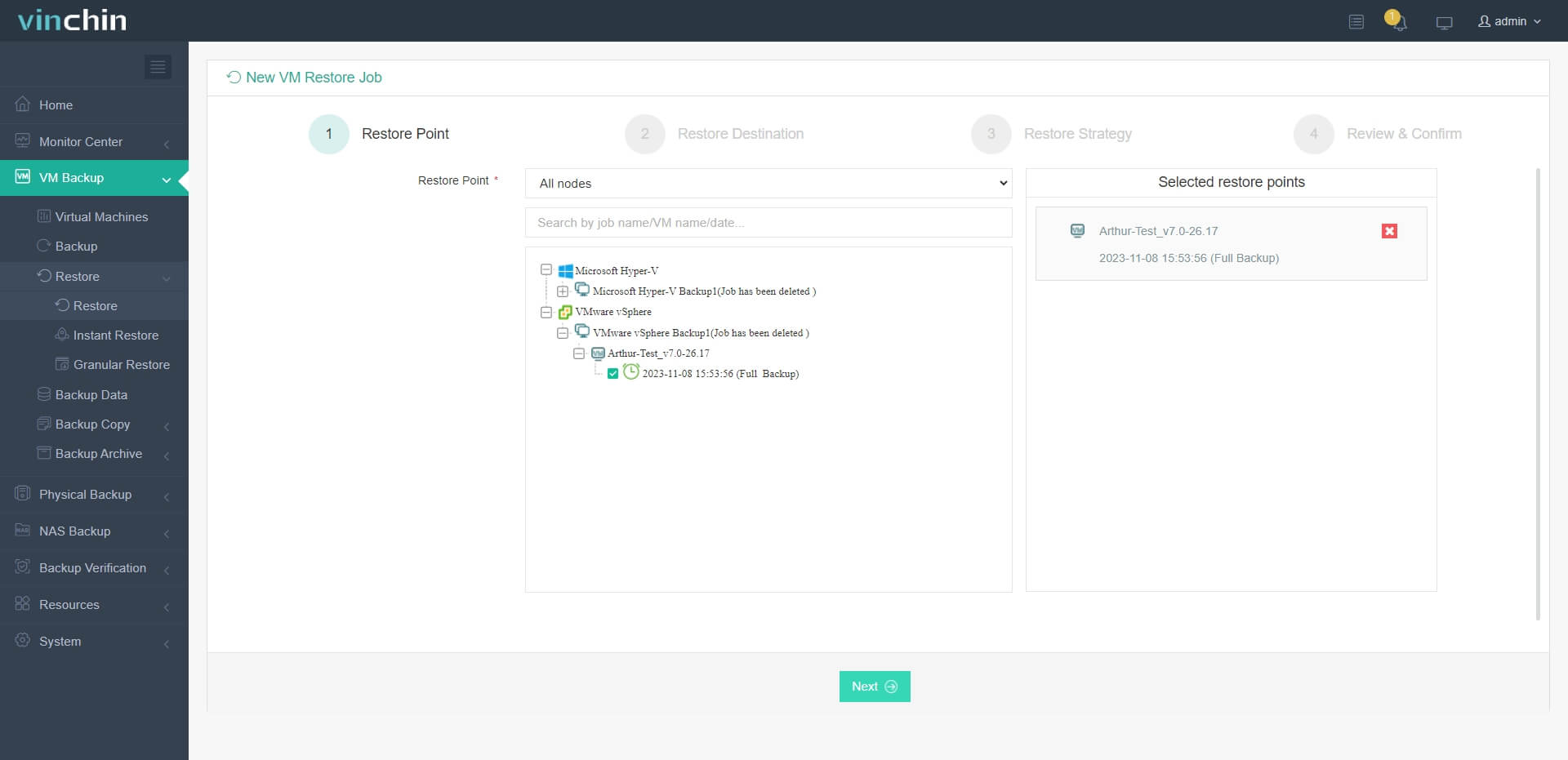
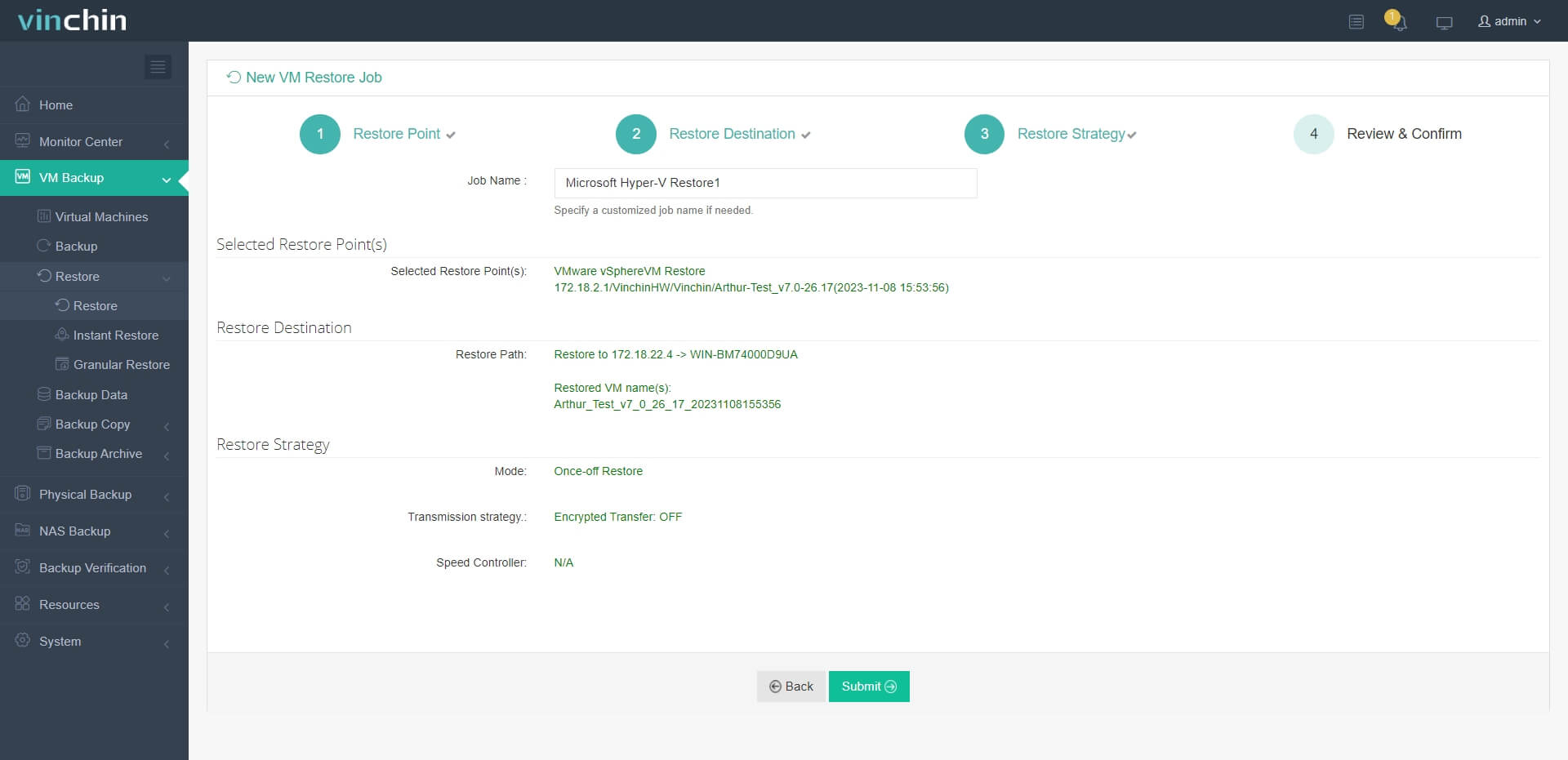
1. Select the VMware backup storage you just created from the inverntory tree.
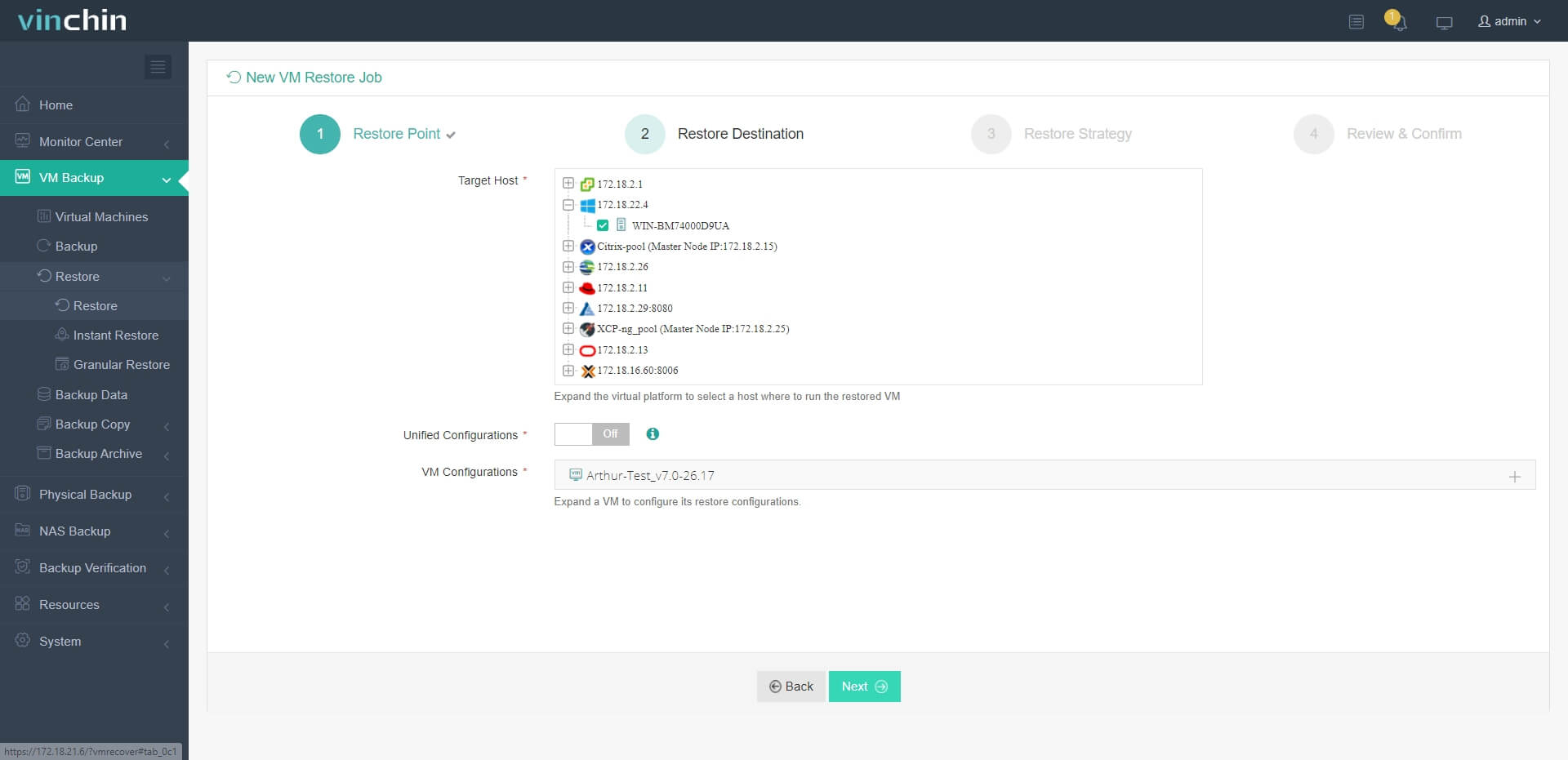
2. Select a Hyper-V host as the restore destination and fulfill other settings if necessary.
3. Configure the restore strategies, choose either to run the task immediately or schedule it later.
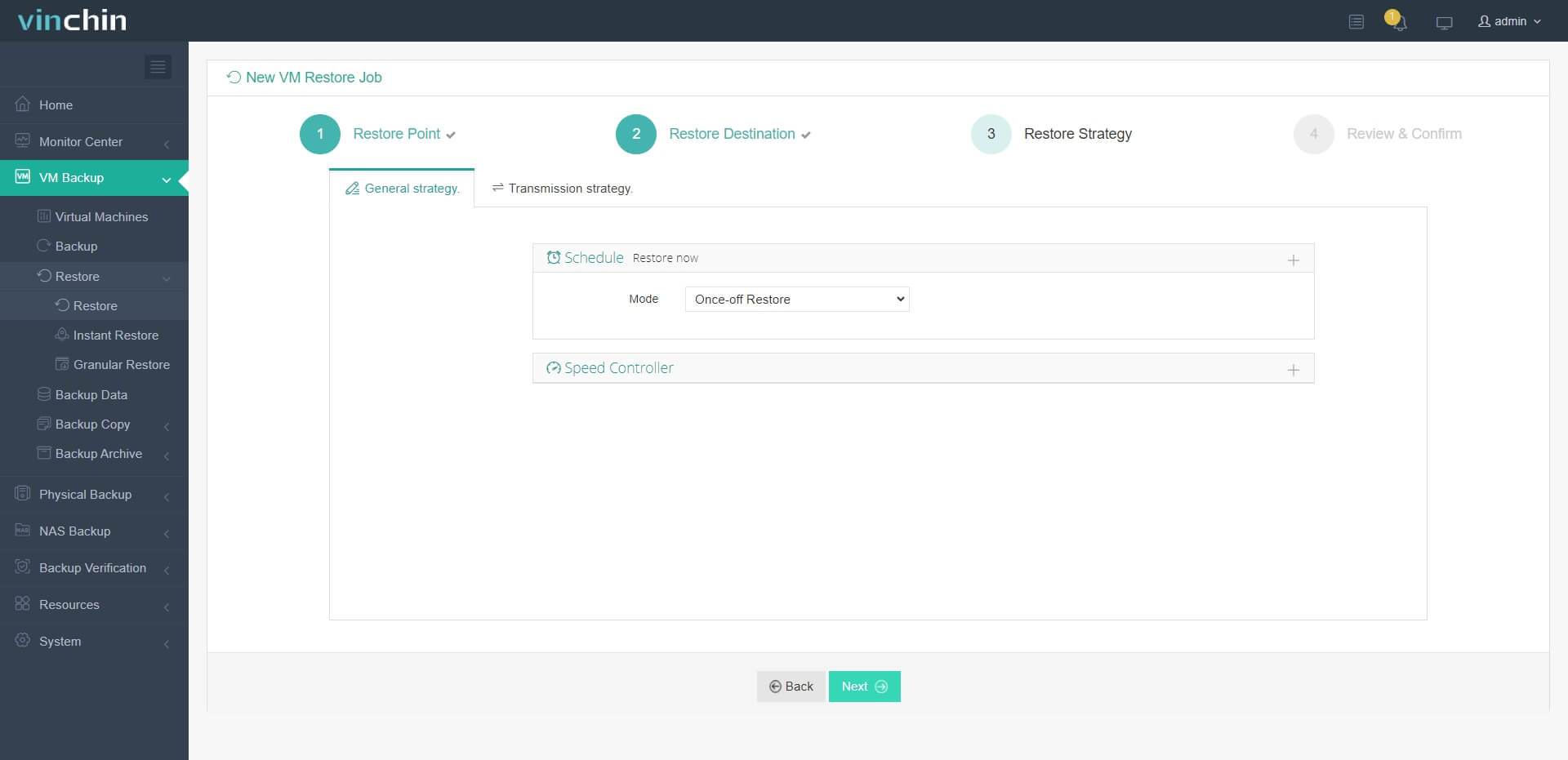
4. Review the settings and click Submit once you confirmed they're correct.
Vinchin Backup & Recovery has been selected by thousands of companies and you can also start a 60-day full-featured free trial here. Also, contact us, leave your requirements, and then you will receive your tailored solution. We have established partnerships with reputable companies all over the world so if you would like to do a local business, you can select a local partner here.
VMware vMotion FAQs
Q1: How can I verify my hosts support vMotion?
Check that vMotion is enabled in vCenter and run a pre-migration compatibility check before starting the migration.
Q2: My vMotion stalled due to network mismatch; how do I fix it?
Ensure that source and destination hosts use compatible management network configurations and that IP settings are consistent.
Q3: How do I cancel an in-progress vMotion?
Right-click the VM in vCenter, go to Recent Tasks, and select Cancel Migration.
Conclusion
VMware vMotion is a core feature that enables zero-downtime live migration of virtual machines between ESXi hosts. It is widely used for load balancing, hardware maintenance, and resource optimization in VMware environments.
However, since vMotion is limited to VMware infrastructure, organizations that require cross-platform migration or disaster recovery across different hypervisors may need additional solutions such as Vinchin Backup & Recovery to achieve greater flexibility and resilience.