Slow backup times? Unpredictable failures? Cryptic Oracle errors? These headaches often trace back to how you configure NFS mount options for Oracle RMAN on Linux. Setting up an NFS share is only half the battle—choosing the right mount options makes all the difference between smooth backups and frustrating downtime. In this guide, we’ll break down what Oracle RMAN and NFS mounts are, why mount options matter so much, how to optimize them step by step—and what to do when things go wrong.
What Is Oracle RMAN and NFS Mount?
Oracle Recovery Manager (RMAN) is Oracle’s built-in tool for backing up, restoring, and recovering databases. It automates complex backup tasks like incremental backups or point-in-time recovery. Network File System (NFS) lets you access remote file systems over a network as if they were local directories on your Linux server.
When you use an NFS share as a backup destination for RMAN, configuration becomes critical. The right settings ensure your backups are safe from corruption or loss—and that restores work when you need them most.
Why Choose Specific NFS Mount Options for Oracle RMAN?
Not all NFS mount options are equal—especially when it comes to database workloads like Oracle RMAN backups. Poor choices can cause slow performance or even failed backups that leave data at risk. For example, using default buffer sizes may throttle throughput; missing key reliability flags could lead to incomplete writes or corrupted files.
Choosing recommended options helps RMAN write backup files efficiently while protecting against network hiccups or server interruptions. You also avoid common errors such as ORA-19504 (“failed to create file”) or ORA-27054 (“NFS file system not responding”). Isn’t it better to prevent these problems before they start?
How to Configure Basic NFS Mount Options in Linux?
Let’s start at square one: mounting an NFS share on Linux with basic settings.
First, make sure nfs-utils is installed on your server—it provides essential tools for working with NFS shares. Use showmount -e host (replace “host” with your server’s name or IP) to list available exports from your NFS server; this confirms which directories you can use for backups.
To create a local directory as a mount point—for example /mnt/backup—run:
mkdir -p /mnt/backup
Then mount the remote export using:
mount -t nfs -o rw host:/nfs/backup /mnt/backup
Here:
host is your NFS server’s hostname or IP address,
/nfs/backup is the exported directory,
/mnt/backup is where it appears locally.
Want this share mounted automatically after every reboot? Edit /etc/fstab, adding:
host:/nfs/backup /mnt/backup nfs rw 0 0
This setup works—but it’s just a starting point! For reliable database protection with RMAN, you need more than defaults.
How to Optimize NFS Mount Options for Oracle RMAN Backups?
Optimizing your mount options transforms ordinary storage into robust backup infrastructure. Here’s what experts recommend:
rw,bg,hard,nointr,rsize=32768,wsize=32768,tcp,vers=3,timeo=600,actimeo=0
What do these mean?
rw: Enables read-write access.
bg: If initial connection fails at boot time, retry in background instead of blocking startup.
hard: Keeps trying until operations succeed—critical so no data gets lost if there’s a brief outage.
Never use “soft” mounts; they risk silent data corruption during network issues!
nointr: Prevents signals from interrupting requests—a legacy best practice that still matters if running older kernels or certain distributions; test its effect in modern environments since some newer kernels handle interrupts differently.
rsize/wsize=32768: Sets read/write buffer size per operation (32 KB). This value balances performance across most networks; some admins test higher values like 1048576 on fast links but always validate first.
tcp: Uses TCP protocol instead of UDP—more reliable under heavy loads.
vers=3: Forces use of stable version 3 protocol; v4 adds features but may complicate locking unless fully tested in your environment.
timeo=600: Waits up to 60 seconds before retrying after timeout—a good balance between patience and responsiveness.
actimeo=0: Disables attribute caching so metadata changes appear instantly everywhere—a must-have for consistent database operations.
To apply these settings temporarily:
mount -t nfs -o rw,bg,hard,nointr,rsize=32768,wsize=32768,tcp,vers=3,timeo=600,actimeo=0 host:/nfs/backup /mnt/backup
For persistent mounting via fstab:
host:/nfs/backup /mnt/backup nfs rw,bg,hard,nointr,rsize=32768,wsize=32768,tcp,vers=3,timeo=600,actimeo=0 0 0
Important notes:
Always avoid using “soft” mounts—they can cause silent data loss if connections drop mid-backup! Also skip “noac”; it disables client-side caching entirely but brings no benefit over actimeo=0 here. Make sure permissions allow both reading and writing by the user running Oracle processes.
If you see errors like ORA‑19504 (“cannot create file”) or ORA‑27054 (“file system not responding”), double-check these settings first!
Common Errors and Troubleshooting Steps
Even well-tuned setups sometimes hit snags—but knowing what symptoms mean speeds up recovery dramatically:
| Error/Symptom | Likely Cause | Action To Take |
|---|
| ORA‑19504 / ORA‑27054 | Incorrect/missing hard option; permission mismatch; lock conflicts | Check that "hard" is set in mount options → Confirm correct ownership & permissions → Ensure rpc.statd runs on both ends |
| Slow Backups | Small rsize/wsize values; network lag; busy storage backend | Try larger rsize/wsize (e.g., up to 1048576); monitor live stats via nfsiostat/iostat/sar-b; check switch/router load |
| Mount Hangs / Timeouts | Network instability; unreachable server; too-low timeo value | Test connectivity with ping → Restart/recheck services → Increase timeo cautiously |
If issues persist after checking these basics:
1. Review /proc/mounts output—are all intended flags present?
2. Look at syslog/dmesg logs around failure times—they often reveal hidden clues!
3. Consult official documentation when stumped by rare error codes.
Remember: small tweaks often yield big improvements!
Protecting Your Oracle Database Backups with Vinchin Backup & Recovery
After optimizing your Oracle environment's storage layer through proper NFS configuration, it's crucial to safeguard those valuable database backups efficiently and reliably. Vinchin Backup & Recovery stands out as a professional enterprise-level solution supporting today's mainstream databases—including Oracle (as discussed throughout this article), MySQL, SQL Server, MariaDB, PostgreSQL, PostgresPro, and TiDB—making it ideal for diverse IT landscapes.
Vinchin Backup & Recovery delivers advanced capabilities such as incremental backup tailored for Oracle workloads, batch database backup management across multiple instances simultaneously, flexible data retention policies including GFS retention strategies for compliance needs, cloud backup plus tape archiving integration for offsite protection and disaster recovery readiness—all managed through robust scheduling automation that minimizes manual intervention while maximizing reliability and efficiency.
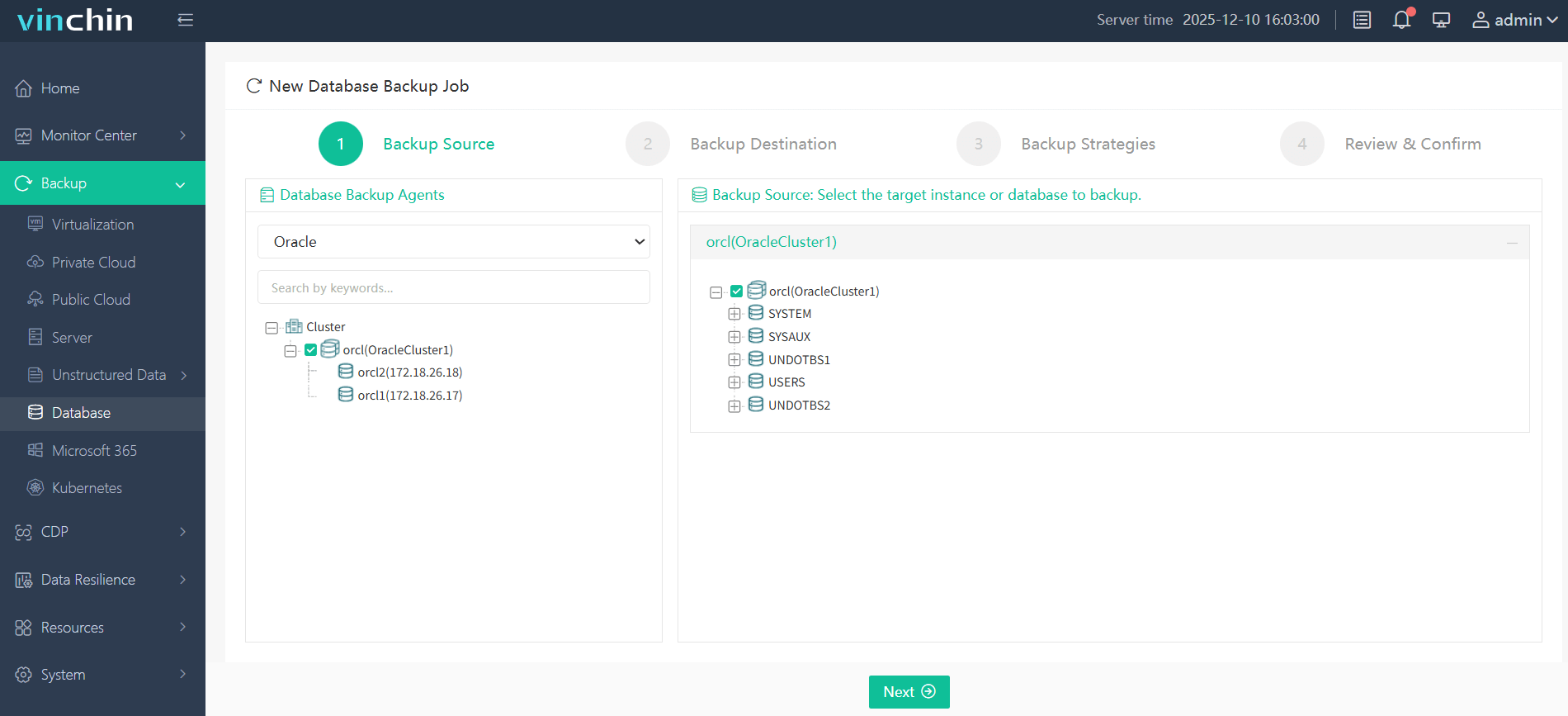
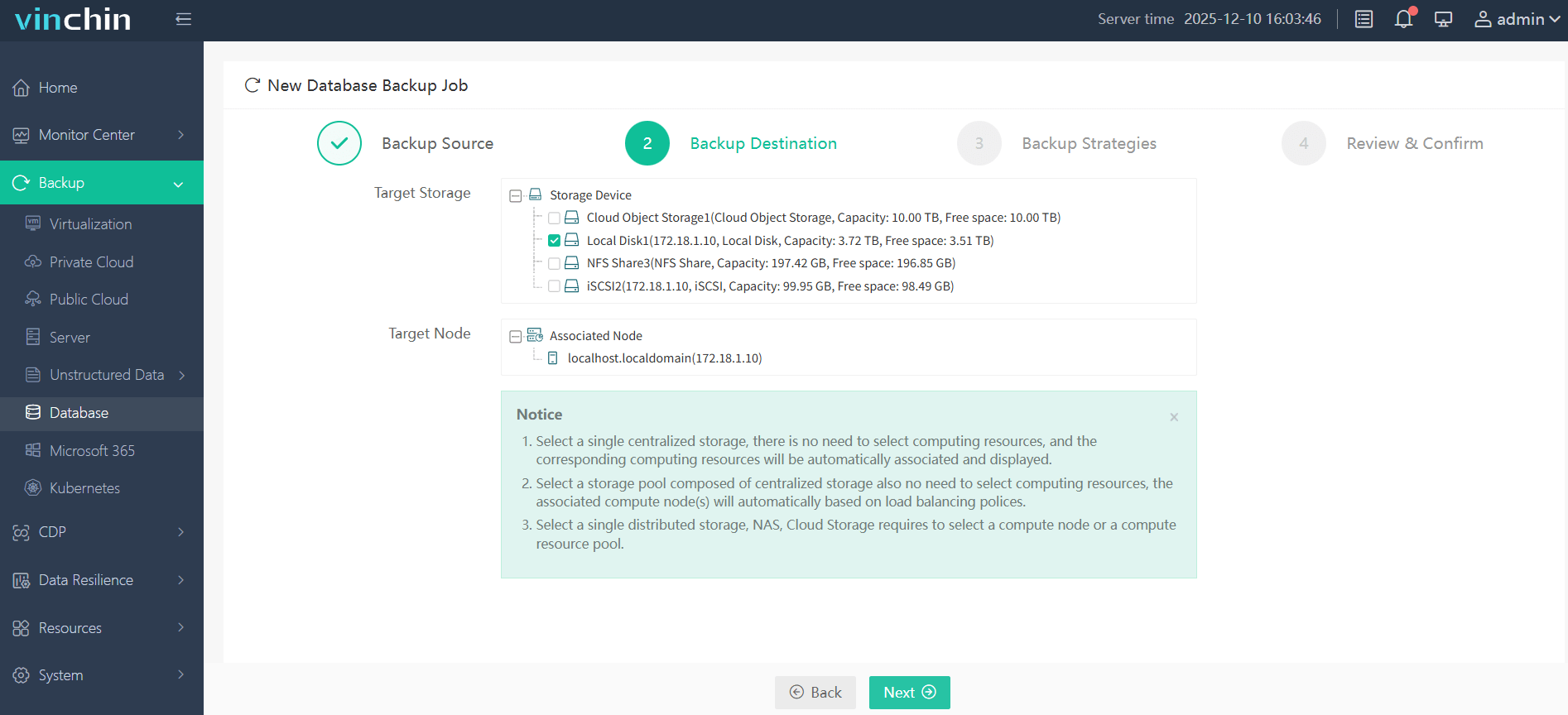
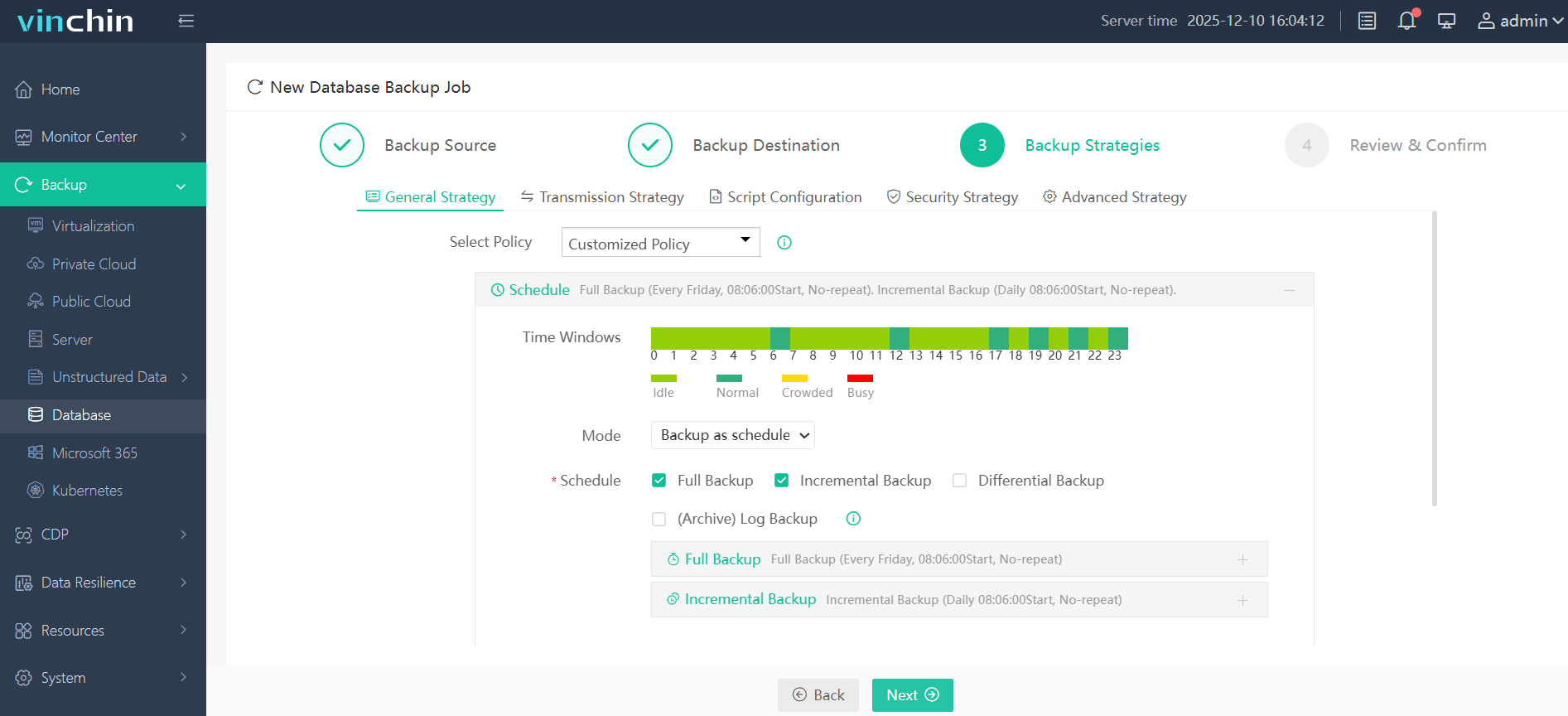
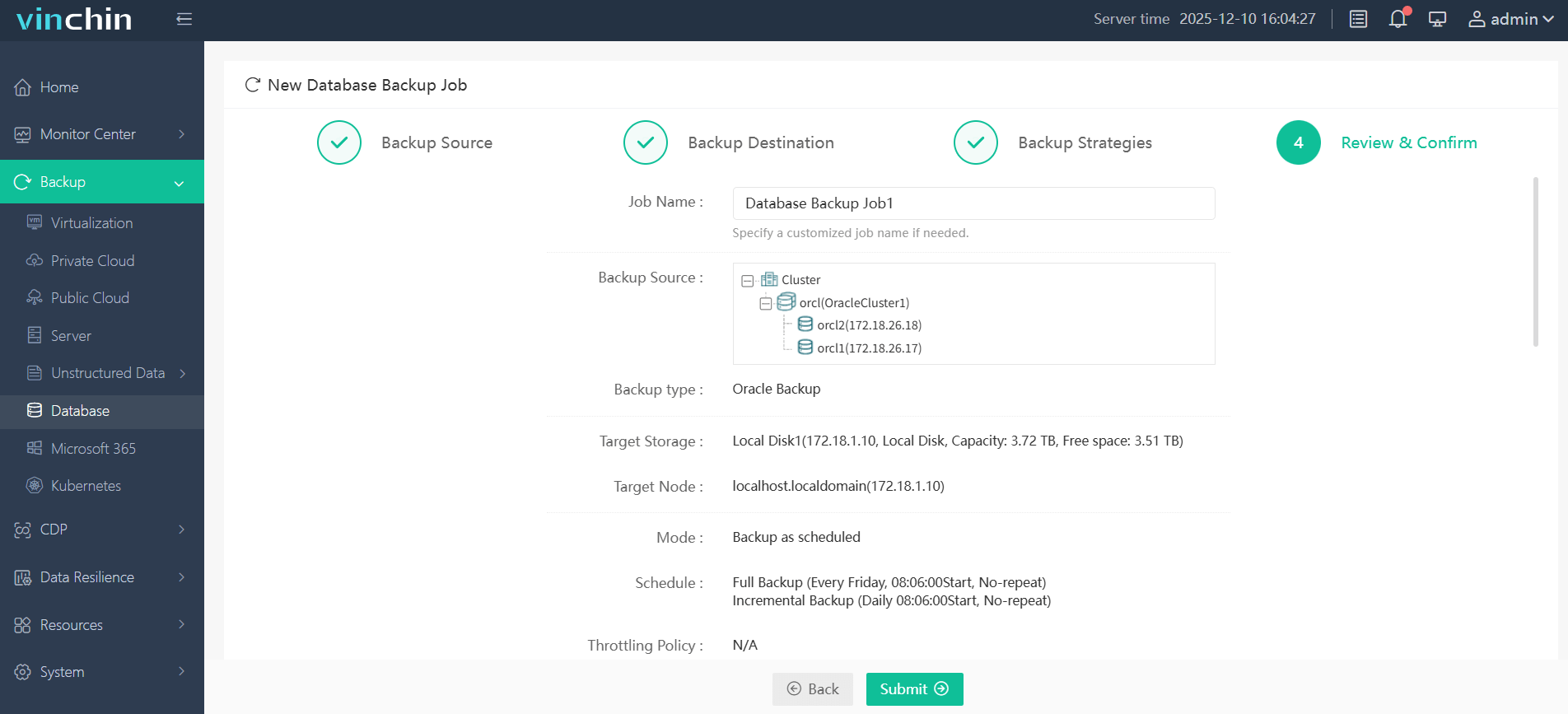
The intuitive web console streamlines every stage of safeguarding your Oracle databases:
Step 1. Select the Oracle database to back up
Step 2. Choose the backup storage
Step 3. Define the backup strategy
Step 4. Submit the job
Recognized globally by thousands of organizations—with top ratings from industry users—Vinchin Backup & Recovery offers a fully functional free trial valid for 60 days so you can experience its power firsthand without commitment. Click below to download now!
Oracle RMAN NFS Mount Options Linux FAQs
Q1: What steps should I take if my RMAN-to-NFS backups suddenly slow down?
A1: First verify recommended mount options are active > Test raw I/O speed > Check live stats via nfsiostat > Investigate network congestion > Review storage backend load.
Q2: Is there any reason not to use newer versions of NFS like v4.x?
A2: While v4 offers advanced security/features, v3 remains simpler, mature, and less prone to locking issues during large-scale database operations unless thoroughly validated beforehand.
Q3: How do I confirm which exact mount options my system uses right now?
A3: Run cat /proc/mounts or findmnt -t nfs then review listed parameters against best-practice recommendations above.
Conclusion
Mastering proper oracle rman nfs mount options linux turns fragile storage into dependable infrastructure ready for mission-critical workloads. By following proven practices, you boost both reliability & speed. For end-to-end protection—including automated management & reporting—consider Vinchin as part of your strategy today!