Protecting your Oracle database is not just smart—it’s essential. Data loss or corruption can strike at any time, so a reliable backup is your safety net. Oracle Recovery Manager (RMAN) is the built-in tool designed for this job. In this guide, you’ll learn what an oracle rman hot backup is, why it matters in real-world environments, and how to perform one using both command line tools and Oracle Enterprise Manager.
What Is Oracle RMAN Hot Backup?
An oracle rman hot backup lets you back up your database while it stays online and available to users. This means business continues without interruption—even during critical operations. RMAN (Recovery Manager) works directly with the database engine by opening server sessions that read datafiles at block level. It ensures data consistency even as transactions occur during the backup process.
Hot backups require ARCHIVELOG mode to be enabled on your database. This mode allows Oracle to archive every change made so that all activity can be recovered later if needed. In contrast, a cold or consistent backup requires shutting down the database first—something few production systems can afford.
Why Choose Hot Backup With RMAN?
Choosing an oracle rman hot backup offers many advantages in busy environments where downtime isn’t an option. First, users keep working while backups run in the background—no need to pause applications or disrupt workflows.
Second, RMAN automates complex tasks like tracking which files have been backed up, managing retention policies for old backups, and verifying integrity after each job completes. Unlike manual user-managed backups—which require placing tablespaces into special modes—RMAN handles everything automatically behind the scenes.
You also get features like compression (to save storage space) and encryption (to protect sensitive data). These make backups smaller and safer without extra effort from administrators.
Understanding the Consistency Mechanism
How does RMAN guarantee a consistent backup when users are still changing data? The answer lies in its use of System Change Numbers (SCNs) along with archived redo logs. When you start an oracle rman hot backup, RMAN records an SCN as a point-in-time marker across all datafiles being backed up.
As changes happen during the process, those changes are written into archived redo logs thanks to ARCHIVELOG mode. If you ever need to restore from this hot backup later on, RMAN uses these logs to roll forward every file until they’re all synchronized at that original SCN—ensuring no committed transaction gets lost or left out.
This approach eliminates human error risks found in older user-managed methods that required toggling tablespace states manually—a common source of mistakes in high-pressure situations.
For most production systems today, using an oracle rman hot backup is considered best practice for reliable data protection.
How to Perform Hot Backup Using Command Line?
Taking an oracle rman hot backup from the command line gives you full control over every detail of your operation—and it’s often faster than using graphical tools once you know what you’re doing.
Before starting any command-line procedure:
Make sure your database runs in ARCHIVELOG mode.
Confirm there’s enough free disk space at your chosen destination.
Use a privileged account such as SYSDBA or SYSBACKUP.
Check if Fast Recovery Area settings meet your needs if used.
Know whether you're working on Windows or Linux/Unix; commands differ slightly between platforms.
Here’s how you perform an oracle rman hot backup step by step:
1. Set environment variables:
On Windows servers (as shown below), set ORACLE_HOME, TNS_ADMIN, PATH, and ORACLE_SID according to your installation paths:
   set ORACLE_HOME=c:\app\product\11.2.0\dbhome_1
   set TNS_ADMIN=%ORACLE_HOME%\network\admin
   set PATH=%ORACLE_HOME%\bin;%PATH%
   set ORACLE_SID=YOURDB
On Linux/Unix systems:
   export ORACLE_HOME=/u01/app/oracle/product/19c/dbhome_1
   export TNS_ADMIN=$ORACLE_HOME/network/admin
   export PATH=$ORACLE_HOME/bin:$PATH
   export ORACLE_SID=YOURDB
2. Start RMAN and connect securely:
Open a terminal window or command prompt:
rman target /
This uses OS authentication if configured; otherwise enter credentials when prompted instead of typing passwords directly into commands for better security practice.
3. Allocate channels for parallel processing:
At the RMAN> prompt:
    run {
      allocate channel ch1 device type disk;
      allocate channel ch2 device type disk;
      allocate channel ch3 device type disk;
      allocate channel ch4 device type disk;
Adjust number of channels based on CPU cores/disks available—or configure persistent parallelism with:
CONFIGURE DEVICE TYPE DISK PARALLELISM 4;
4. Run compressed full database backups:
Still inside run { ... } block:
      backup as compressed backupset database format 'D:\ORACLE\HOT_bkp_Inc0_%U.bak';
      backup as compressed backupset archivelog all format 'D:\ORACLE\AL_bkp_%U.bak';
      backup current controlfile format 'D:\ORACLE\CTL_%d%s%t_%U.bak';
      release channel ch1;
      release channel ch2;
      release channel ch3;
      release channel ch4;
    }
    exit
5. Check output logs carefully:
Review both RMAN session output and alert log (alert_<SID>.log) for errors like "RMAN-" codes or warnings about missing files/disk space issues.
Look specifically for lines confirming "backup set complete" messages before considering jobs successful.
After completing any oracle rman hot backup job via command line:
Run CROSSCHECK BACKUP; followed by DELETE EXPIRED BACKUP; within another RMAN session soon after finishing each job—this keeps catalog/control file tidy by removing references to missing files.
Validate recent backups using either RESTORE DATABASE VALIDATE; or targeting specific sets: VALIDATE BACKUPSET <tag>;. This checks physical integrity before disaster strikes.
Don’t forget configuration files! Back up server parameter file separately: BACKUP SPFILE;.
Regularly monitor Fast Recovery Area usage (SHOW PARAMETER db_recovery_file_dest_size) so future jobs don’t fail due to lack of space.
Automate these steps with batch scripts (.bat/.sh) scheduled through Task Scheduler or cron jobs depending on operating system preferences.
How to Perform Hot Backup With Oracle Enterprise Manager?
If you prefer working visually rather than through terminals—or manage multiple databases—the graphical interface offered by Oracle Enterprise Manager makes life easier.
Begin by logging into OEM Cloud Control with appropriate privileges assigned (usually DBA role). Navigate through these menus:
1. Click Availability
2. Select Backup & Recovery
3. Choose Schedule Backup
The wizard will open next:
Pick Whole Database under “Backup Type.”
Ensure “Online Backup” option is checked so users remain connected throughout process.
Set destination (Disk recommended unless tape libraries are required).
Choose “Compressed Backupset” format whenever possible—it saves storage without sacrificing speed.
Define schedule frequency plus retention policy matching company compliance rules.
Review summary screen then click Submit when ready!
OEM provides live status updates plus notifications upon completion/failure—making monitoring simple even across dozens of instances.
Protecting Your Oracle Database With Vinchin Backup & Recovery
For organizations seeking advanced yet streamlined protection beyond native tools, Vinchin Backup & Recovery delivers professional enterprise-level database backups tailored for modern environments—including robust support for Oracle databases alongside MySQL, SQL Server, MariaDB, PostgreSQL, PostgresPro, and TiDB platforms. Key features such as advanced source-side compression and incremental backups help optimize storage efficiency and performance; batch database backups simplify large-scale management; flexible retention policies ensure compliance needs are met; while built-in integrity checks safeguard recoverability—all combining to provide fast operations with minimal resource impact and maximum reliability.
The intuitive web console makes safeguarding your Oracle environment straightforward:
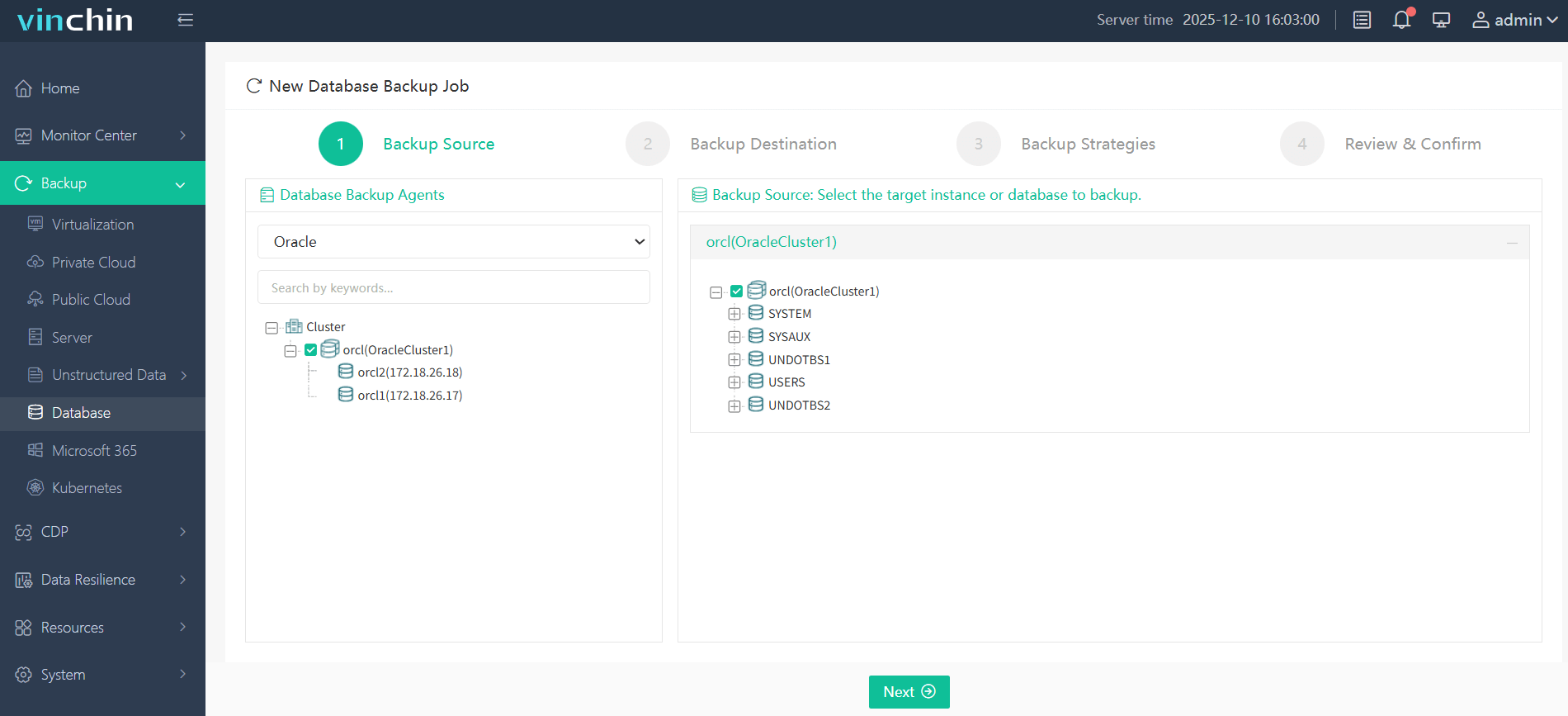
Step 1: Select the Oracle database to back up
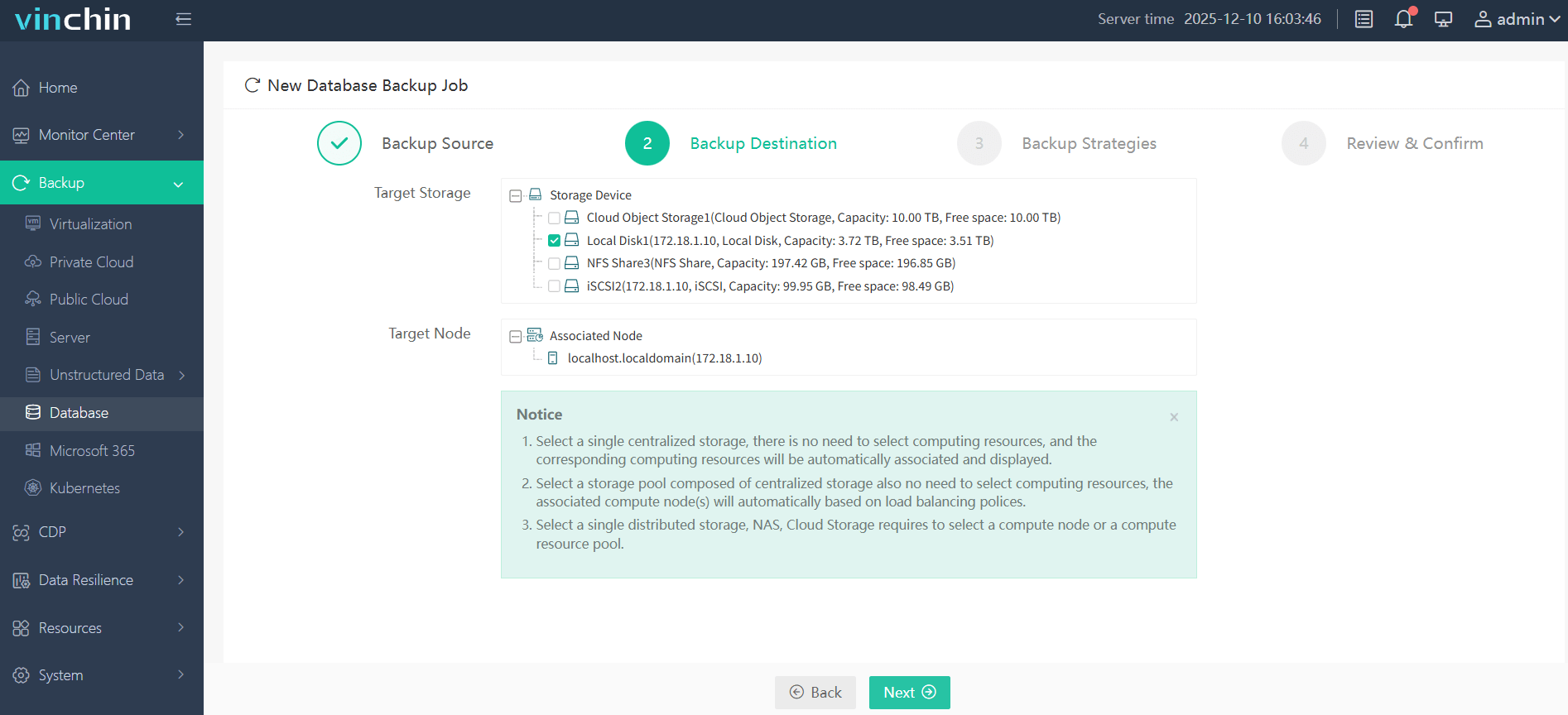
Step 2: Choose the backup storage
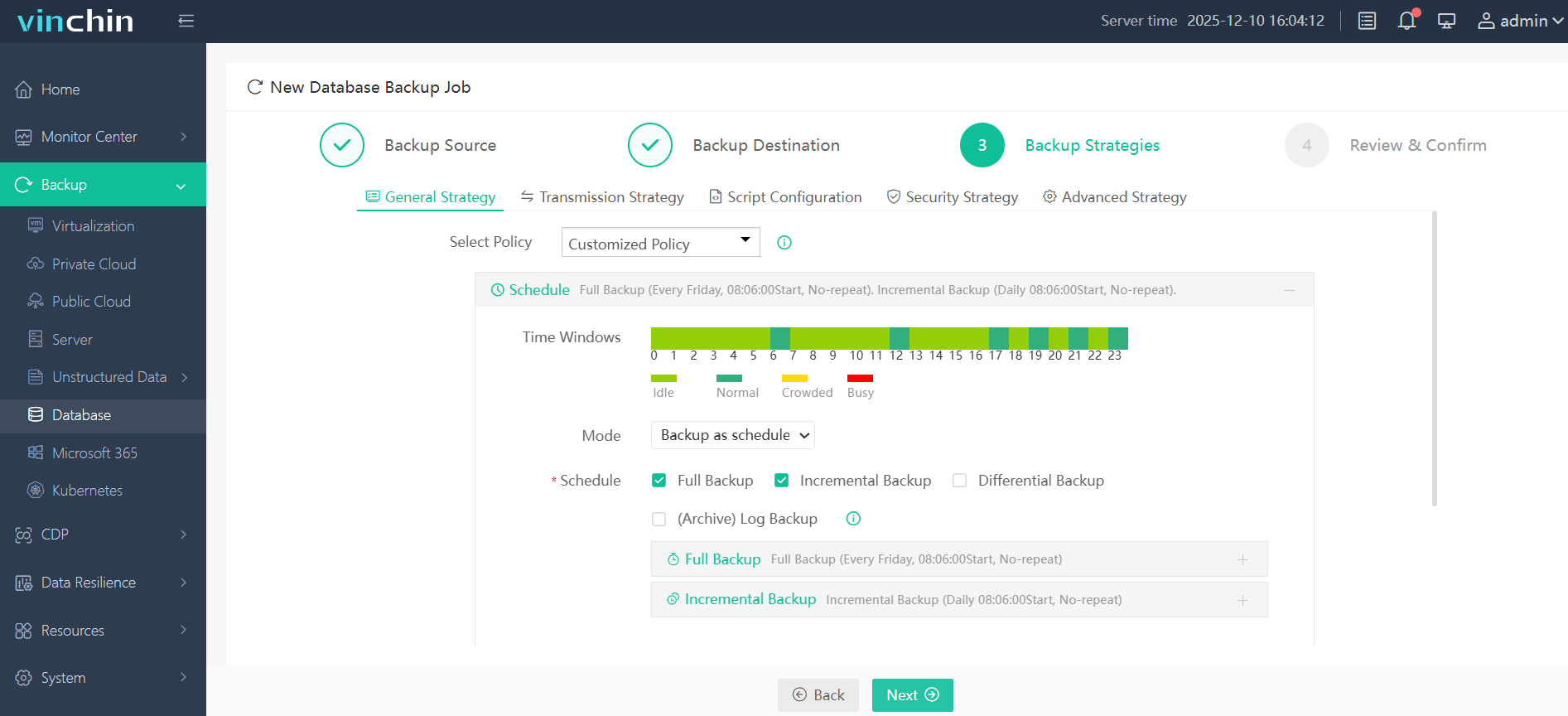
Step 3: Define the backup strategy
Step 4: Submit the job
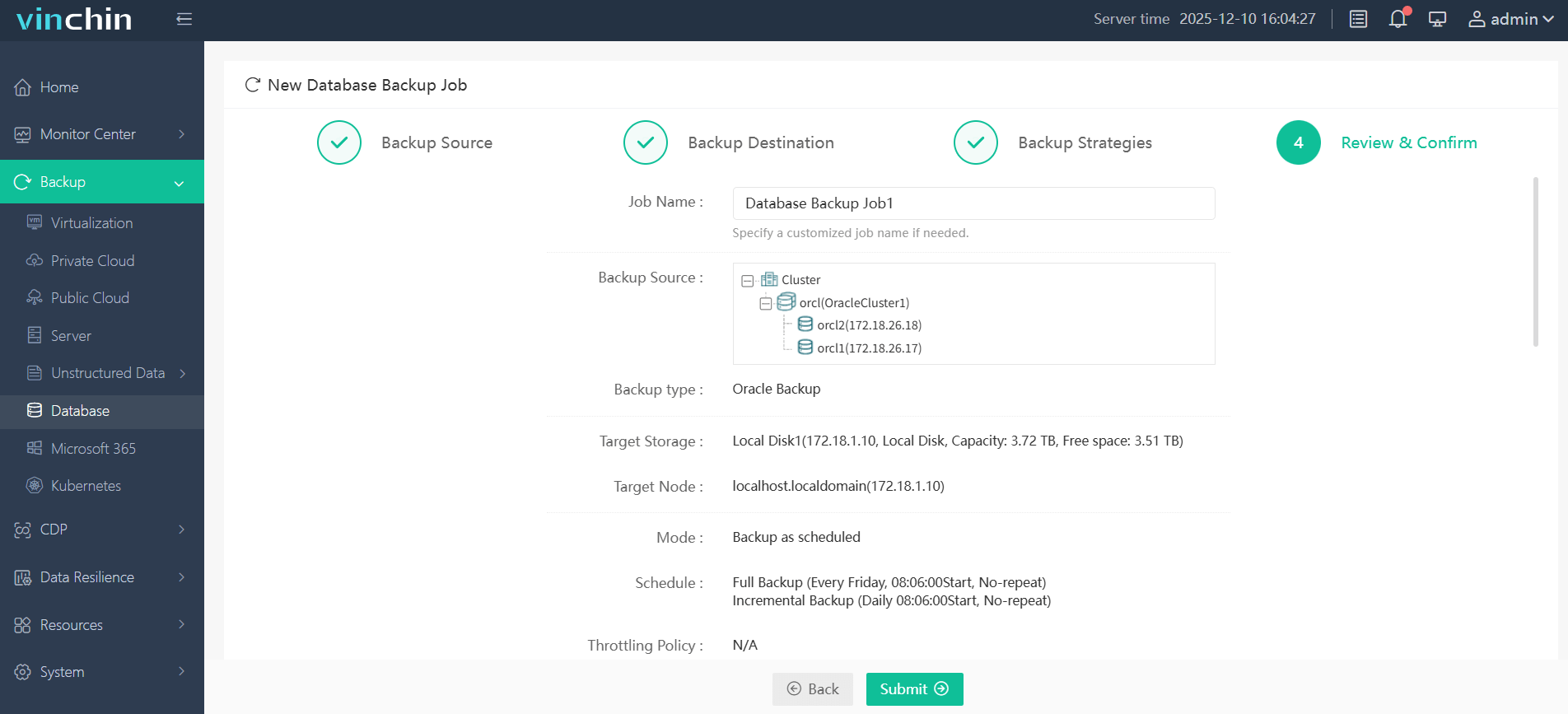
Vinchin Backup & Recovery is trusted globally by enterprises seeking top-rated data protection software—with thousands of satisfied customers worldwide giving it high marks for reliability and ease-of-use. Experience its power yourself with a 60-day full-featured free trial—click download now!
Oracle RMAN Hot Backup FAQs
Q1: Can I take an oracle rman hot backup while running heavy OLTP workloads?
Yes—you can run backups during active workloads since ARCHIVELOG mode captures ongoing changes without locking users out; however, monitor system load closely during peak times.
Q2: How do I verify my last oracle rman hot backup was usable?
Connect via RMAN then run RESTORE DATABASE VALIDATE or VALIDATE BACKUPSET <tag> commands—they check physical integrity without overwriting existing files.
Q3: What should I do if my Fast Recovery Area fills up mid-backup?
Increase FRA size via ALTER SYSTEM SET DB_RECOVERY_FILE_DEST_SIZE, delete obsolete archive logs after confirming safe copies exist, then rerun failed job.
Conclusion
Oracle RMAN hot backups let you protect vital business data around-the-clock using either command line tools or Enterprise Manager dashboards—with no downtime required! For streamlined enterprise-grade protection, Vinchin delivers powerful yet easy-to-use solutions tailored specifically for modern IT teams everywhere.