Data center teams regularly need to take ESXi hosts offline for maintenance, replace hardware, move workloads to faster storage, or rebalance busy clusters. Shutting down VMs for each of these tasks would mean constant downtime. VMware vSphere solves this with vMotion, which moves running virtual machines without interrupting the applications or users on them.
Quick answer: VMware vMotion live-migrates a running VM from one ESXi host to another without downtime by copying its memory and execution state over a dedicated vMotion network. Storage vMotion does the same for a VM’s disks, moving them to another datastore while the VM keeps running. Both are started in the vSphere Client by right-clicking a VM and selecting Migrate. vMotion requires vCenter Server, a supported vSphere license, compatible CPUs, and a VMkernel adapter with vMotion enabled on each host.
What Is VMware vMotion?
vMotion is a VMware vSphere feature that moves a powered-on virtual machine from one ESXi host to another with no downtime. The VM keeps its network identity and connections, and users and applications don’t notice the move.
How vMotion works:
1. vCenter checks that the destination host is compatible and has enough resources.
2. The source host copies the VM’s memory to the destination over the vMotion network while the VM keeps running.
3. Memory pages that change during the copy are tracked and sent again in short rounds, until only a small amount of changed memory remains.
4. The VM is paused for a fraction of a second, the last changes and the CPU state are transferred, and the VM resumes on the destination host.
5. The network switch is notified of the VM’s new location, so traffic follows it immediately.
If a vMotion fails, the VM simply keeps running on the source host.
Types of vMotion Migration
| Migration type | What moves | Shared storage needed? | Typical use |
|---|
| vMotion (change compute resource only) | Memory and CPU state to another host | Yes, both hosts see the VM’s datastore | Host maintenance, load balancing |
| Storage vMotion (change storage only) | Virtual disks and files to another datastore | No | Storage maintenance, array migration |
| vMotion without shared storage (change both) | Host and datastore at the same time | No | Moving VMs between hosts with local storage |
| Cross vCenter vMotion | VM to a host managed by another vCenter Server | No | Data center consolidation, migrations between vCenters |
| Long-distance vMotion | VM between sites with up to 150 ms round-trip time | No | Disaster avoidance, moving workloads between sites |
For more on moving VMs between vCenter Servers, see Advanced Cross vCenter vMotion.
vMotion vs. Storage vMotion
vMotion and Storage vMotion are both live migrations, but they move different parts of the VM:
| vMotion | Storage vMotion |
|---|
| What changes | The ESXi host running the VM | The datastore holding the VM’s files |
| What stays the same | The datastore (unless you change both) | The ESXi host |
| Data transferred | Memory and CPU state | Virtual disk and configuration files |
| Network used | vMotion VMkernel network | The host’s storage path; offloaded to the array with VAAI where supported |
| Downtime | None | None |
| Main use cases | Host maintenance, DRS load balancing | Storage upgrades, freeing up datastore space, changing disk format |
You can also do both in one operation by choosing Change both compute resource and storage in the Migrate wizard.
What Is VMware vMotion Used for?
Host maintenance: move all VMs off a host before patching, upgrading or replacing hardware. Putting a host into maintenance mode in a DRS cluster does this automatically.
Load balancing: move VMs from busy hosts to hosts with spare capacity. VMware DRS uses vMotion to do this automatically.
Avoiding hardware failures: move VMs away from a host that reports hardware warnings before it fails.
Storage changes (Storage vMotion): move VMs to new arrays, to faster storage, or off a datastore that is running out of space, without downtime.
vMotion Requirements and Limitations
Host and licensing requirements
vCenter Server managing both hosts. vMotion isn’t available on standalone ESXi hosts.
A vSphere license that includes vMotion. Essentials Plus, Standard and higher editions do; Essentials doesn’t.
Compatible CPUs on the source and destination hosts: same vendor (Intel or AMD) and compatible feature sets. In mixed-generation clusters, enable Enhanced vMotion Compatibility (EVC).
Network requirements
A VMkernel adapter with the vMotion service enabled on each host.
At least 1 GbE for the vMotion network, with 10 GbE or faster recommended. Each concurrent vMotion needs at least 250 Mbps.
Round-trip time of up to 150 ms between hosts for long-distance vMotion.
The VM’s port groups (networks) must exist on the destination host.
VM requirements
The VM must not be connected to devices that only exist on the source host, such as a host CD-ROM or a USB device without vMotion support.
For vMotion without changing storage, both hosts must have access to the VM’s datastore.
VMs using certain features, such as PCI passthrough devices, can’t be migrated with vMotion.
Storage vMotion requirements
A vSphere license that includes Storage vMotion (Standard and higher).
The host must have access to both the source and the destination datastore.
Disks must be in persistent mode or be raw device mappings (RDMs).
VMware Tools must not be in the middle of an installation.
If vMotion isn’t available in your environment, see how to migrate a VM without vMotion.
How to Use VMware vMotion in vCenter to Perform a Live Migration?
For reliable and fast migrations, give vMotion its own VMkernel adapter, ideally on dedicated physical NICs. Repeat these steps on every ESXi host in the cluster.
Step 1. Add a VMkernel adapter for vMotion
1. In the vSphere Client, select the host, open Configure > Networking > VMkernel adapters, and click Add Networking.
2. Select VMkernel Network Adapter and click Next.
3. Choose New standard switch (or an existing switch or distributed port group). To use jumbo frames, set the MTU to 9000, but only if every switch port on the path supports 9000 bytes.
4. Add two unused physical adapters to the switch for redundancy and performance.
5. Enter a network label, such as vMotion, and under Enabled services select vMotion.
6. Assign a static IPv4 address and subnet mask, then click Finish.
If the vMotion networks on different hosts are in different subnets, select the vMotion TCP/IP stack in step 5 and configure its default gateway, so vMotion traffic can be routed.
Step 2. Set the NIC failover order
1. Select the host, open Configure > Networking > Virtual switches, and find the new switch.
2. Edit the vMotion port group and, under Teaming and failover, set one physical adapter as Active and the other as Standby.
For more throughput, you can use multi-NIC vMotion: create two vMotion VMkernel adapters, and give each one a different active adapter, with the other adapter as standby.
Step 3. Test the vMotion network
From the ESXi shell, check that each host can reach the others’ vMotion addresses through the vMotion adapter:
vmkping -I vmk1 192.168.50.12
If you use jumbo frames, test that a full-size packet passes without fragmentation:
vmkping -I vmk1 -d -s 8972 192.168.50.12
Replace vmk1 with your vMotion adapter and the IP address with the other host’s vMotion address. If you used the vMotion TCP/IP stack, add -S vmotion.
How to Migrate a VM with vMotion in vCenter
1. In the vSphere Client, right-click the VM you want to move and select Migrate.
2. Select Change compute resource only and click Next. To move the VM’s disks at the same time, choose Change both compute resource and storage.
3. Select the destination host or cluster. vCenter runs a compatibility check and shows any errors or warnings. Click Next.
4. Select the destination network for each VM network adapter and click Next.
5. Choose the vMotion priority. High is recommended, because it reserves resources for the migration. Click Next.
6. Review the settings and click Finish.
You can follow the migration in Recent Tasks. Most migrations take seconds to a few minutes, depending on the VM’s memory size and how fast it changes.
If the migration fails, see how to fix “unable to migrate VM to another ESXi host”.
How to Change a VM's Datastore with Storage vMotion
1. In the vSphere Client, right-click the VM and select Migrate.
2. Select Change storage only and click Next.
3. Choose the virtual disk format (keep the same format, thin provision or thick provision), select a VM storage policy, and select the destination datastore. To place the configuration file and each disk on different datastores, click Configure per disk. Click Next.
4. Review the settings and click Finish.
The VM keeps running throughout. Performance can drop slightly while the disks are copied, so move large VMs outside peak hours. You can follow progress in Recent Tasks.
An Easier Way to Secure VM Data and Migrate VMware
vMotion only works within VMware vSphere. If you need to move VMs to another hypervisor, such as Hyper-V or Proxmox VE, or protect them against failures and ransomware, you need a different approach.
Vinchin Backup & Recovery is a VM backup and migration solution that’s easy to deploy and fast at backing up virtual machines. Its key features include:
Agentless backup: back up VMs on 19+ virtualization platforms, including VMware, without installing agents.
Cross-platform migration: restore a VMware backup to another platform, such as Hyper-V or Proxmox VE, to move workloads between hypervisors.
Instant recovery: start a failed VM directly from its backup on the original or another host to minimize downtime.
Unified web console: manage backups and migrations for all platforms from one console.
For example, to migrate a VM from VMware to Hyper-V (back up the VMware VM first):
1. Select the VMware backup storage you just created from the inverntory tree.
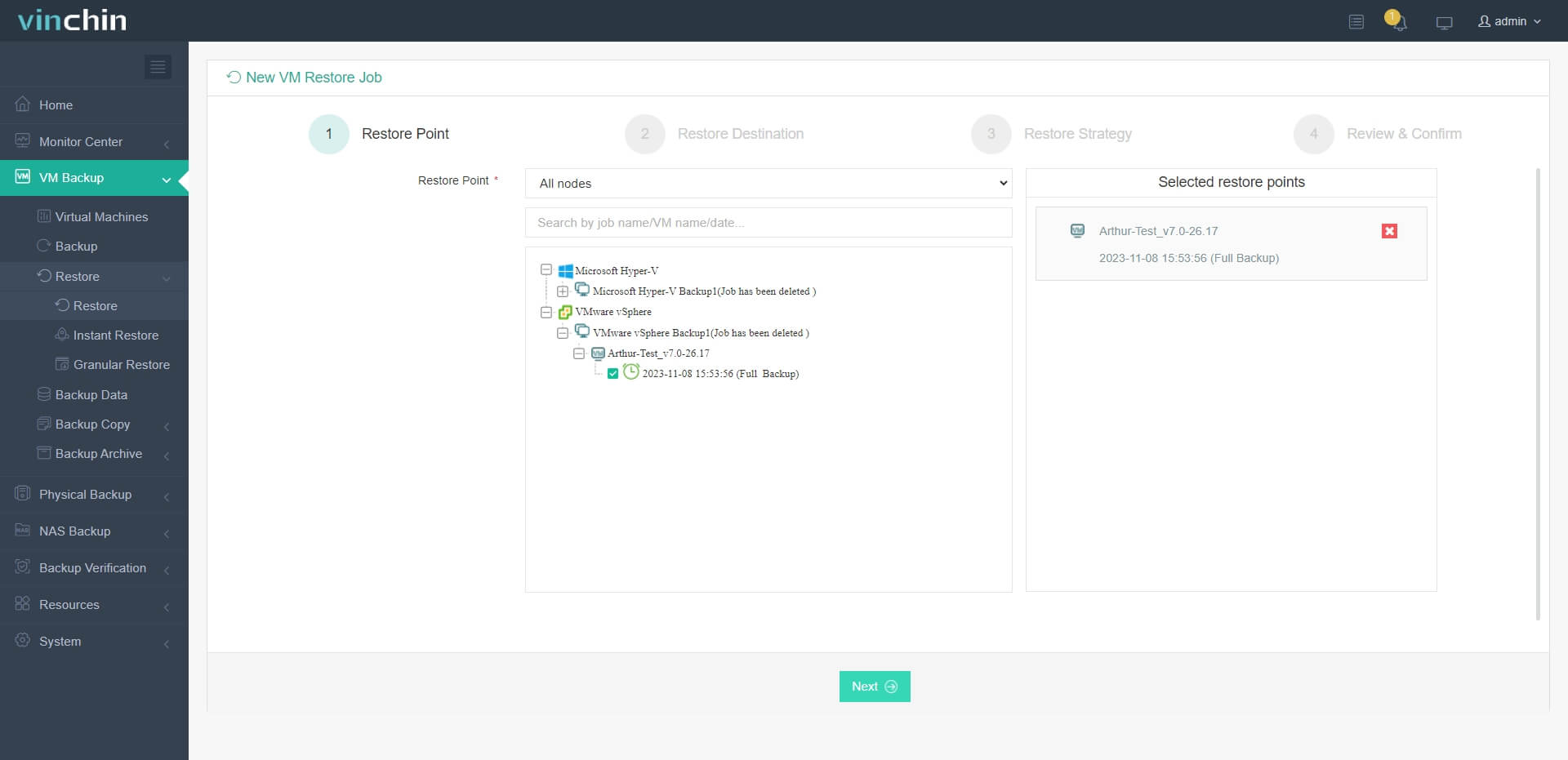
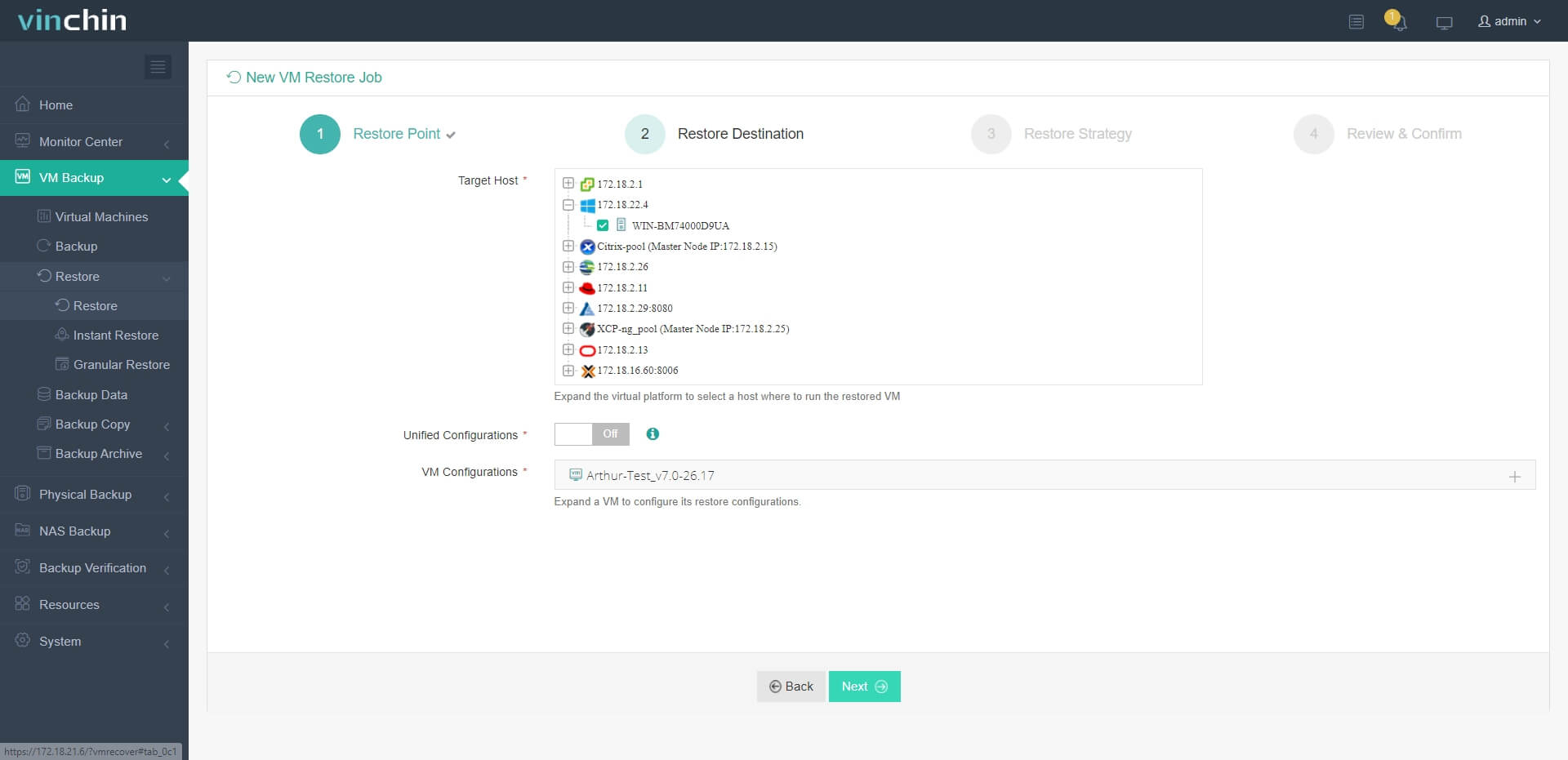
2. Select a Hyper-V host as the restore destination and fulfill other settings if necessary.
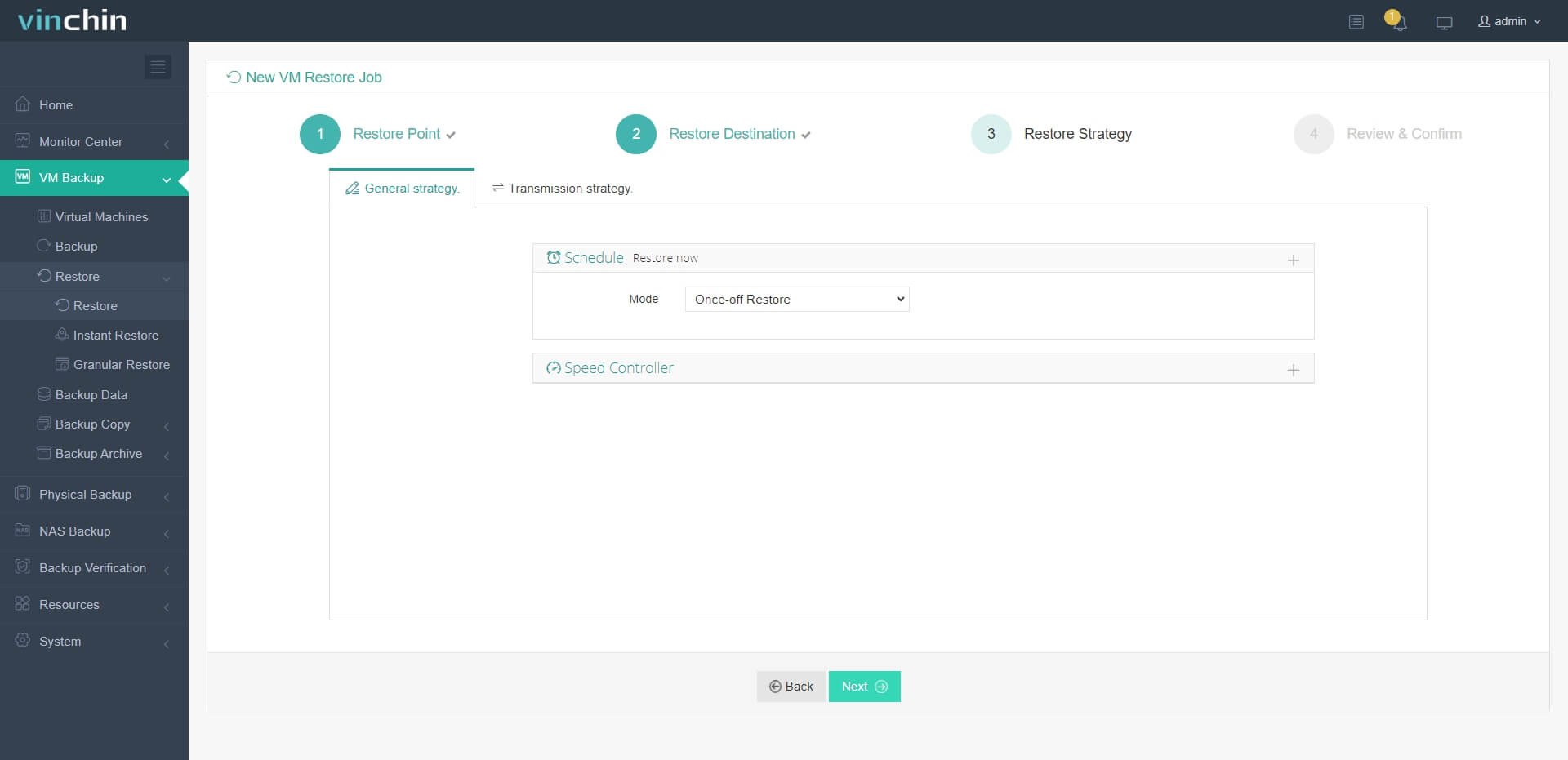
3. Configure the restore strategies, choose either to run the task immediately or schedule it later.
4. Review the settings and click Submit once you confirmed they're correct.
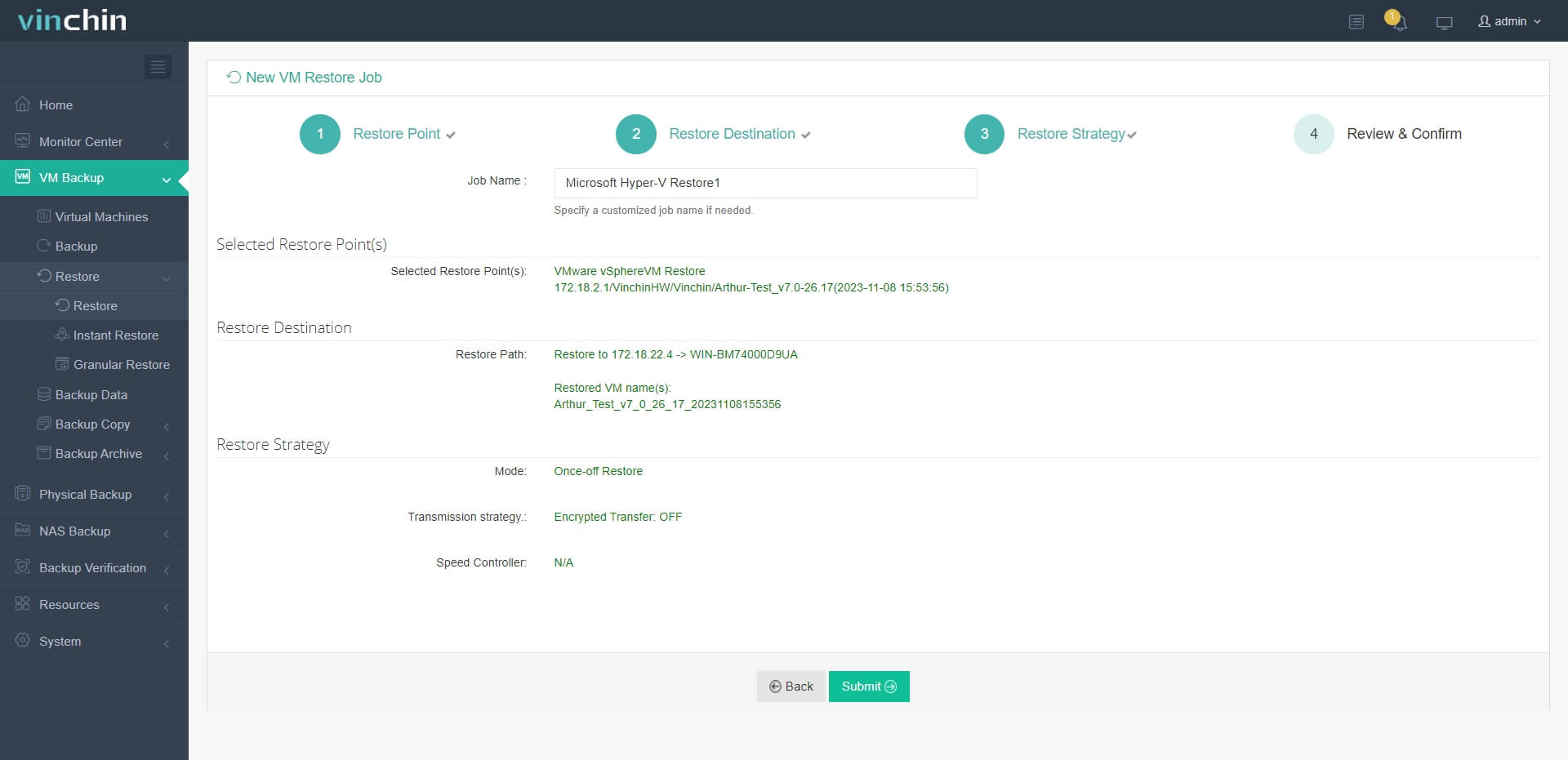
Vinchin Backup & Recovery has been selected by thousands of companies and you can also start a 60-day full-featured free trial here. Also, contact us, leave your requirements, and then you will receive your tailored solution. We have established partnerships with reputable companies all over the world so if you would like to do a local business, you can select a local partner here.
VMware vMotion FAQs
Q1: How can I check whether my hosts support vMotion?
Make sure each host has a VMkernel adapter with the vMotion service enabled, then start a migration in the vSphere Client. The wizard runs a compatibility check and lists any problems, such as CPU incompatibility or missing networks, before you click Finish.
Q2: Why does vMotion fail or stall?
The most common causes are a misconfigured vMotion network (wrong IP, VLAN or MTU), CPU incompatibility between hosts, a port group missing on the destination host, or a device such as a host CD-ROM attached to the VM. Test the network with vmkping, check that MTU settings match end to end, and read the error message in the task details.
Q3: How do I cancel a vMotion in progress?
In the vSphere Client, open Recent Tasks at the bottom of the screen, find the migration task, and click Cancel. The VM stays on the source host.
Q4: Which network does Storage vMotion use?
Within a single host, Storage vMotion copies data through the host’s storage paths, and arrays that support VAAI can offload the copy entirely. When you change the host and the storage at the same time, the data travels over the vMotion network.
Q5: Does Storage vMotion cause downtime?
No. The VM keeps running during the move. Disk performance can drop while the data is copied, especially for large VMs on busy storage, so schedule big moves outside peak hours.
Q6: What should I do if Storage vMotion fails because of a locked file?
Find out what’s holding the lock, such as a backup job, a snapshot operation or another host, and wait for it to finish or stop it. Then retry the migration. Avoid rebooting hosts unless the lock can’t be released any other way.
Q7: What is a good vMotion network setup?
Use a dedicated VMkernel adapter on at least 10 GbE, two physical NICs for redundancy, an isolated VLAN, and jumbo frames if your whole network supports them. Configure it the same way on every host in the cluster.
Conclusion
VMware vMotion moves running VMs between ESXi hosts with no downtime, while Storage vMotion moves their disks between datastores. With a dedicated vMotion network, compatible CPUs and the right license, you can maintain hosts, balance load and upgrade storage without interrupting users.
Since vMotion works only within VMware vSphere, organizations that need cross-platform migration or VM backup and recovery can add Vinchin Backup & Recovery for more flexibility and resilience.