If you manage Oracle database with RMAN (Recovery Manager), you know that channels are more than just a technical detail. Poor channel management can lead to missed backup windows, failed restores from resource exhaustion, or slow performance. Mastering how to allocate and release RMAN channels is key for smooth backup jobs. In this guide, we’ll break down what an RMAN channel is, why releasing it matters, when you should do it manually—and how to troubleshoot common issues. Ready to take control of your Oracle backups?
What Is an RMAN Channel?
An RMAN channel acts as a bridge between the Recovery Manager process and your database instance. Each channel represents one stream of data moving between Oracle and storage—whether that's disk or tape. When you run backup or restore commands, these channels handle the data flow.
You can let RMAN allocate channels automatically based on your configuration or define them manually for special tasks. Each allocated channel creates its own server session on the database host. This allows multiple operations in parallel—boosting speed during large backups or restores.
Understanding Channel States
Channels go through several states during their lifecycle:
| State | Description |
|---|
| ALLOCATED | The channel has been created but is not yet performing any action |
| IDLE | The channel is waiting for instructions |
| BUSY | The channel is actively processing a backup or restore operation |
| RELEASED | The channel has been closed; resources are freed |
Each state reflects what’s happening behind the scenes. For example, when you use RELEASE CHANNEL, you terminate that server session—freeing up memory and CPU resources.
It’s important to distinguish between a logical “channel” (the concept used in scripts) and the physical server process/session running on your system. Releasing a channel ends both.
Why Release Channels in RMAN?
Channels consume valuable system resources like memory, CPU time, network bandwidth—and sometimes even device locks if using tape drives. If you allocate channels manually within an RMAN script but forget to release them at the right moment, those resources stay tied up until either the job finishes or something fails.
RMAN usually releases all channels at the end of each RUN block by default. But there are times when explicit control helps prevent bottlenecks or conflicts—especially in complex scripts or busy environments.
When Should You Manually Release Channels?
Manual release isn’t always necessary—but it’s powerful when used wisely:
First: If your script runs several distinct phases (like backing up datafiles then cleaning up archivelogs), releasing channels after each phase ensures no leftover sessions hog resources before starting maintenance steps.
Second: During error handling with an EXCEPTION clause inside RUN, releasing channels lets you clean up gracefully if something goes wrong mid-script—avoiding orphaned processes that might cause trouble later.
Third: For troubleshooting tricky jobs where one part keeps failing while others succeed—you can isolate problem steps by releasing only certain channels before retrying allocations elsewhere in your script.
Finally: In environments with strict resource limits (such as shared servers), proactively releasing unused channels avoids contention with other workloads running on the same hardware.
By thinking ahead about when to free up these connections—not just relying on defaults—you keep your environment stable and responsive even under heavy load.
How to Manually Release Channels in RMAN?
Manual control over channels gives you fine-grained power over backup operations—a must-have skill for advanced DBAs managing complex workflows.
To release a channel manually:
1. Start by opening a RUN block.
2. Use ALLOCATE CHANNEL followed by a unique name (like ch1).
3. Run your desired backup or maintenance command(s).
4. Use RELEASE CHANNEL with that same name once finished with its task(s).
Here’s how this looks in practice—with two parallel disk channels for better performance:
RUN {
  -- Allocate two disk channels for parallelism
  ALLOCATE CHANNEL ch1 DEVICE TYPE DISK FORMAT '/backup/%U';
  ALLOCATE CHANNEL ch2 DEVICE TYPE DISK FORMAT '/backup/%U';

  BACKUP AS COMPRESSED BACKUPSET DATABASE PLUS ARCHIVELOG;

  -- Explicitly release both disk channels after backup
  RELEASE CHANNEL ch1;
  RELEASE CHANNEL ch2;

  -- Any further maintenance would require new allocations
}
This approach makes scripts easier to read—and helps pinpoint problems if something fails mid-job since released resources don’t linger around causing confusion later.
Remember: If you forget to include RELEASE CHANNEL, all manually allocated ones are still released automatically at RUN block completion—but being explicit improves clarity and troubleshooting ease.
How to Use Automatic Channel Management?
Automatic management simplifies life for most routine backups—especially at scale across many databases or hosts.
With automatic mode enabled:
First configure global defaults using CONFIGURE CHANNEL statements—for example setting device type preferences (DISK, SBT_TAPE) plus parameters like maximum piece size (MAXPIECESIZE) or throughput limits (RATE).
Next set parallelism using:
CONFIGURE DEVICE TYPE DISK PARALLELISM n;
where n equals how many simultaneous streams/channels you want active per job.
Once configured:
BACKUP DATABASE;
will prompt RMAN itself to allocate n disk-type channels automatically based on those settings—and then release them once done without any manual intervention required.
A few tips for advanced users:
If you issue an explicit ALLOCATE CHANNEL inside any RUN block—even just one—the automatic configuration gets overridden just for that block; only explicitly named/manual allocations will be used until exiting back out again.
For specialized setups (like ASM storage), use extra options within CONFIGURE statements such as CONNECT strings tailored per node/device type—or adjust MAXPIECESIZE/RATE values so large jobs don’t overwhelm network links or disks unexpectedly.
Automatic management works best where consistency matters most—but knowing how overrides interact prevents surprises during critical restores!
Introducing Vinchin Backup & Recovery
After mastering manual and automated Oracle backup strategies, leveraging enterprise-grade tools can further streamline protection efforts across diverse environments. Vinchin Backup & Recovery stands out as a professional solution supporting today’s mainstream databases—including Oracle, MySQL, SQL Server, MariaDB, PostgreSQL, PostgresPro, and TiDB—with robust features tailored especially for Oracle users seeking reliability at scale. Among its most relevant capabilities are batch database backup, incremental backup support, cloud backup and tape archiving integration, integrity check routines, and restore-to-new-server functionality—all designed to simplify administration while strengthening data safety and recovery flexibility across hybrid infrastructures.
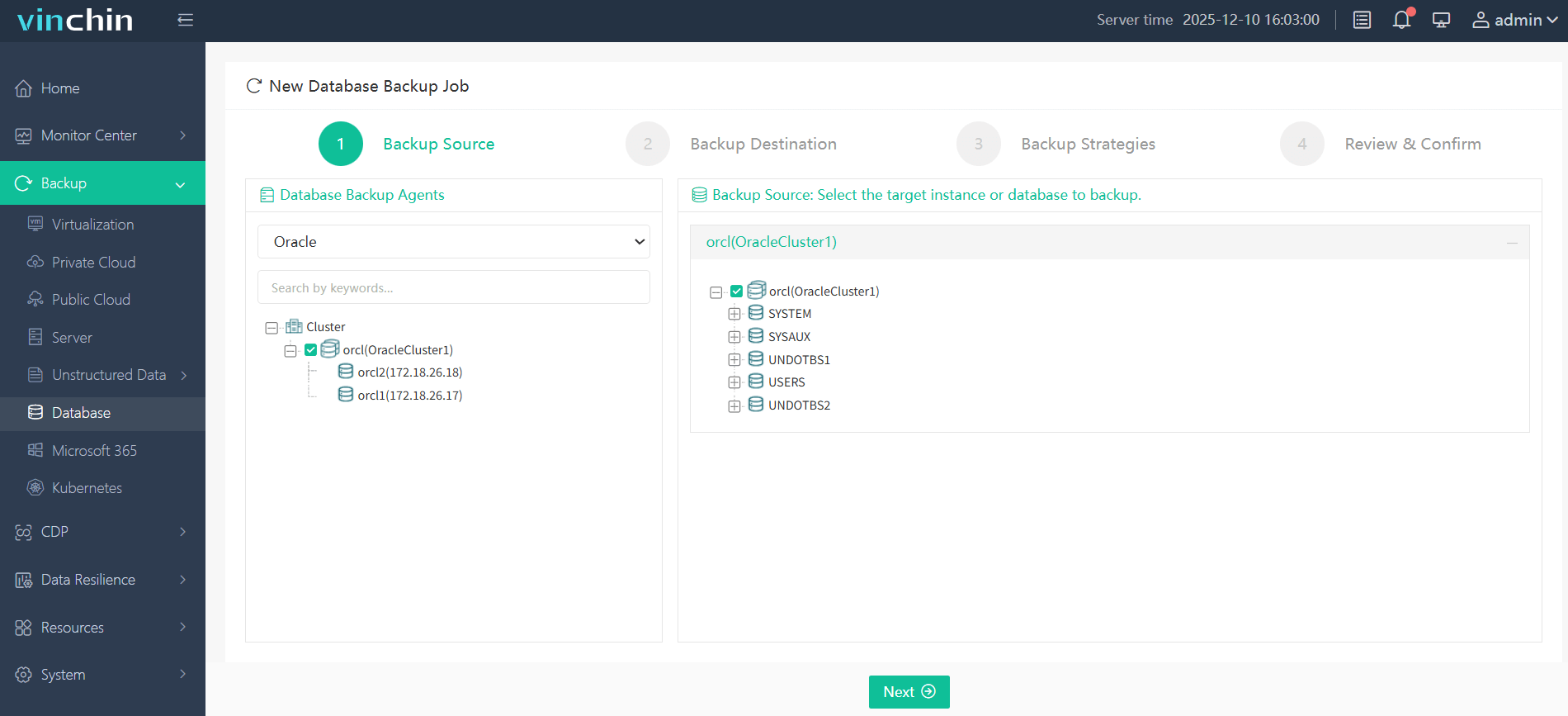
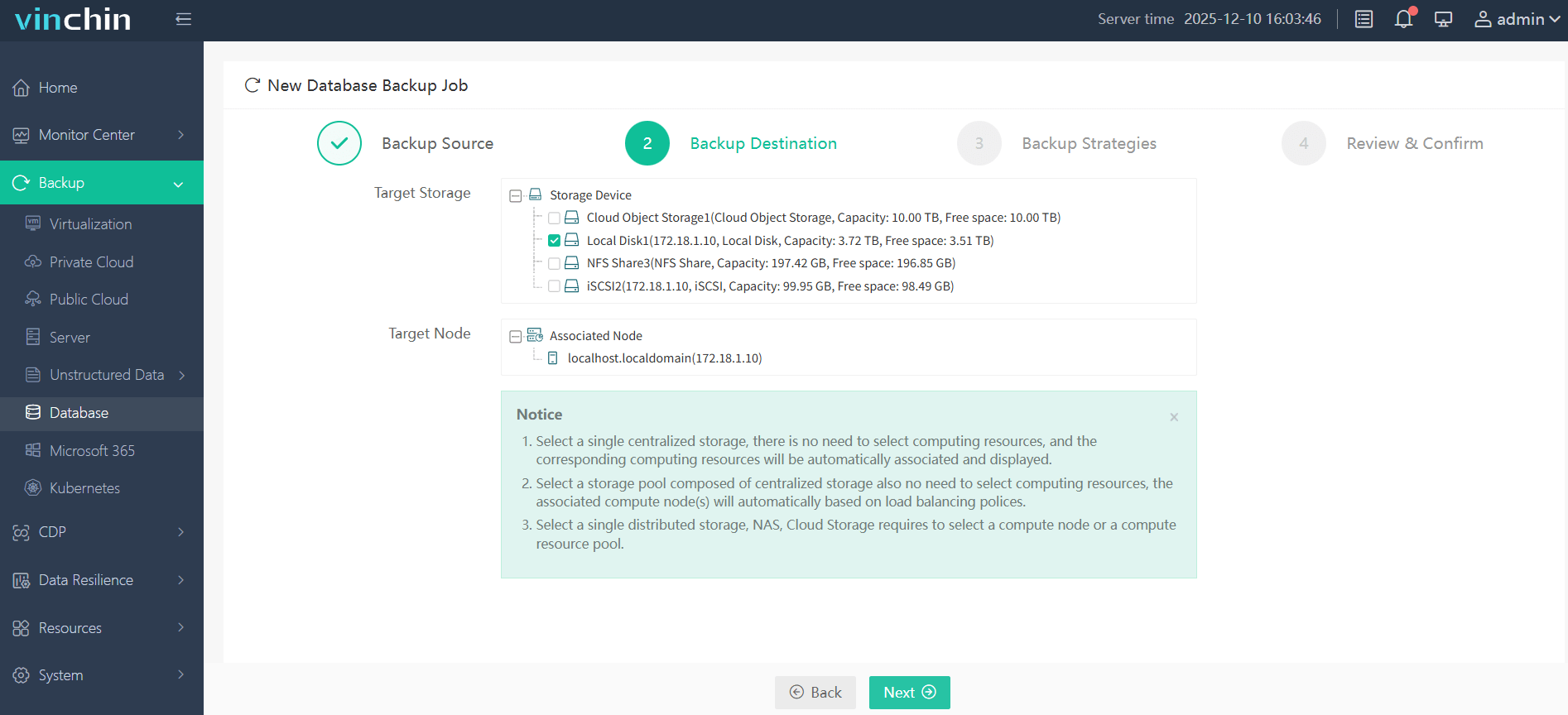
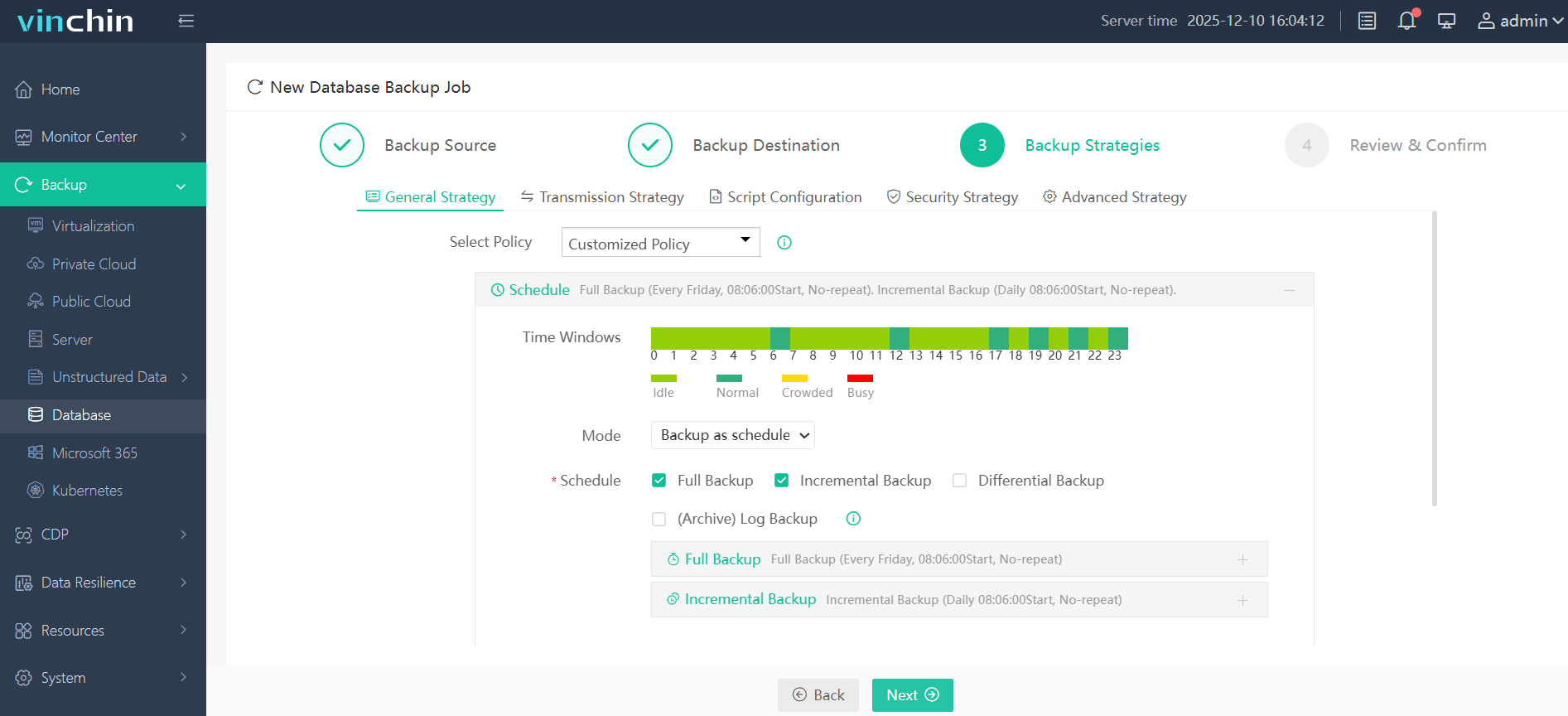
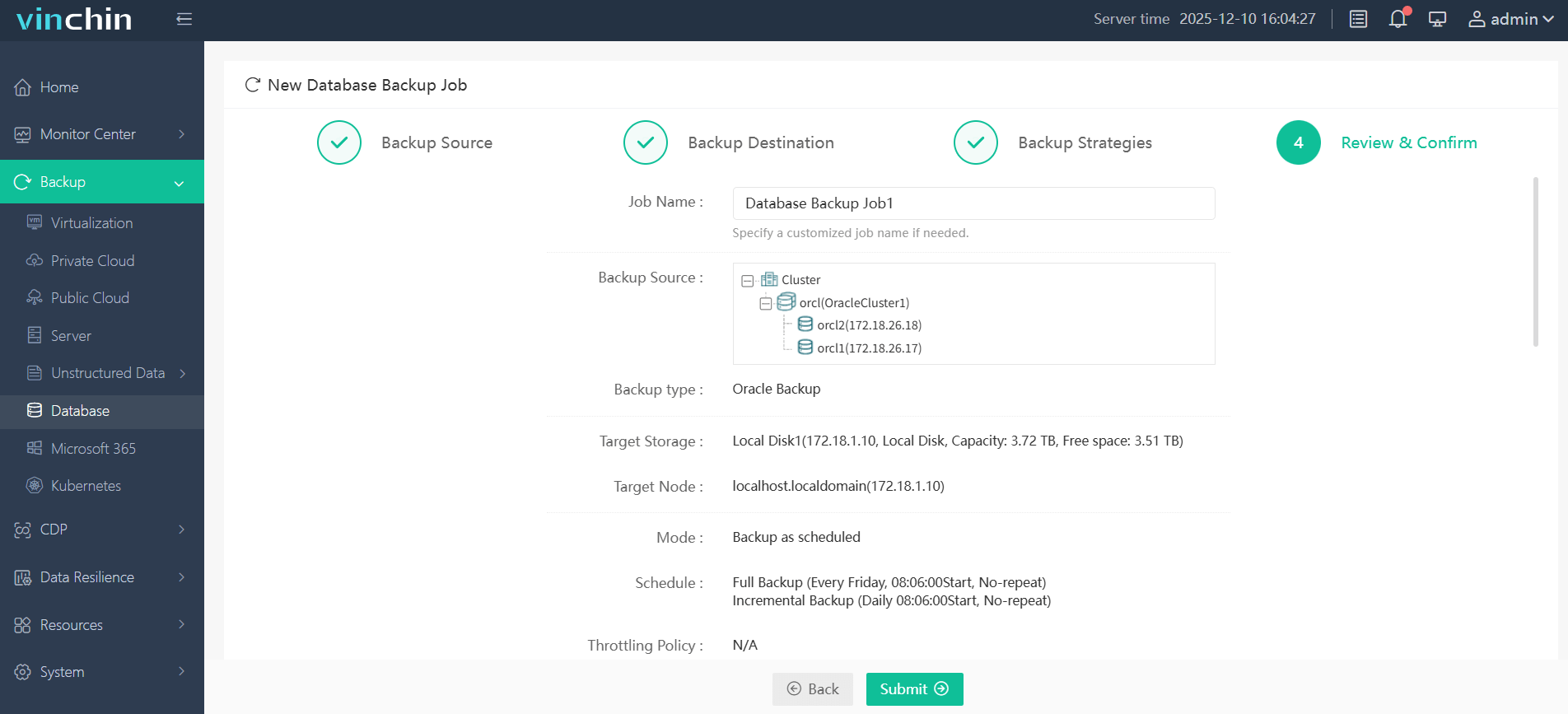
The intuitive web console makes safeguarding Oracle databases straightforward:
Step 1. Select the Oracle database to back up
Step 2. Choose the backup storage
Step 3. Define the backup strategy
Step 4. Submit the job
Recognized globally by thousands of enterprises with top ratings for usability and trustworthiness, Vinchin Backup & Recovery offers a full-featured free trial lasting 60 days—click below to experience seamless enterprise data protection firsthand!
RMAN Release Channel FAQs
Q1: Can I view currently allocated channels during an active job?
A1: Yes; run SHOW CHANNEL; inside an active RMAN session or check V$SESSION where PROGRAM contains 'rman'.
Q2: What happens if I mix manual allocation with automatic configuration?
A2: Manual ALLOCATE CHANNEL overrides automatic settings within that RUN block until it ends; afterwards defaults resume unless reconfigured again.
Q3: How do I quickly resolve “no suitable channel allocated” errors?
A3: Start new RUN block > ALLOCATE needed DEVICE TYPE > rerun command needing access.
Conclusion
Mastering both manual release techniques and automated configurations ensures reliable Oracle backups every time—even under pressure from tight schedules or heavy loads! Vinchin takes this expertise further by making enterprise-grade protection simple through automation—try it today risk-free!