OpenStack powers many enterprise clouds. When disaster strikes, every second counts. Fast recovery is not just a convenience—it is essential for business continuity. Enterprises need backup solutions that restore data quickly to avoid costly downtime and lost productivity. Solutions with instant VM restore and granular recovery features help organizations bounce back fast after an outage.
Downtime can damage reputation, disrupt operations, and even lead to regulatory penalties. Rapid access to critical data keeps services running smoothly. For IT teams managing complex OpenStack environments, choosing a backup solution focused on speed makes all the difference.
Why Fast Recovery Matters in Enterprise Environments?
Fast recovery protects your business from extended outages and their ripple effects across operations. Here are key reasons why speed should be at the core of your backup strategy:
● Service Availability
Keeping applications online is vital for customer trust and revenue streams. Even brief interruptions can cause users to turn elsewhere or abandon transactions mid-process. According to Gartner research, average downtime costs $5,600 per minute for large enterprises. Quick restores help minimize these losses.
● Operational Resilience
A resilient IT environment recovers from failures without major disruption. Fast backup restores let you resume normal operations before issues escalate into larger problems like missed deadlines or failed service-level agreements (SLAs).
● Regulatory Compliance
Many industries require strict limits on data loss (RPO) and downtime (RTO). Slow recoveries risk non-compliance fines or audits if you cannot meet these targets. Meeting compliance means restoring systems within defined timeframes—something only rapid solutions can guarantee.
● Data Integrity
Restoring data quickly also reduces the risk of corruption or inconsistency during prolonged outages. Modern backup tools verify integrity during both backup and restore processes so you get reliable results every time.
● Business Reputation
Customers expect always-on services. Extended outages harm your brand image more than almost any other IT failure. A fast recovery process reassures stakeholders that you have robust plans in place.
How To Choose The Best OpenStack Backup Solution for Fast Recovery?
Selecting an effective OpenStack backup solution requires careful evaluation of technical capabilities that directly impact restore speed at scale. Prioritize features proven to reduce downtime while supporting operational growth.
Instant VM Restore lets you run virtual machines directly from backup storage instead of waiting hours for full data transfers back into production hosts. This approach slashes RTOs because workloads become available almost immediately after disaster strikes—a must-have for mission-critical systems handling live transactions or sensitive workloads.
Granular File-Level Recovery allows restoration of individual files or folders without needing to recover entire VMs first. This saves valuable time when only small amounts of data are lost due to accidental deletion or corruption—common scenarios in daily operations.
Automation of Failover Processes ensures predictable outcomes during stressful incidents by reducing manual intervention steps prone to human error. Automated failover scripts can trigger VM restores based on predefined policies so staff focus on higher-priority tasks rather than repetitive actions.
Compatibility with OpenStack Versions avoids integration headaches by ensuring your chosen solution supports both current deployments and planned upgrades through API compatibility or published support matrices. This future-proofs investments against platform changes down the line.
Scalability means handling hundreds—or thousands—of VMs without performance drops as your cloud grows over time. Look for solutions architected around distributed processing engines capable of parallelizing backups/restores across multiple nodes so throughput remains high regardless of workload size.
Deduplication technology further accelerates both backups and restores by eliminating redundant blocks before writing them to disk; this reduces not only storage requirements but also speeds up scanning during recovery since less unique data needs processing.
By focusing on these core features—instant VM restore, file-level granularity, automation, compatibility assurance, scalability architecture—you set your organization up for success when seconds matter most after an outage hits.
Vinchin Backup & Recovery: Enterprise-Grade Protection for OpenStack
For organizations seeking comprehensive protection in OpenStack environments, Vinchin Backup & Recovery stands out as a professional enterprise-level virtual machine backup solution supporting 15+ mainstream virtualization platforms—including prioritized support for OpenStack alongside VMware, Hyper-V, Proxmox, oVirt, OLVM, RHV, XCP-ng, XenServer, ZStack and more. With broad compatibility across diverse infrastructures, it delivers unified management no matter how complex your hybrid cloud may be.
Vinchin Backup & Recovery offers advanced features such as instant recovery (excluding Hyper-V), CBT tracking where supported (including OpenStack), LAN-free backup options on select platforms like ZStack/OpenStack/Proxmox/oVirt/etc., SpeedKit acceleration where available, plus essentials like incremental/differential backups and granular restore across all hypervisors it supports.
To back up an OpenStack VM using Vinchin Backup & Recovery’s intuitive web console:
Step 1: Select the OpenStack VM to back up.

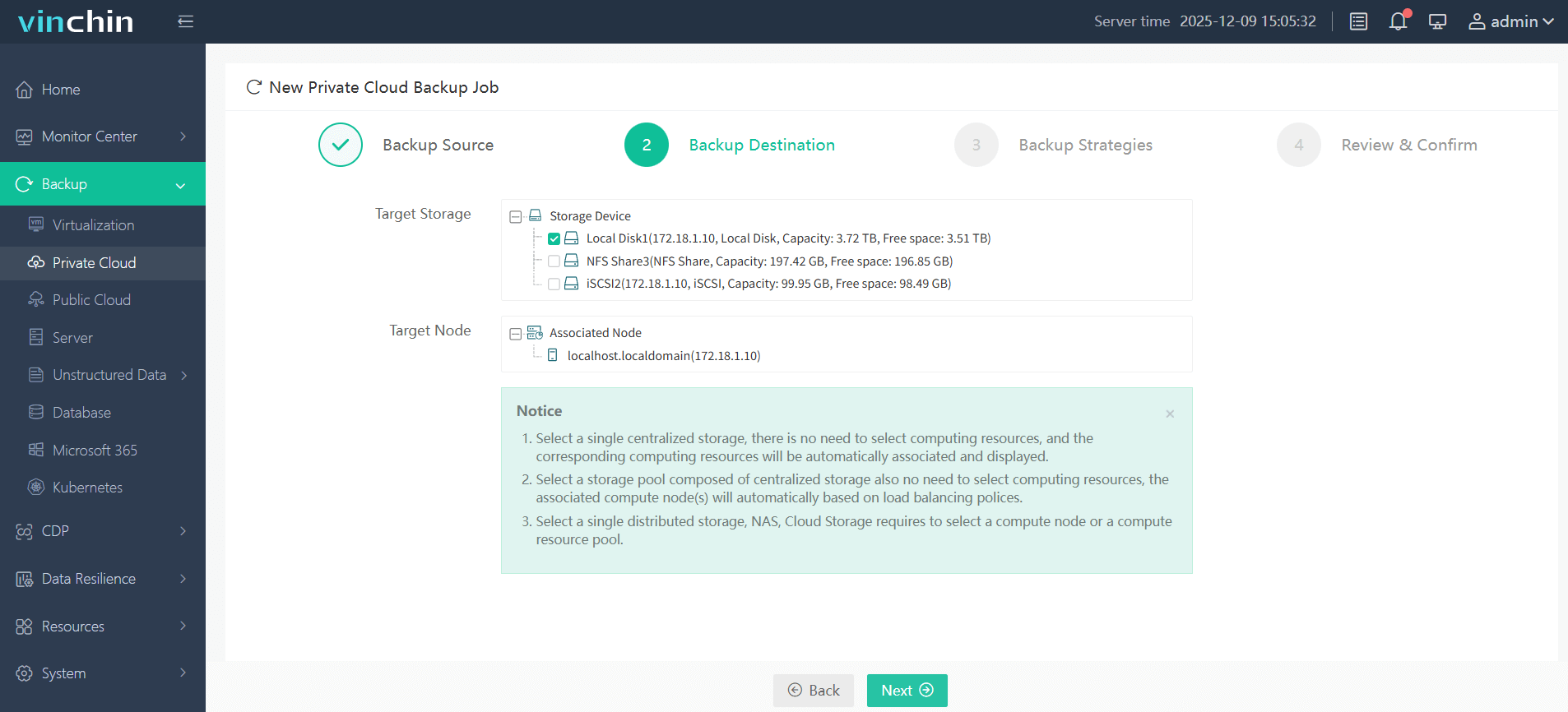
Step 2: Choose the backup storage.
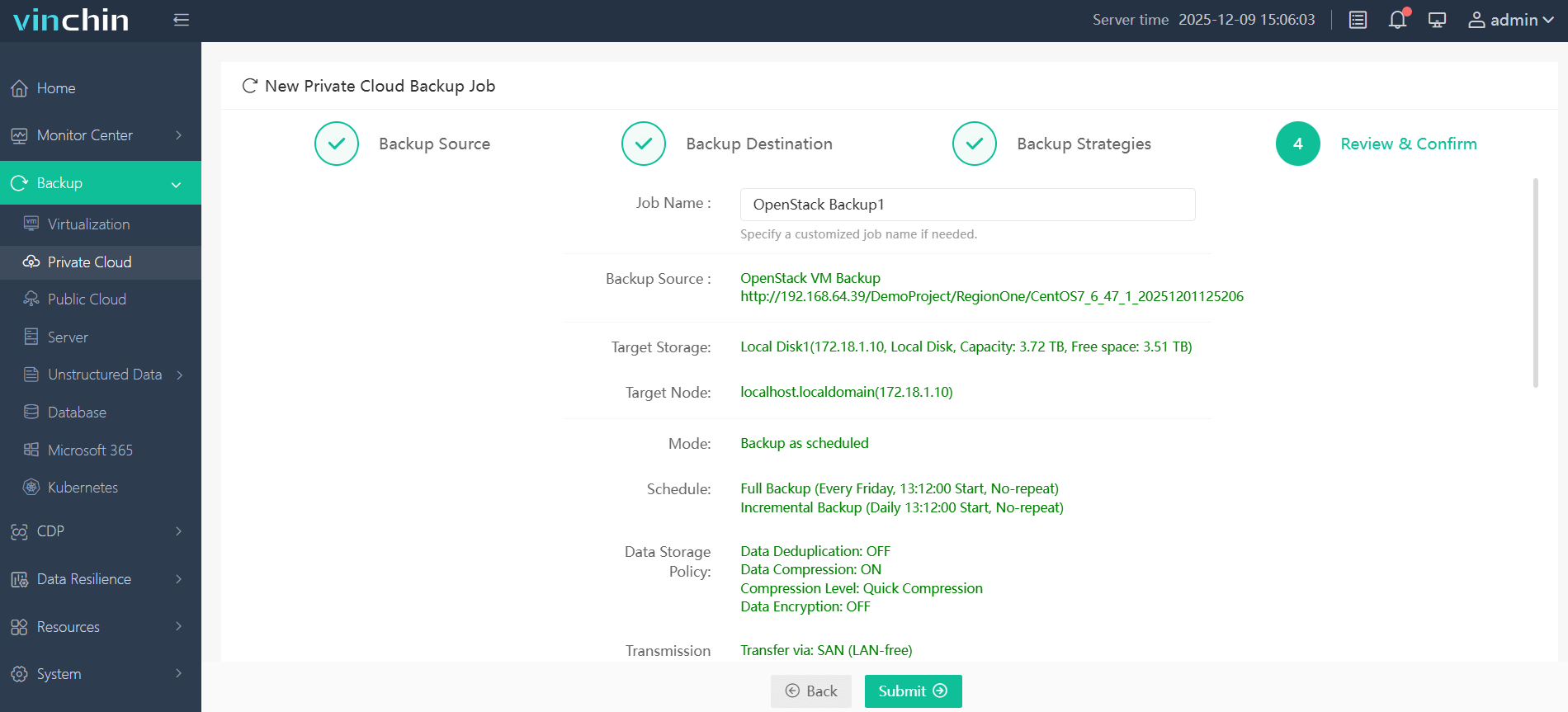
Step 3: Configure the backup strategy.

Step 4: Submit the job.
With its global reputation among enterprise customers and top industry ratings worldwide,
Vinchin Backup & Recovery offers a 60-day full-featured free trial—click below to experience powerful protection firsthand.
Best OpenStack Backup Software FAQs
Q1: What defines 'fastest recovery' in an enterprise backup context?
It refers to minimizing downtime by restoring virtual machines or files instantly—or within minutes—while maintaining complete data integrity throughout the process.
Q2: How does fast recovery reduce business risk?
It shortens service disruptions so customers experience little interruption while preventing financial losses linked to extended outages or compliance violations due to slow restoration timescales.
Q3: Can fast recovery scale as our environment grows?
Yes; modern solutions built around distributed architectures maintain consistent performance whether protecting dozens—or thousands—of virtual machines across expanding cloud footprints.
Q4: Is there a trade-off between speed and security?
No; leading enterprise solutions combine rapid restores with strong encryption both in transit (TLS) and at rest (AES), leveraging hardware acceleration where available so security does not slow down performance.
Conclusion
For enterprises relying on OpenStack clouds, the fastest recoveries come from solutions offering instant restores, granular file access, and seamless scaling—all while keeping downtime low and operations protected against risk.